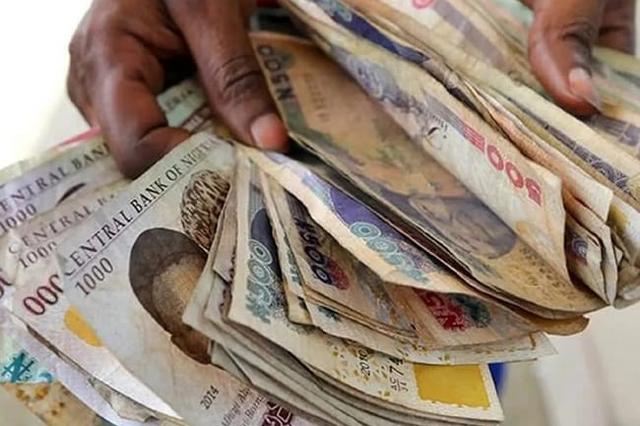

• The Central Bank of Nigeria's official rate for the naira moved from N1,376.58 per dollar last Thursday to N1,389.73 on Friday and N1,394.01 on Monday 23 November, according to CBN data reported by BusinessDay.
• On the street, the picture was slightly different: BusinessDay put the parallel-market close at N1,455 on Friday and N1,445 on Monday, so the gap between the two rates narrowed even as the official rate weakened.
• What is not yet known is where the naira ended trading on Tuesday, and the CBN's Monetary Policy Committee, ending its two-day meeting on Tuesday, kept its benchmark rate at 23%.
A trader in Ikeja pricing a shipment of phone accessories, or a parent in Ibadan adding up a child's school fees abroad, has watched the same number creep up all month. Each move of a few naira on the dollar shows up in the next invoice.
Last week we reported that the naira closed at N1,388 on Thursday 19 November, its weakest close since March. The slide did not stop there. By Monday the CBN's official rate had reached N1,394.01, according to a BusinessDay report on Monday's trading, which cited CBN data.
Two official numbers, one direction
There are two official figures in circulation, which is why reports seem to disagree. One is the CBN's own published rate for the Nigerian Foreign Exchange Market (NFEM), a weighted figure from the day's trades. The other is the day's last traded quote, the "closing rate" that some outlets track.
On the CBN rate, the run since our last report looks like this:
- Thursday 19 November: N1,376.58
- Friday 20 November: N1,389.73
- Saturday 21 and Sunday 22 November: no official trading
- Monday 23 November: N1,394.01
That is a loss of N17.43 for the naira over two trading days. BusinessDay and The Sun both reported the N1,389.73 Friday figure, and The Sun put the naira's loss for the week at 2.57%.
On the closing-rate measure, Nairametrics' review of CBN trading data said the naira ended Friday at N1,394, down from N1,360 on Monday 16 November, after trading between N1,387.10 and N1,400 during the day. It said this was the first time the currency had touched N1,400 in the five sessions it reviewed, and its weakest close in eight months. We did not find a closing-rate figure for Monday from the same series by the time of writing.
The street rate eased slightly
The parallel market, where bureaux de change and street dealers trade, moved the other way on Monday. BusinessDay put the parallel rate at N1,460 on Thursday, N1,455 on Friday and N1,445 on Monday. Nairametrics and The Sun gave a similar Friday figure of about N1,458, and The Sun noted that some reports quoted up to N1,468.
Arbiterz, another tracker, quoted N1,435 at bureaux de change on Monday. Street quotes differ by dealer, city and the time of day, so these figures are a range rather than a single price.
The result is a narrower gap. BusinessDay calculated the difference between the official and parallel rates at N51 on Monday, down from N66 on Friday. One day's easing on the street does not show a trend.
Dollar sales by the CBN did not hold the line
The naira weakened even though the central bank was selling dollars. Nairametrics, citing Cordros Securities, said the CBN supplied about $1.30 billion to the market in the week to 20 November. Cordros said steady demand from foreign portfolio investors outweighed that intervention, and that it expects demand pressure to continue for the rest of the year.
On Monday, Bloomberg reported that the naira briefly weakened to N1,403.50 before paring losses after the central bank stepped in, citing traders. That is an intraday level reported by one news organisation, not an official close, and the CBN has not published details of what it sold that day.
External reserves have also slipped. BusinessDay reported reserves of $54.58 billion as of 20 November, about $680 million lower over two weeks, and still above the $44.19 billion recorded at the same point in 2025. The reserves had peaked at $55.26 billion on 27 October.
Elections, exits and December demand
Analysts give overlapping explanations. Quest Merchant Bank, quoted by BusinessDay, pointed to constrained dollar supply, uncertainty ahead of the 2027 elections weighing on investor confidence, and festive-season demand for dollars. Chiazor Victor, head of research at FSL Securities, told The Sun that importers and families paying for travel and school fees usually raise December demand while dollar supply has softened.
Foreign investors pulling money out is the other thread. Briefs, summarising the Bloomberg report, quoted Chapel Hill Denham analyst Nabila Mohammed as saying foreign portfolio investors had a net outflow of $1.02 billion so far this quarter, as maturing CBN bills let them take money out. Standard Chartered's Samir Gadio said some investors were reluctant to add positions in emerging markets facing elections. These are analysts' readings of the market, not CBN statements.
For a Nigerian reader, the practical effect is in anything priced from the dollar: imported goods, school fees abroad, foreign subscriptions and card spending. At Monday's official rate, a $100 bill works out to about N139,401, against about N137,658 at last Thursday's rate. Banks, fintech apps and card issuers apply their own rates and fees on top, so what an individual pays will differ.
The MPC kept its benchmark rate at 23% on Tuesday, with the corridor and cash reserve rules unchanged, as most analysts surveyed in the run-up had expected. Before the meeting, Cordros said in a note cited by BusinessDay that "the naira has become the binding constraint" on the committee's decision. Whether the CBN keeps selling dollars, and how much, will shape the rest of the week.
Also read: CBN decides on its 23% rate on Tuesday. What a hold, cut or rise means for loans and savings
Also read: How to send money from the UK to Nigeria in 2026: fees, rates and the naira rule
Has the dollar rate changed what you are buying or paying for this December? Tell us in the comments.