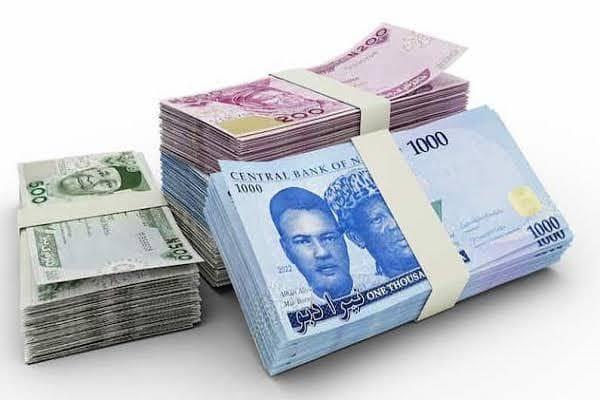
• The naira closed at ₦1,388 to the dollar in the official market on Thursday 19 November, its weakest close since 5 March, after ending Monday at ₦1,360; the CBN's weighted average rate moved from ₦1,357.19 to ₦1,376.58 over the same days.
• Street dealers quoted about ₦1,440 to ₦1,468 per dollar by Thursday and Friday morning, depending on the outlet, while Nigeria's gross external reserves stood at about $54.71 billion on 18 November, down from a 2026 peak of $55.26 billion in late October.
• Friday's official figures had not been published at the time of writing, and none of the reports this week shows how far the slide will run or whether the CBN will step in.
A parent with a December tuition deadline abroad checks the rate on Monday, decides to wait a few days, and finds on Thursday that the same dollar costs more. A freelancer paying for software on a naira card sees a slightly bigger debit at renewal. A small importer settling a supplier's invoice has to find more naira for the same order.
That is what this week looked like in the official market. According to Nairametrics' report on Thursday's trading, the naira closed at ₦1,388 per dollar on Thursday 19 November, the weakest close since 5 March, when it settled at the same level. The Central Bank of Nigeria's weighted average for the Nigerian Foreign Exchange Market (NFEM) was ₦1,376.58, down from ₦1,363.23 on Wednesday. Vanguard reported the same two figures.
Four days, about ₦28 at the close
There are two official numbers, and they tell the same story at different sizes. The closing rate, the price at which the last trades of the day went through, moved from ₦1,360 on Monday 16 November to ₦1,379.99 on Wednesday and ₦1,388 on Thursday, according to Nairametrics. That is a ₦28 slide, or about 2.1%, in four trading days.
The NFEM weighted average, which reflects the average price of the day's trades, went from ₦1,357.19 on Monday to ₦1,376.58 on Thursday. That is ₦19.39, or about 1.4%. On Thursday alone the rate traded between ₦1,370 and ₦1,397, and interbank turnover rose to $800.31 million from $502.88 million on Wednesday, Nairametrics reported.
Friday's official figures had not been released when this article was written. A real-time interbank feed cited by Vanguard on Friday morning showed lower early-trading quotes, but that is not the CBN's published rate, so Thursday's numbers remain the latest official ones.
The street rate depends on who you ask
The parallel market moved too, but the quotes differ by outlet and by dealer. Vanguard's Friday rate report said Lagos and Abuja dealers were selling at up to ₦1,468 per dollar on Friday morning, after closing Thursday between ₦1,461 and ₦1,468. Arbiterz put Thursday's street rate at ₦1,461, up from ₦1,453 the day before. Daily Times, by contrast, reported about ₦1,440 for Thursday.
Measuring the week on the street is harder. Vanguard's own Monday report gave a selling rate of ₦1,390, which on Vanguard's figures alone would mean a rise of about ₦78 by Friday morning, but quotes vary so much between outlets that the number should be read loosely. On Vanguard's Thursday figures, the street rate sat about ₦73 to ₦80 above the ₦1,388 official close; on Daily Times' ₦1,440, the gap was about ₦52. Vanguard said the naira had lost ₦42 in the official window and ₦95 on the street since the end of October, when it put the two rates at ₦1,346 and ₦1,373.
Reserves are still high, but they are falling
The country's buffer has been shrinking for about three weeks. Nairametrics reported gross external reserves of $54.87 billion on 12 November, down $390.94 million from the year's high of $55.26 billion on 27 October. Arbiterz put the figure at $54.762 billion on 17 November, and Vanguard and BusinessDay at $54.71 billion on 18 November, which Vanguard said was about $554 million below the October peak.
For context, that is still well above the $45.57 billion recorded on 2 January, according to Nairametrics. The CBN's own reserves page did not load for this report, so the November figures here are as published by those outlets from CBN data.
Analysts quoted this week point to demand rather than one single shock. Vanguard attributed the widening street gap to festive import demand, corporate obligations and weaker inflows, citing unnamed financial analysts. Abiodun Ogunniyi, head of research at IRON Capital Partners, told Nairametrics that unless the drivers of depreciation change, "the outlook for the Naira towards the end of the year remains unfavourable." Coronation Merchant Bank's research team, also cited by Nairametrics, described the naira as "fundamentally undervalued but tactically vulnerable." These are analysts' views, not CBN statements.
What the week adds to a school fee, a subscription and an invoice
These examples compare Monday's CBN weighted average (₦1,357.19) with Thursday's (₦1,376.58). Banks and transfer services add their own margins, so the official rate is a reference point, not the price anyone actually pays.
- An $8,000 school fee instalment: about ₦10.86 million on Monday and ₦11.01 million on Thursday, roughly ₦155,000 more. At Thursday's ₦1,388 close it would be about ₦11.10 million. At a street rate of ₦1,468 it would be about ₦11.74 million, roughly ₦731,000 above Thursday's official figure; at ₦1,440 it would be about ₦11.52 million.
- A $12 monthly subscription on a naira card: about ₦16,286 on Monday and ₦16,519 on Thursday, about ₦233 more per renewal. Card issuers apply their own rates, so the debit may differ.
- A $2,500 import invoice: about ₦3.39 million on Monday and ₦3.44 million on Thursday, roughly ₦48,000 more. If the importer has to buy dollars on the street at ₦1,468, the same invoice costs about ₦3.67 million.
For large, date-fixed payments, the gap between official and street rates matters more than the four-day move. On the $8,000 fee, the difference between Thursday's CBN figure and the top street quote is nearly five times the week's official change.
Friday's NFEM close, the next weekly reserves reading, and any sign of CBN dollar sales in the official window are the next numbers to watch. With December travel, school fees and festive imports ahead, the coming two weeks will show whether Thursday's close was a high point or a step along the way.
Also read: The naira is at ₦1,357/$ after a November slip. What it means for dollar-priced costs
Also read: CBN and NNPC sign a deal to put oil dollars under central bank rules. What it does not yet do
Are you paying a dollar bill before Christmas, and are you buying now or waiting? Tell us in the comments.