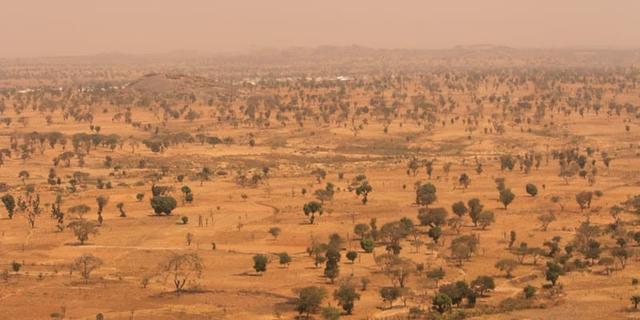
• NiMet's outlook for Monday to Wednesday this week forecast dust haze over Kano, Katsina, Kebbi, Sokoto and Zamfara and warned that dry harmattan winds can spread fires, while Lagos was still in line for isolated afternoon thunderstorms.
• Dermatology bodies including the American Academy of Dermatology and the NHS say thicker creams and ointments hold moisture better than thin lotions, and that moisturiser works best on damp skin straight after a bath.
• As of 25 November 2026, Jumia lists a 400ml Vaseline petroleum jelly at ₦2,950 and a 400ml Nivea lotion from ₦4,305, while the same CeraVe cream runs from under ₦9,000 to ₦55,000 depending on the listing and size, and this piece endorses no product.
In Kano, a trader rubs white ash off her knuckles before opening her shop. In Lagos, an office worker is still reaching for a light lotion because the afternoons are humid. Same week, two different skin problems, one crowded shelf.
NiMet's outlook for 23 to 25 November, also reported by 21st Century Chronicle, forecast "slight dust haze with good visibility" over five north-western states and hazy mornings in the South, with isolated thunderstorms still possible over Lagos and other coastal states. We found no NiMet statement declaring the start of this harmattan season. Here is what skin doctors say a moisturiser needs to do, what to avoid, and what common brands were listed at on Wednesday.
Three kinds of ingredient do three different jobs
Dermatologists sort moisturiser ingredients into three groups. A review in the US National Library of Medicine's StatPearls series describes humectants such as glycerin, hyaluronic acid and urea as compounds that "attract and bind water". Emollients such as shea butter and ceramides smooth the skin by filling gaps between surface cells. Occlusives such as petrolatum (petroleum jelly), mineral oil, dimethicone, lanolin and plant oils form a seal that slows water loss.
The harmattan catch sits in the first group. The same review says humectants pull water from the air only when humidity is above about 70%; in drier air they draw water from deeper skin layers instead and, without an occlusive on top, can leave skin drier. A glycerin-heavy lotion that works in humid Port Harcourt may do little in dusty Sokoto unless something greasier goes over it.
The American Academy of Dermatology's dry-skin advice lists jojoba oil, dimethicone, glycerin, hyaluronic acid, lactic acid, lanolin, mineral oil, petrolatum and shea butter as ingredients to look for, says creams and ointments work better than lotions for dry skin, and advises applying moisturiser while skin is still damp after a bath. The NHS guide to emollients agrees: lotions spread easily but are "not very moisturising".
Oily skin, dry skin and the Lagos humidity problem
Skin type changes the choice more than brand does. For oily or acne-prone skin, the AAD says labels reading "oil-free", "non-comedogenic" or "won't clog pores" mean a moisturiser is unlikely to cause breakouts. The StatPearls review suggests lighter, oil-free or gel formulas for oily skin and thicker creams for dry skin. In humid southern cities, that often means a light product by day, with a heavier one kept for nights or for elbows, knees and heels.
For sensitive skin, the AAD advises "fragrance-free" rather than "unscented" products, because unscented ones can contain masking chemicals.
Nigerian dermatologists have given similar advice in past seasons. Professor Dasetima Altraide of the University of Port Harcourt Teaching Hospital told Nigeria Info FM in December 2024 that people could "mix petroleum jelly with water to keep your skin moisturized" during harmattan, and urged sunscreen with an SPF of at least 30, applied even before going outdoors. The AAD likewise says people with darker skin can get skin cancer, and suggests a broad-spectrum SPF 30 or higher sunscreen; it notes that tinted formulas with iron oxide also guard against the visible light that can deepen dark patches.
Two practical warnings apply. The NHS and the British Association of Dermatologists say emollients soaked into clothes and bedding make them burn more easily, even once dry, which matters in a season when NiMet is warning that dry winds spread fires. And before using any new product all over, the AAD suggests a home test: a quarter-sized amount on the inner arm or the bend of the elbow, twice a day for seven to ten days, stopping at the first sign of redness, itching or swelling.
What NAFDAC bans in skin creams, and how to check a number
Some creams sold as moisturisers or "glow" products carry bleaching agents. NAFDAC's own guidance for small cosmetics makers states that "Hydroquinone above 2%, mercury and its salts, corticosteroid in body creams are also banned." The same page says every cosmetic label must show a NAFDAC registration number, batch number, manufacturing and expiry dates, the manufacturer's name and country of origin, and a list of ingredients.
NAFDAC's director-general, Professor Mojisola Adeyeye, said in a 2022 statement reported by The Sun that bleaching ingredients "could cause skin cancer as well as damage the liver and kidney". The World Health Organization says mercury-containing skin lightening products "are hazardous to health" and have been banned in many countries.
Checking a number is harder for creams than for medicines. NAFDAC's Greenbook at greenbook.nafdac.gov.ng can be searched by registration number, but its category list on Wednesday did not include cosmetics, so a cream missing from it proves nothing either way, and NAFDAC's separate registered-products page did not load when we tried it. At minimum, a pack should carry a registration number and a full ingredient list; a hand-mixed cream with no label has had no NAFDAC check at all.
What the common names are listed at on 25 November
These are prices shown on Jumia on Wednesday, 25 November 2026. Jumia is a marketplace, so many listings come from third-party sellers, and prices change daily. They are listed prices, not recommendations.
- Vaseline Blueseal petroleum jelly (Jumia Express Official Store): 50ml ₦535 (was ₦726); 400ml ₦2,950 (was ₦3,821).
- Vaseline body lotions, 400ml (same store): Advanced Repair ₦4,280; Dry Skin Repair ₦4,405; Cocoa Glow ₦4,405 (each was ₦5,555).
- Nivea body lotions, 400ml: Nourishing Cocoa ₦4,305 (was ₦5,105); Radiant & Beauty Even Glow ₦5,595 (was ₦6,635).
- Cetaphil Moisturizing Cream: 16oz (453g) listings from ₦28,000 to ₦35,000; 20oz (566g) at ₦34,000 to ₦40,000.
- CeraVe Moisturizing Cream: a 454g tub at ₦8,999 (was ₦20,000), a 539g tub at ₦55,000 and a 177ml size at ₦50,000. CeraVe Moisturising Lotion 473ml is at ₦11,999 (was ₦17,000).
- Shea butter blends: Jimpo Ori shea butter 280g ₦5,500; Toke Natural Coconut Shea Butter 275g ₦6,999. The listings do not say where the products are made.
The CeraVe spread stands out. The online pharmacy GoMed shows a "last known price" of ₦25,500 for the 454g tub, almost three times the cheapest Jumia listing. The listings do not explain the gaps, so buyers can ask a seller in writing whether a tub is sealed and where it came from, and check the label details NAFDAC requires. The dermatology guidance above points to ingredients, texture and skin type, not brand or price, as what decides whether a moisturiser suits someone.
NiMet's December outlook should show whether the dust haze spreads south. Watch too whether the crossed-out discounts on these listings survive the end of Jumia's Black Friday sale on 30 November.
Also read: NAFDAC says it never banned Camosunate. How to check a medicine's status yourself
Also read: El Niño is near record strength. What NiMet has said about Nigeria's dry season
Is your harmattan routine petroleum jelly, shea butter or something pricier? Tell us in the comments.