

• NAFDAC said in a statement dated 21 November 2026, signed by its Director-General, Prof. Mojisola Adeyeye, that it "has never banned Camosunate or medicines containing the artesunate-amodiaquine combination".
• The claim traces back to a statement by the Edo State Consumer Protection Committee about a pharmacy it sealed in Benin City, and the Association of Community Pharmacists of Nigeria gave the committee's chairman 24 hours to prove the ban.
• NAFDAC's statement did not mention the Edo committee, no reply from the committee or its chairman has been reported, and nothing published so far establishes what made the child in the original account unwell.
A WhatsApp forward lands in a family group on a Sunday afternoon: a popular malaria medicine has been "banned by NAFDAC", check your cupboard. A parent who bought the same sachets for a child last month reads it twice and starts looking for the pack.
That was the message doing the rounds last week about Camosunate, an antimalarial that combines artesunate and amodiaquine. On Saturday the regulator answered it. In a press release dated 21 November 2026, the National Agency for Food and Drug Administration and Control said the claim was false, according to a Nairametrics report on the NAFDAC statement and separate reports by P.M. News and Blueprint. The press release itself was not on the press-release page of NAFDAC's website when TheRadar checked on 23 November, so the wording here is as those outlets quoted it.
A sealed pharmacy in Benin, and a doctor's reported remark
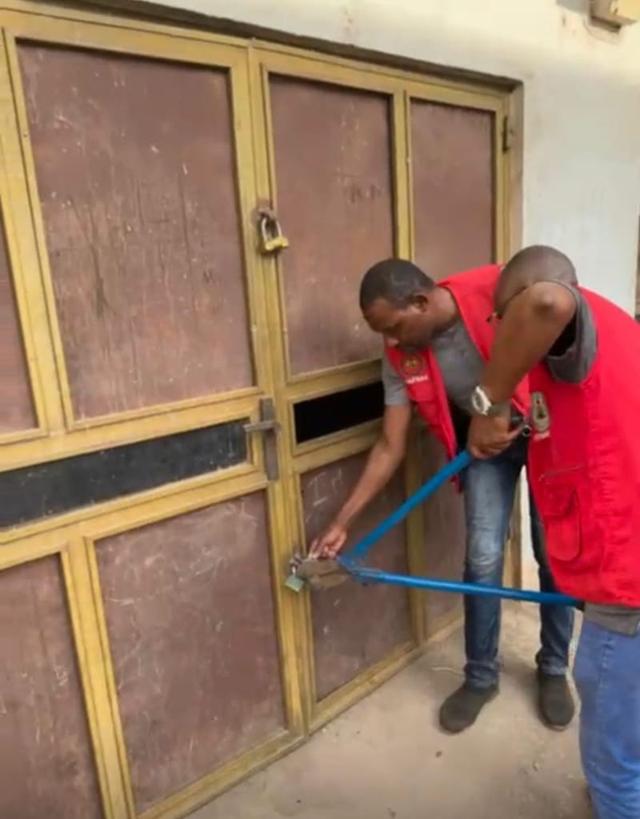
The trail starts in Edo State. Leadership reported on 17 November that the Edo State Consumer Protection Committee, chaired by Osaro Culture Iyamu, had sealed a pharmacy in the Evbuodia community along Airport Road, Benin City.
According to the committee's statement as Leadership reported it, a woman bought Camosunate for her child, the child's condition worsened, and she took the child to a hospital. A doctor there asked for a sample of the medicine and allegedly told her it had been banned by NAFDAC. The committee said it then found the product on the pharmacy's shelves, along with other items it suspected were fake or expired.
Every part of that account comes from the committee. The report carried no response from the pharmacy's owner, the doctor was not named, and no test result on the medicine has been published.
What the regulator said, and what it left open
NAFDAC's answer was narrow and direct. "The Agency clarifies that it has never banned Camosunate or medicines containing the artesunate-amodiaquine combination," the statement said, as quoted by Blueprint.
The agency did not wave away the symptoms in the viral posts. It said some of them could match known side effects of the medicine, and listed nausea, vomiting, diarrhoea, abdominal pain, headache, dizziness, drowsiness and loss of appetite. Its point was that a possible side effect is not the same thing as a ban.
It asked health workers and the public to report any suspected adverse reaction for assessment, through the NAFDAC Med Safety App on Android and iOS or at the nearest NAFDAC office. It also asked people who had shared the claim to pass on the correction through the same channels. Nairametrics noted that the statement did not refer to the Edo committee at all.
The pharmacists' 24-hour demand
The pushback from pharmacists came earlier. Voice of Nigeria reported on 17 November that the Association of Community Pharmacists of Nigeria (ACPN), through its National Chairman, Pharm. Ambrose Igwekamma Ezeh, gave Mr Iyamu 24 hours to produce an authentic NAFDAC notice banning, suspending or withdrawing the product, or to retract and apologise. It said legal action was possible.
ACPN named the pharmacy as ALSO CARE Pharmacy and asked the committee to disclose what it seized and the evidence that any of it was counterfeit. It argued that a state consumer protection committee has no power under federal law to regulate medicines. Mr Iyamu told a briefing reported by Vanguard on 12 November that the committee's powers come from Section 8 of the Counterfeit and Fake Drugs and Unwholesome Processed Foods (Miscellaneous Provisions) Act. That legal argument is unresolved.
On Sunday 22 November, Vanguard reported that ACPN had taken the matter to the Attorney-General of the Federation, Lateef Fagbemi, in a petition alleging regulatory overreach. None of the reports TheRadar read says whether Mr Iyamu produced any document or withdrew the claim.
Three checks anyone can run on a pack
The first is the Greenbook, NAFDAC's public database of registered products. Typing a product name or a NAFDAC registration number into the search boxes on the NAFDAC Greenbook returns the product, its active ingredients, the company that registered it, the approval date and a status.
TheRadar ran that search for Camosunate on 23 November. It returned one product, Camosunate Children Powder, registration number 04-7908, under two rows: an older record marked "Ongoing Renewal" and a current one marked "Active", approved on 26 November 2025 and expiring on 25 November 2030. The applicant is listed as Geneith Pharmaceuticals Limited and the manufacturer as Front Pharmaceuticals PLC, China. That matches what ACPN said it found. No other Camosunate formulation appeared under that name, so the search shows nothing either way about any other Camosunate product or pack, and the Edo account does not say which form the child was given.
The second check is the registration number printed on the pack, which should match the Greenbook entry for that exact product.
The third, where a pack carries one, is the scratch panel. NAFDAC's page on its Mobile Authentication Service says the scheme covers antimalarials and antibiotics: the buyer scratches the panel, sends the one-time PIN toll-free by text to a provider's short code, and gets a text saying the product is genuine or suspected fake. TheRadar has not confirmed whether Camosunate packs carry a panel. The same page lists a complaints line, 0800-1-NAFDAC (0800-1-623322).
These checks answer different questions. The Greenbook shows whether a product is registered, and the scratch code speaks to whether one pack is authentic. Neither says whether a medicine is right for a particular patient, which is a question for a doctor or pharmacist.
What to watch now is whether the Edo committee responds to NAFDAC's statement, whether the Attorney-General's office acts on ACPN's petition, and whether anyone publishes a laboratory finding on the medicine taken from the Benin pharmacy. Until then, the regulator's position is on record and the children's powder registration is there for anyone to look up.
Also read: NUC disowns a UK college selling doctorates and professorships. How to check a degree is real
Also read: The ₦100,000 family grant SMS: what is claimed, and what no agency has confirmed
Have you ever looked up a medicine's NAFDAC number or texted a scratch code before using it? Tell us what you found in the comments.