
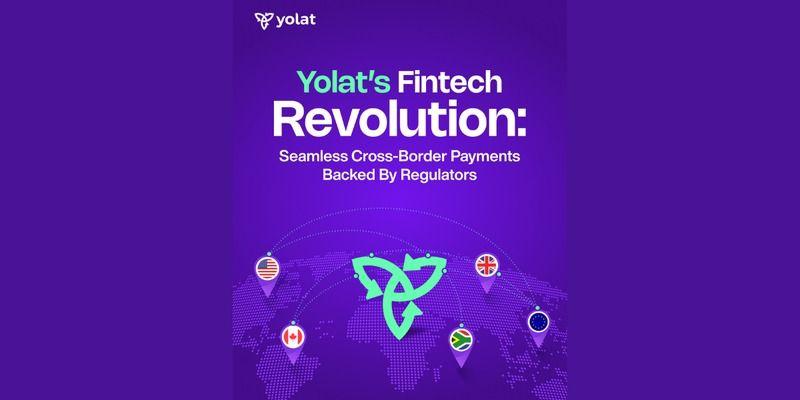
• Six Nigerian-founded startups received a combined $521,700 in Stellar Community Fund awards, led by Yolat’s $110,000 award.
• The six are building cross-border transfers, merchant payments, stablecoin commerce, WhatsApp-based finance and tools for small businesses.
• The awards are development funding, not proof that crypto has solved Nigeria’s payment problems — but they show where builders think the next ones are.
The Stellar Community Fund awards are not a reason to chase another token. They are a clearer look at the everyday payment problems Nigerian founders are trying to fix.
The biggest figure is $521,700. The more useful question is what the money is meant to build.
Six Nigerian-founded projects have received that combined amount from round 44 of the Stellar Community Fund, a grant programme for teams building on Stellar. At first glance, it is another Crypto/Web3 funding headline. Look closer and the winners are working on problems that already make life difficult for businesses, freelancers and people moving money across borders.
The six teams and the money
Yolat received the largest award at $110,000. The startup is building cross-border settlement infrastructure with stablecoins underneath and local money as the experience customers actually touch. Jumpa received $89,700 for a chat-based and USSD-focused cross-border payment platform. Azza received $89,000 for a WhatsApp-based stablecoin and local-fiat payment product.
Choppaddi got $80,000, while Paycashless and Blink received $78,000 and $75,000 respectively. The individual awards add up to the $521,700 reported by Technext and listed in the Stellar Community Fund’s round 44 recap.
This is builder money: funding for product work, integrations, technical capacity and the slow attempt to make a useful service survive beyond a demo.
The product is not the coin
Paycashless is designed around the unglamorous work of running a business: collecting payments, sending payouts, invoicing and managing cash flow. Blink is working on letting businesses receive crypto payments while settling in local currency. Choppaddi combines a marketplace for essentials with payments in local money or USDC.
Azza is trying to bring crypto and fiat transfers into WhatsApp, where many Nigerians already spend part of their working day. Jumpa is aimed at making cross-border transfers simpler through chat-based interfaces and USSD. The shared bet is that people will not adopt a payment tool because it uses a blockchain. They will use it if it removes friction they already hate.
Grants are not a finished business model
A grant is not revenue. It is not a licence to operate everywhere. It does not erase compliance, customer-service, foreign-exchange or trust problems.
The Stellar Community Fund says its Build Awards are for teams with traction or a validated need and a plan to build on the network. Round 44 awarded 46 projects globally, with $4.57 million worth of XLM distributed across its tracks. The six Nigerian-linked awards sit inside that wider round.
Why the payment angle matters now
Nigeria’s digital workers and small businesses already understand the cost of payment workarounds. Some use multiple apps just to receive, convert, hold and spend money. Some still wait on transfers, chase invoices or lose time to payment failures. A tool that makes one of those tasks easier has a real market — if it can earn trust.
The stablecoin rail is only useful if the customer barely has to think about it. The local experience is the product.
Also read: Pouchers raised $500,000. It is betting Nigerian global workers are tired of payment workarounds
Also read: Nigeria is building drones at home. Terra has $52 million to prove it
Which payment task wastes the most time for your work or business? Tell us in the comments.
