
• The Federal Government and FEMADEC Energy opened a CNG refuelling station and vehicle conversion centre at the University of Lagos on 20 November under Project SPROUT, with 10 CNG buses and discounted car conversions for staff promised.
• CNG for cars sells at ₦380 to ₦500 per standard cubic metre, according to oil marketers' figures from 9 November, while petrol sold for about ₦1,289 to ₦1,350 a litre in Lagos on 17 and 18 November, before Dangote cut its gantry price to ₦1,070.
• A private car conversion costs roughly ₦350,000 to ₦600,000 on Pi-CNG's indicative figures as reported by Legit.ng, the discount for UNILAG staff has not been published, and campus fares have not yet come down.
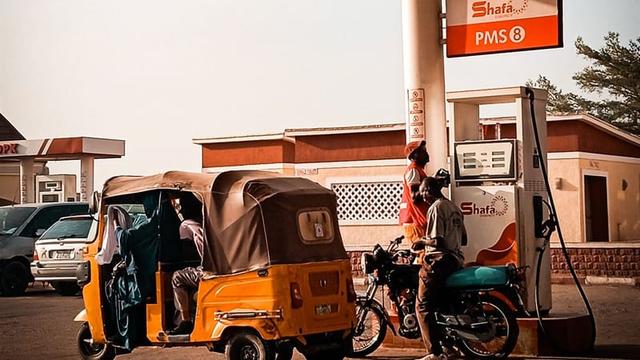
A lecturer pulls out of the Akoka gate and joins the queue at a petrol station on Herbert Macaulay Way. A full tank of petrol now runs well past ₦50,000. Across the campus, a student pays a shuttle fare that went up with fuel prices and has not come back down.
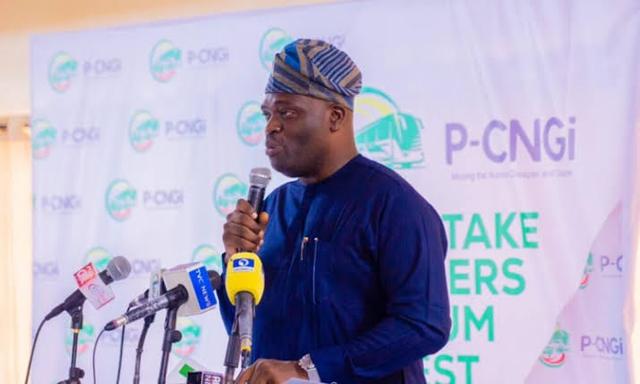
That is what the Federal Government says its new campus gas stations are meant to change. On Friday, 20 November, the education minister, Dr Tunji Alausa, commissioned a CNG daughter station and vehicle conversion centre at UNILAG, according to the university's own report of the commissioning. Stations at the University of Ibadan, the Federal University of Technology, Akure (FUTA) and the Federal University, Oye-Ekiti (FUOYE) were commissioned remotely at the same event.
A gas pump on campus, with a fares deadline attached
The facilities come under Project SPROUT, the Special Palliative Relief on University Transportation, which runs under the Presidential CNG Initiative (now Pi-CNG & EV). The Midstream and Downstream Gas Infrastructure Fund (MDGIF) pays for it and FEMADEC Energy Limited builds and runs the stations. FEMADEC's chief executive, Fola Akinnola, said its network now covers 11 tertiary institutions, out of a planned 20.
Alausa said UNILAG would receive 10 CNG-powered buses and 1,000 conversion kits for staff cars. ThisDay's report of the ceremony says the other three universities get five buses each. That report also quotes the minister telling students that if campus fares do not fall: "If you don't see reduction in three months, I need to know."
The terms for staff are less clear. The vice-chancellor, Prof. Folasade Ogunsola, said 10 conversions would be free and others in the university community would pay "reduced costs", according to the university. Tribune reported that the 10 free slots will be allocated by ballot. No one has said publicly how big the discount is or who qualifies.
What a cubic metre costs against a litre
CNG is sold by the standard cubic metre (scm), not by the litre. The federal benchmark for passenger vehicles in Lagos and Abuja has been ₦380 per scm since 1 September 2025, Nairametrics reported at the time. Legit.ng gave the same figure in August 2026, with ₦450 per scm for heavy-duty vehicles and lorries. The Major Energies Marketers Association of Nigeria (MEMAN) put CNG for vehicles at ₦380 to ₦500 per scm in its 9 November bulletin, also reported by Legit.ng. MEMAN did not say which stations charge which price.
Petrol has been falling. Legit.ng's 17 November price check found NNPC selling at ₦1,289 a litre in Lagos, AP at ₦1,290 and MRS at ₦1,310. A Daily Sun survey the next day put MRS at ₦1,330 and Ardova at ₦1,350. In Abuja on 19 November, NNPC sold at ₦1,300 and MRS at ₦1,365. All of these pump prices predate Dangote's cut of its gantry price to ₦1,070 a litre, from ₦1,130, reported by BusinessDay on 20 November. How much of that reaches the pumps depends on marketers.
The two prices cannot be compared one for one, because how far a car goes on a cubic metre of gas depends on the engine and the kit. Officials prefer to talk about the whole trip. Alausa said a journey to Ibadan that costs about ₦10,000 in petrol would cost about ₦2,500 in CNG, roughly a quarter. That is the minister's own estimate, not an independent test, and it does not include the cost of converting the car.
The conversion bill comes first
Before any savings, a petrol car needs a gas cylinder, a kit and installation. Pi-CNG lists indicative costs of ₦350,000 to ₦600,000 for passenger cars, Legit.ng reported in October. A Nairametrics report on the conversion drive quoted an analyst putting the average at about ₦325,000, and an Abuja commercial driver who said he paid ₦650,000 to convert his tricycle. Kit specification, engine size and the centre doing the work all change the quote.
Free conversions under the federal programme have mostly gone to commercial vehicles. Private car owners usually pay the bill themselves, unless they qualify for a targeted scheme like the one now offered to UNILAG staff. Pi-CNG also announced a ₦2.5 billion credit scheme in May 2025 to help with conversion, though drivers who spoke to Nairametrics said some borrowers have struggled to repay when gas was hard to find.
Safety is part of the bill too. Nairametrics reported a cylinder explosion during refuelling in Abuja, and officials have since urged motorists to use only accredited centres and certified kits. Pi-CNG says more than 400 conversion centres are registered on its website, where drivers can look up an approved one.
Finding gas is the harder part
Pi-CNG's official refuelling station register, last updated on 15 October, lists 105 stations run by 24 operators across 24 states and the FCT. Legit.ng, reporting on 17 November, put the count higher at 113 stations and said a Pi-CNG official told a town hall in Abuja of a target of 2,500. The agency's executive chairman, Ismaeel Ahmed, acknowledged that existing facilities remained inadequate, the outlet reported.
Drivers already feel that. In September, Abuja commercial drivers told Nairametrics that buying gas at an NNPC station near Jabi can mean a wait of at least six hours, and that one station serves the whole of Lugbe. For a driver on a daily commute, the nearest working pump matters as much as the price on the board.
The UNILAG station is classed as a Level 1 station, and it is meant to serve the campus buses, converted staff cars and students in training. How far it will serve the wider Yaba and Akoka public has not been stated.
The first test is the one Alausa set himself: whether shuttle fares at UNILAG, UI, FUTA and FUOYE fall within three months, and when the 10 buses arrive. Drivers outside the universities will be watching two other numbers: how many of the planned new stations actually open in Lagos, and whether the pump price stays near ₦380 as demand rises.
Also read: Bus fares on CNG routes could fall 40% under a 2027-2031 target. What commuters pay today
Also read: Why Nigerian transport fares remain high despite the CNG cost advantage
Would you spend ₦400,000 converting your car to CNG if the nearest gas station were 10km away? Tell us in the comments.