
• Moniepoint lists its POS terminal at ₦21,500 (a ₦10,000 caution fee, ₦10,000 for logistics and ₦1,500 for a year of insurance), while OPay's public POS page lists no price, PalmPay's site could not be checked, and the only OPay and PalmPay figures found come from a March 2025 third-party list.
• Under the Central Bank of Nigeria's October 2025 agent banking guidelines, a customer can withdraw at most ₦100,000 a day and ₦500,000 a week at an agent, each agent's total cash-out is capped at ₦1.2 million a day, and since 1 April 2026 an agent may work with only one provider.
• The CBN does not set what agents charge customers, the Corporate Affairs Commission's demand that every POS operator register is still disputed by an agents' association, and no source checked shows how strictly the August 2026 geo-fencing deadline is being enforced.
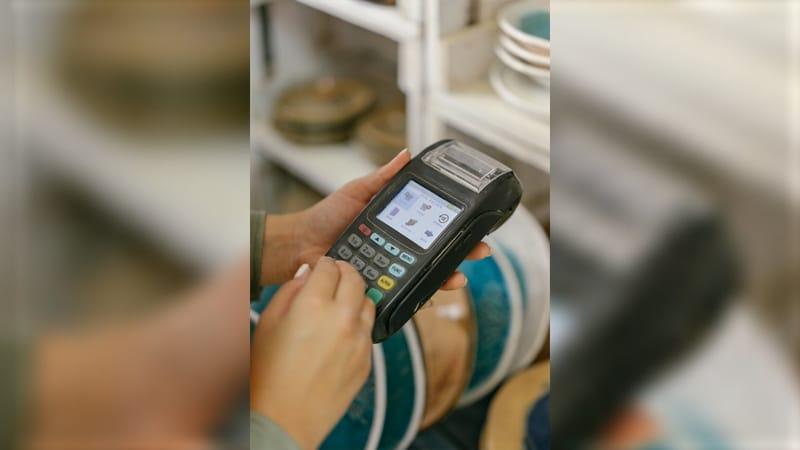
A table, an umbrella, a card terminal and a bundle of naira notes. On many Nigerian streets, that has been the whole set-up of a POS business, and for many people it is the first business they think of when a salary runs short.
The set-up now has more rules around it than it did two years ago. The CBN's Guidelines for the Operations of Agent Banking in Nigeria, issued on 6 October 2025, set new limits, tied each terminal to a fixed place and limited each agent to one provider. Here is what starting one involves, with figures checked as of 22 November 2026. None of it is financial advice.
The terminal is the cheap part
Moniepoint is the only one of the three big providers found stating a price on its public site. Its POS terminal page says the terminal costs ₦21,500, made up of a ₦10,000 caution fee, a ₦10,000 logistics fee and ₦1,500 for one year of insurance, paid from a funded Moniepoint business account. It says delivery takes about 48 hours.
OPay's public POS page checked today does not list a terminal price, and PalmPay's website could not be loaded. A March 2025 Pulse comparison, linking to price lists from SwiftBills, put OPay's Mini POS at ₦8,500, its traditional POS at ₦35,000 and its smart POS at ₦50,000, and PalmPay's analogue POS at ₦20,000, with smart models at ₦40,000 or ₦60,000. Those figures are more than 18 months old and could not be confirmed with either company.
The trend is upward. Nairametrics and Legit.ng reported in autumn 2025 that entry-level terminals had risen to around ₦21,500 and Android or smart terminals to between ₦62,000 and ₦85,000, which they linked to the weaker naira.
The bigger cost is the float. An agent pays out cash and receives money into a wallet, so the business needs both a cash stock and a wallet balance. The CBN guidelines list "evidence of availability of funds to cover Agent operations" among the documents a provider must collect before appointing an agent.
One provider, one place, and paperwork first
The guidelines say plainly that agents "shall be exclusive to one Principal only". The CBN's covering circular set 1 April 2026 as the start date for the exclusivity and agent-location rules, which ends the old practice of keeping a Moniepoint and an OPay terminal on the same table as a backup.
An individual agent must be at least 18, and the guidelines bar anyone with a non-performing loan at any financial institution in the last 12 months, an undischarged bankrupt, and anyone whose BVN has been watch-listed. The provider collects the agent's BVN, NIN and address, and the guidelines define an agent's agreed location as a structure "not lower than a kiosk" at an identifiable place, and an agent cannot move or close without telling the provider at least 30 days ahead (or another period set in its agreement) and getting approval.
At the location, the agent must display the provider's name, the letter of appointment, the charges and the provider's phone number, among other notices.
CAC registration is where the rules are contested. The CBN guidelines require a CAC certificate or business name registration for non-individual agents, meaning businesses such as shops, petrol stations and salons. The Corporate Affairs Commission went further in December 2025, saying, as reported by Nairametrics, that all POS operators had to be registered by 1 January 2026 and that "unregistered PoS terminals will be seized or shut down by security officials." The Association of Mobile Money and Bank Agents in Nigeria called the directive "unnecessary, out of scope, and potentially unconstitutional", arguing that individual agents are not required to register, and warned it could go to court, Nairametrics reported. The association also challenged an earlier CAC registration order in court in 2024, according to Leadership. No new lawsuit, ruling or wide enforcement after 1 January was found in reports checked today.
₦100,000 a customer, ₦1.2 million an agent, 70 metres from base
The limits sit in Section 11 of the guidelines. A customer can take out at most ₦100,000 a day and ₦500,000 a week through agents, and the same caps apply to cash deposits. Bill payments are capped at ₦100,000 both daily and weekly. On the agent's side, each agent's total cash-out in a day cannot exceed ₦1.2 million, and the provider's system is meant to stop transactions automatically once a limit is reached.
Every terminal must also be geo-fenced to the agent's registered location, and customers' alerts are meant to show the agent's name and the geo-coordinates of the transaction. The radius had been set at 10 metres. A circular dated 29 May 2026, signed by Rakiya Yusuf, director of the CBN's Payments System Supervision Department, widened it. As Leadership reported, the circular said the "geo-fence radius is hereby increased from 10 metres to 70 metres" and moved enforcement to 1 August 2026. The CBN's own reforms page records the same change.
Technext reported that roaming agents, such as market collectors and dispatch riders, could lose the ability to take payments once they move outside the 70-metre radius.
What agents charge, and where the money can be lost
The CBN does not set the fee a POS agent charges a customer. The guidelines leave fees to the agreement between the agent and the provider and require the agent to display them. Techpoint Africa reported in April 2025 that a ₦5,000 withdrawal typically costs a customer ₦100 to ₦150 and a ₦20,000 withdrawal ₦400 or more, with higher charges in rural areas where agents and banks are fewer. The agent's own costs, including the provider's transaction fee, come out of that.
The risks start with cash kept at a fixed, visible spot. Network failures can leave a customer debited with no cash paid out, and the agent then waits for a reversal. Fraud carries a direct consequence under the guidelines: where an agent is accused of fraud, the provider must suspend the agent while police investigate and blacklist the agent if convicted. A watch-listed BVN rules a person out of being an agent at all.
There is also uncertainty at the top. A separate CBN circular of 15 June 2026 bars a group with more than 25% of card issuing or merchant acquiring from holding more than 15% of the other, and Moniepoint and OPay, the two biggest POS operators, have until 31 December 2026 to comply, TheRadar and Technext reported. How that will change terminal supply, prices or agent terms has not been announced.
The next dates to watch are that 31 December market-structure deadline and the dispute over CAC registration. The guidelines also allow the CBN to change the transaction limits at any time, so the ₦100,000 and ₦1.2 million figures hold only until the next circular.
Also read: CBN new fintech rules: What Opay and Moniepoint users must know before December 31
Also read: SunTrust Bank signs a POS deal with OPay as unconfirmed leadership reports circulate
How much does your nearest POS agent charge you for ₦5,000? Tell us in the comments.