
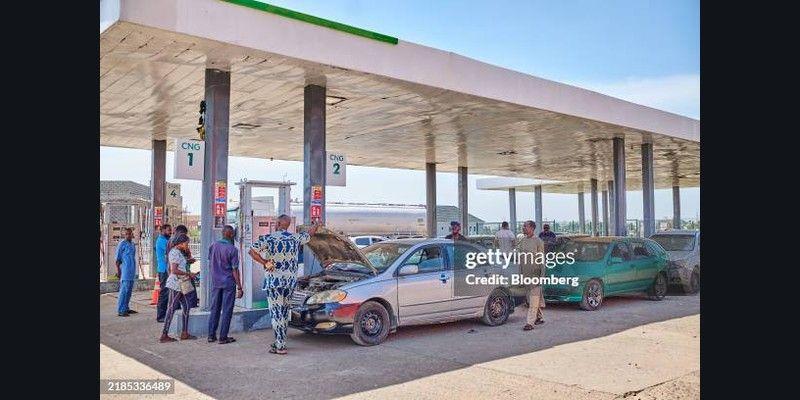
• Operators report that compressed natural gas (CNG) is substantially cheaper per standard cubic metre (SCM) than petrol or diesel, yet commuter transport fares across major Nigerian cities remain stubbornly high.
• Structural bottlenecks—including severe refueling station deficits, steep vehicle conversion costs, expensive tyres, and recurring maintenance overheads—prevent savings from translating into lower ticket prices.
• According to data from Nairametrics and official Presidential Initiative on Compressed Natural Gas (PiCNG) disclosures, infrastructure scaling and financing must improve before commuters feel relief at the motor park.
As federal authorities push for cleaner, cheaper energy through compressed natural gas adoption, commuters across Lagos, Abuja, and Port Harcourt continue to empty their pockets at the motor park. Behind lofty promises of slashed transport tariffs lies a complex web of infrastructure deficits, heavy capital outlays, and soaring operational overheads keeping fares locked at peak levels.
The morning sun at the bustling Ojuelegba motor park in Lagos rarely brings good news for commuters clutching crumpled Naira notes. Amid conductor whistles and exhaust fumes, commercial drivers debate daily survival. When the federal government, through the Presidential Initiative on Compressed Natural Gas (PiCNG), championed a nationwide mass transit pivot to cleaner fuel, the prevailing narrative was simple: gas is cheaper, so transport fares must crash. Drivers would spend less per standard cubic metre (SCM) compared to petrol, and passengers would finally catch a break from inflation following the petrol subsidy removal.
Yet, months into the ambitious rollout, daily commuters stepping into commercial buses face a baffling economic paradox. Despite documented reports from transport operators confirming that compressed natural gas offers a lower cost per unit than petrol, ticket prices refuse to budge downward. In many corridors, fares have inched higher alongside surging general inflation, foreign exchange volatility, and astronomical vehicle spare parts costs. To understand why discounted transit has stalled on the asphalt, one must look beyond the pump price and examine the grinding realities of operating commercial vehicles in Nigeria today.
The fueling bottleneck: Why station scarcity fuels high operational downtime
The immediate barrier preventing CNG cost advantages from reaching commuters is the severe scarcity of retail refueling infrastructure. While government projections boast of expanding distribution networks, physical reality on Nigerian highways tells a sobering story. As detailed in comprehensive reports by Nairametrics, Nigeria's nascent gas infrastructure is plagued by a massive geographic supply shortfall, with only a fraction of required retail compression and dispensing stations operational nationwide.
For a commercial bus driver operating in Lagos or navigating inter-state routes connecting Ibadan, Benin, and Abuja, finding a functional CNG station is a grueling multi-hour ordeal. Drivers frequently recount spending upwards of three to four hours in endless queues at available outlets, burning precious working hours that could have been dedicated to ferrying passengers. This severe loss of productive operating time directly undermines potential pump savings. When a commercial driver spends half a day hunting for gas instead of completing profitable trips, lost daily revenue must be absorbed somewhere—usually manifested in rigid transport fares charged to passengers.
Furthermore, the high capital intensity of setting up compression facilities and storage systems means private investors tread cautiously. Without a dense, reliable grid of gas stations within easy reach of major motor parks, commercial operators cannot rely solely on gas. Many drivers maintain dual-fuel capability or revert to petrol during critical shortages, completely negating the structural cost-reduction engine that PiCNG was designed to create. For a deeper look at how macro-level economic policies continue to ripple through domestic markets, readers can explore our detailed coverage on Nigeria's inflation trends.
The upfront conversion wall and financing hurdles
Beyond the lack of filling stations, the steep initial financial outlay required to convert conventional petrol-powered vehicles to run on compressed natural gas remains a formidable mountain for independent transport operators. Converting a standard commercial minibus or utility vehicle is not a negligible expense. Even with subsidized conversion kits and official PiCNG deployment drives aiming to ease transport union burdens, thousands of vehicle owners still face substantial out-of-pocket costs for professional installation, specialized high-pressure cylinders, electronic control units, and safety certification.
Commercial transport in Nigeria is largely driven by individual owner-drivers and small-scale fleet operators operating on razor-thin daily cash flows. Accessing commercial bank loans or institutional financing to fund conversions is practically out of reach due to soaring interest rates, stringent collateral demands, and financial sector aversion toward informal transport lending. Consequently, many drivers rely on personal savings, high-interest informal loans, or daily cooperative contributions to finance their transition. Once a driver secures a conversion kit and utilizes cheaper gas, the immediate financial priority shifts toward paying off accumulated debts and servicing loans. Under such intense financial recovery pressure, reducing commuter fares becomes an impossible luxury rather than a viable business decision.
Maintenance, tyres, and the hidden cost of Nigerian roads
It is a common misconception among the public that lower fuel expenditure automatically translates into higher net profits freely passed down to consumers. In practice, vehicle operation encompasses a multifaceted matrix of recurring expenditures escalating aggressively amid macroeconomic headwinds. Chief among these are skyrocketing costs of automotive spare parts, motor vehicle insurance, regulatory levies, and vehicle tyres.
Nigerian roads impose a brutal toll on commercial vehicles. Potholes, unpaved feeder routes, and severe traffic congestion accelerate mechanical wear and tear, necessitating frequent suspension overhauls, brake replacements, and engine servicing. While cleaner-burning gaseous fuel reduces internal engine deposits over the long term, it does nothing to mitigate the punishing impact of bad roads on vehicle chassis and suspension systems. Furthermore, imported tyre and replacement component prices have surged dramatically in recent years, driven by foreign exchange depreciation and import duties.
Commercial transport operators must also navigate informal transit union dues, local government levies, and security checkpoints levying arbitrary tolls along major routes. When combined with comprehensive insurance premiums and daily vehicle maintenance funds, fuel cost savings are instantly swallowed by broader operational expenses. To examine how foundational economic disruptions have continuously reshaped commercial viability across sectors, you can read our retrospective on fuel subsidy removal impact.
The path forward: Bridging policy ambition and commuter relief
The core objective of the Presidential Initiative on Compressed Natural Gas remains fundamentally sound—transitioning Nigeria toward a cleaner, domestically sourced, and economically sustainable energy ecosystem is an indispensable national imperative. However, bridging the widening gap between policy ambition and commuter relief requires a profound recalibration of implementation strategies. Official PiCNG disclosures emphasize that scaling retail distribution infrastructure, expanding accredited conversion center networks, and introducing targeted financing models for transport cooperatives are vital prerequisite steps.
For transport fares to genuinely reflect the cost advantage of compressed natural gas, infrastructure must outpace demand. This entails aggressive public-private partnerships to establish hundreds of decentralized fueling stations along high-density commuter corridors and inter-state highways, drastically reducing station queues and travel downtime. Additionally, expanding zero-interest or low-interest equipment financing schemes specifically tailored for registered transport unions will liberate drivers from crippling debt traps. Until systemic structural bottlenecks are comprehensively dismantled, the economic promise of CNG will remain confined to policy papers, while the everyday Nigerian commuter continues bearing the heavy burden of high transport costs.
Have you or your commercial driver made the switch to CNG yet? Share your conversion and transit experiences in the comments below!
