
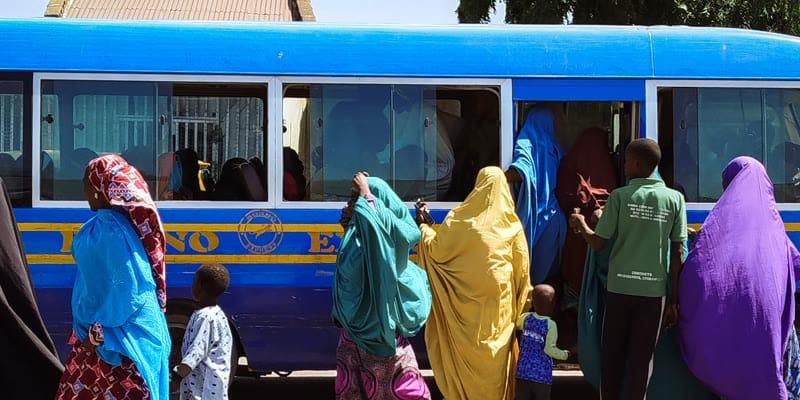
• President Bola Tinubu said on Thursday that Chinese manufacturer Yutong will supply an initial 300 CNG buses for the National Affordable CNG Transit Programme, with the first 100 expected in Lagos by the end of December 2026.
• Later buses are to be assembled at the former Leyland plant in Ibadan by YP Automobiles, and the government says it aims to cut fares by about 40% on participating routes between 2027 and 2031.
• The 40% figure is a target for routes that join the programme, not a nationwide fare cut, and reporting since October shows many commuters on petrol-powered buses have not yet seen lower fares.
At a motor park in Dutse or a bus stop in Ikeja, the fare is usually settled before the engine starts, and for many commuters it has barely moved in weeks. Passengers who heard that transport would get cheaper from October 1 are still paying close to what they paid before.
On Thursday, 19 November, the Presidency put a new number on that promise. In a statement issued by presidential adviser Bayo Onanuga, Tinubu's agenda for 2027 to 2031 targets fare reductions of approximately 40% on participating routes, according to a Daily Trust report on the announcement. "I know the burden of transport fares and how much less you have left for your family when you return home," the President said. "It is a burden I am determined to ease."
Three hundred buses, one plant in Ibadan
The centre of the announcement is a supply deal. Yutong is to provide an initial 300 CNG-powered buses through the Presidential Initiative on CNG and Electric Vehicles. The first 100 are due in Lagos by the end of December, according to the Daily Trust report, while Tinubu's own statement said "as early as next month".
The rest are meant to be built in Nigeria. Yutong is to set up a CNG bus assembly plant at the former Leyland automotive site in Ibadan, Oyo State, with later units assembled by YP Automobiles Bus Assembly. The Presidency presented this as a way to cut vehicle imports and create jobs for Nigerian engineers and technicians. No assembly start date, plant capacity or investment figure was given in the reports reviewed.
The statement also referred to an earlier presidential directive for 1,000 additional CNG refuelling units across the country. It did not say how many of those are already working, which matters because a bus that cannot refuel nearby does not stay on the road for long.
Where the cheaper fares already exist
Tinubu pointed to routes where CNG buses are already running. He said a journey from Enugu to Nsukka that once cost as much as ₦4,000 now costs ₦1,600 on participating CNG buses. He also cited ₦50 bus rides in Borno State and free CNG bus services in Kaduna, and said fares had dropped in at least 10 states and the Federal Capital Territory.
These are the government's own examples, and they have not been independently audited. The Enugu–Nsukka figure is not new: according to Voice of Nigeria, the President used it in an October post on X, where it was based on two commuters' accounts of their own trips rather than a published fare table. The wording "as much as ₦4,000" also suggests the old fare varied.
What the examples do show is how the scheme works. The savings come on specific buses on specific routes, often run or funded by state governments. A commuter whose route has no CNG bus is still paying a petrol-based fare.
Most commuters are still waiting for October 1
This is not the first fare promise this season. Tinubu had promised cheaper transport from October 1, after state governors agreed to measures including deploying CNG buses. A day after that date, Daily Trust found fares unchanged or higher on many routes, including Sokoto to Birnin Kebbi rising from ₦3,500 to ₦5,000 and Lokoja to Okene from ₦1,500 to ₦3,000. Transport union officials in several states told the paper they had received no CNG buses or no fare-reduction directive.
Six weeks later, the picture had not changed much. A Tribune investigation published on 10 November found petrol still selling at roughly ₦1,370 to ₦1,430 a litre in Lagos and Abuja and fares unchanged in states such as Jigawa and Ondo, neither of which had deployed government CNG buses for public transport. In Jigawa, Dutse to Kano still cost ₦3,500. The paper reported that many operators in Kaduna were unaware of the NNPC discount, and a former MOMAN chairman said its requirement to use the NNPC app may have limited its reach among commercial drivers.
Transporters' argument has been consistent: fares follow fuel, spare parts and vehicle costs, and most of them still run petrol engines. Cheaper CNG buses only change that for the routes they actually serve.
What 300 buses can and cannot change
Three hundred buses is a meaningful number for a handful of busy corridors, but Nigeria's road transport is carried mostly by privately owned danfos, minibuses and long-distance coaches. The statement did not say which routes the new Yutong buses will serve, who will operate them, or what fares they will charge.
It also did not explain how the 40% reduction will be measured: against which baseline fare, on how many routes, and whether it covers private operators who convert to CNG or only government-backed fleets. Those details will decide whether the target means anything to a commuter outside the pilot routes.
The timing matters too. The 40% goal sits in a 2027 to 2031 agenda, which runs into the next electoral cycle. For now, it is a pledge with a supply deal attached, not a fare change commuters can claim at the park.
The first test is close. If 100 Yutong buses land in Lagos by the end of December, the next questions are where they are deployed, at what fare, and how quickly refuelling stations follow, with the Ibadan plant's start date the one to watch after that.
Also read: Why Nigerian transport fares remain high despite the CNG cost advantage
Also read: Dangote's petrol price is falling again. Pump prices are following slowly
Has your daily fare changed since October, and is there a CNG bus on your route? Tell us in the comments.
