
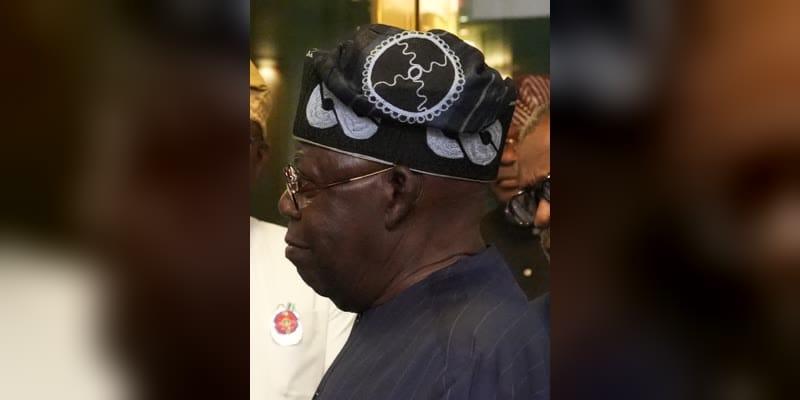
• The APC Presidential Campaign Council said on Sunday, 15 November 2026, that President Bola Tinubu's five-year Strategic Defence Operations Plan is ready, three months after he ordered security chiefs to draft it within 90 days.
• The concrete measures bundled into the announcement, including 28,000 extra soldiers, 50,000 extra police officers and four new army divisions, were approved earlier, in November 2025 and July 2026, and are not new decisions.
• The plan's full text, its cost, its timetable and any formal presidential approval have not been published, and the main claims, such as 15,000 terrorists and bandits killed, come from a campaign statement, not from an independent count.
A trader in Makurdi who closes her shop before dark, a parent in Ilorin who now walks the children to school, a farmer in Niger State who skipped a planting season: for millions of Nigerians, a "defence plan" is only worth what it changes on the road home. That is why a new five-year plan for the military got so much attention this week.
The announcement did not come from the State House. It came from the president's re-election campaign. In a statement on Sunday, Dele Alake, spokesperson for the APC Presidential Campaign Council, said the plan was ready and described it as a long-term framework for aligning defence priorities, operational requirements, capability development and spending, according to BusinessDay's report on the campaign statement. He linked it to Tinubu's plans to tackle terrorism, banditry and kidnapping if he is re-elected in 2027.
The plan began as a 90-day order in August
The idea is not new to this week. On 19 August 2026, at a Federal Executive Council meeting, Tinubu directed the preparation of a National Threat Assessment and a rolling five-year Strategic Defence Operations Plan, according to the State House release signed by presidential adviser Bayo Onanuga. The work was given to a committee coordinated by Major General Adeyinka Famadewa, the president's Special Adviser on Homeland Security, with members including National Security Adviser Nuhu Ribadu, Defence Minister General Christopher Musa, the Chief of Defence Staff, the service chiefs and the heads of the DSS and the National Intelligence Agency.
The committee was told to submit the finished documents "for his consideration and approval within 90 days". Counted from 19 August, that window closed around 17 November. Counted from 26 August, when the Secretary to the Government of the Federation inaugurated the committee, it runs to around 24 November. Either way, the campaign's announcement came close to the deadline.
According to the August release, the threat assessment is meant to rank Nigeria's main security threats and set objectives for each. The operations plan is then supposed to spell out the forces needed in each theatre, the gaps in equipment and support, and an implementation timetable. The release also said that, once approved, the plan would become the basis for a multi-year defence spending and procurement plan.
Ready is not the same as approved
This is where the plan and its implementation need to be kept apart. The campaign statement, as reported by Vanguard and BusinessDay, describes the plan as ready. Neither report says when, or whether, Tinubu formally approved it, and TheRadar could not find a State House release confirming approval as of Wednesday.
The plan's text has not been published. No budget figure, funding source or start date was given. The statement says the plan will cut waste and "optimise available resources", but the August release makes clear that the actual spending and procurement plan is a separate step that comes after approval. In other words, the five-year plan is a framework for deciding what to buy and where to deploy. It is not, on its own, money released for new equipment.
The campaign also made claims about results: more than 15,000 terrorists and bandits killed in the last three years and more than 130,000 Boko Haram fighters and dependants who surrendered through Operation Safe Corridor. These figures come from the campaign council and have not been independently verified.
The recruitment numbers were approved months ago
The parts of the announcement that most affect ordinary Nigerians are not new. The 50,000 police figure dates to November 2025, when Tinubu declared a nationwide security emergency and authorised the police to recruit 20,000 more officers, raising the target to 50,000, and to use NYSC camps as training depots, as Voice of Nigeria reported at the time. The 28,000 extra soldiers were approved on 23 July 2026, alongside the expansion of the army from eight to 12 divisions.
Those four new divisions are based in Makurdi (Benue), Ilorin (Kwara), Jalingo (Taraba) and Benin City (Edo). The Presidency said in July that the first phase would be completed by September 2026 and the second by December 2026. Sunday's statement did not say whether either deadline has been met.
The campaign did add some detail about training capacity. It said two new army depots, in Osogbo, Osun State, and Amasiri-Edda, Ebonyi State, can each train 6,000 recruits at a time, and that 5,210 recruits are currently in training in Osogbo. It also said a 700-unit barracks is being built in Ikere-Ekiti, Ekiti State. These are the campaign's figures; TheRadar has not seen independent confirmation of the numbers in training.
Jobs in uniform, and no word on state police
For young Nigerians, the clearest consequence is jobs in uniform. The army and police intakes are real approvals, even though no timetable for filling all the places has been published. Sunday's statement did not announce any new application window, so a link claiming to offer one off the back of this plan deserves suspicion until the army or police confirm it on their own channels.
For people in Benue, Kwara, Taraba and Edo, the new divisions are meant to put command closer to where attacks happen. Whether that shortens response times is something residents, not press statements, will be best placed to judge.
The campaign statement did not mention state police, and nothing in the reports on the plan addresses who controls policing in the states.
The next thing to watch is whether the State House formally confirms approval of the plan and publishes at least a summary, and whether the separate multi-year defence spending plan reaches the National Assembly with real figures attached. Until then, the five-year plan is a promise of better coordination, made in the middle of a campaign, resting on recruitment decisions that were already on the books.
Also read: 12 divisions, 28,000 recruits: Everything you need to know about Nigeria's army expansion
Also read: The job link is not a job. How to spot a fake government recruitment page before it gets your money
Has anything changed about security on your daily route this year? Tell us in the comments.
