
• Continuous Voter Registration for the 2027 general elections closed on Sunday, 26 July 2026, and INEC has described the third phase as the "final" one, with no new registration window announced before the polls.
• INEC says Permanent Voter Cards from the first two phases and transfers are being handed out at local government offices now, and that distribution moves to registration areas, or wards, nationwide from 1 December 2026.
• What is not yet settled is how many cards for the roughly 2.97 million third-phase registrants, which INEC says are printed abroad, will reach voters before the final register is published on 15 December and the presidential election holds on 16 January 2027.
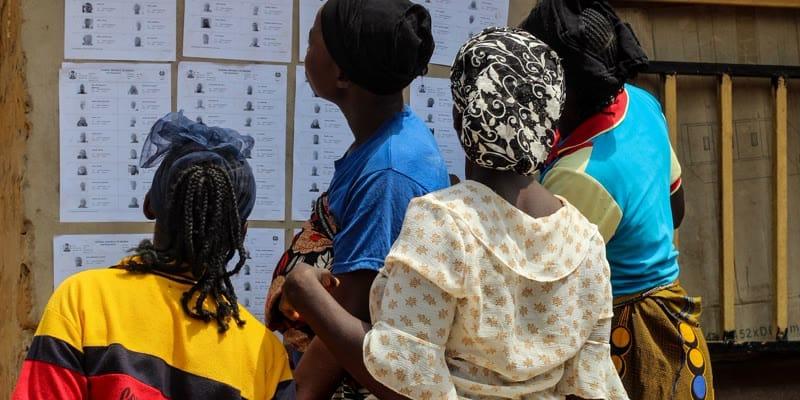
On a weekday morning in a local government office somewhere in Nigeria, a queue forms at a table where INEC staff call out names from printed lists. Some people in the line registered in early 2026 and are collecting a card for the first time. Others have come to ask whether their card has arrived at all.
That is the stage the 2027 election cycle has reached. Registration is over, and the work now is cleaning the register and getting cards into hands. INEC Chairman Professor Joash Amupitan set out the latest position at a press conference in Abuja, reported by Vanguard in its account of the register clean-up, and the election dates remain as listed on INEC's own election calendar.
The registration window has already shut
INEC's Continuous Voter Registration (CVR) ran in three phases from 2025 into 2026. The commission first set 10 July 2026 as the closing date for the last phase, then extended it by about two weeks after appeals from parties and civil society groups. According to Vanguard, the exercise ended at the close of Phase III on Sunday, 26 July 2026.
The process, as INEC ran it, had two routes. Applicants could start online on the commission's portal, cvr.inecnigeria.org, and then complete biometric capture at a physical centre, or they could do everything at a centre. Vanguard, citing INEC's own infographic at the close, reported that 2,697,863 people in the final phase completed registration at physical centres and 1,170,134 online.
At an editors' workshop on 5 October, Amupitan said the three phases had produced 10,772,421 new registrations pending biometric checks, and that the national register now stood at "over 103 million", as Legit.ng and Vanguard both reported. INEC has not announced any further registration period before January, and its chairman has referred to the third phase as the final one.
1.6 million records are gone, and 54 officials are under scrutiny
The preliminary register was displayed at wards from 9 to 15 October for claims and objections. At the Abuja briefing that followed, Amupitan said 1,609,553 records had been removed. He gave the breakdown as 1,608,660 confirmed invalid registrations and 873 verified records of deceased voters. Leadership's report of the same briefing carries the same figures, although the two components add up to 20 fewer than the stated total, a gap INEC has not explained.
The commission said its Automated Biometric Identification System had flagged unusual registration patterns, substituted photographs and multiple registrations. It said 54 staff in 10 states allegedly bypassed standard procedures, including misusing special provisions meant for vulnerable citizens such as persons with disabilities. INEC says disciplinary action and possible prosecution have been initiated. None of those officials has been named, and no court has ruled on the allegations.
Amupitan described the response as "evidence-led investigation, completed corrective action and stronger preventive controls." INEC also said duplicates remain in legacy data from 2011 to 2023, and that its board has directed that flagged entries from those cycles be removed after verification. Critics have called for an independent audit of the register, and that debate is not over.
Where the cards are, and where they are not
According to Leadership's report on the delay in third-phase cards, Amupitan said "the distribution of Phases 1 and 2 of the PVC and transferred PVCs is ongoing at the various LGAs in Nigeria." He said some third-phase cards were being delivered and would go to the states the following week, and asked Phase III registrants to be patient because the cards are produced outside the country. From 1 December 2026, he said, distribution will go back to the registration areas all over Nigeria.
State offices are already reporting their own numbers. In Akwa Ibom, INEC said collection runs from 9am to 3pm daily at its offices in the 31 local government areas, and that proxy collection is not allowed. In Enugu, the Resident Electoral Commissioner said 78,112 new cards had arrived for the 17 council areas. Daily Trust reported that more than 100,000 cards remain uncollected in Plateau, many of them dating from 2023.
The national picture is less clear. Vanguard's survey of state offices in early November estimated that more than 14 million eligible voters had yet to collect their cards. INEC has not published a national collection figure, and offices in Borno, Bauchi, Kebbi and Delta declined to release statistics when asked.
The calendar is now tight
The Electoral Act 2026 replaced the 2022 law in February, and INEC moved the polls forward as a result. Its calendar lists the presidential and National Assembly elections for Saturday, 16 January 2027, and governorship and State House of Assembly elections for Saturday, 6 February 2027. A Federal High Court in Abuja later struck down some deadlines in INEC's revised timetable in a suit by the Youth Party, but the election dates on the commission's calendar have not changed.
That leaves about seven weeks between the switch to ward-level distribution on 1 December and the presidential vote. INEC says the final register will be published on 15 December. Before then, on 28 November, it plans a nationwide mock accreditation and voting exercise to test its BVAS machines, which Amupitan announced at Chatham House in London on 12 November. INEC says it has cut the number of voters per BVAS device from 1,250 to 850.
INEC also maintains that voters must be physically present and pass fingerprint or facial accreditation on the BVAS to vote. A card alone is not a vote, but under INEC's rules there is no vote without one.
The next markers are fixed: the mock exercise on 28 November, the move to wards on 1 December, and the final register on 15 December. The open question is whether the third-phase cards arrive and get collected in time, and whether INEC publishes national collection figures that let the public judge how many registered Nigerians will actually be able to vote on 16 January.
Also read: INEC adjusts 2027 general election dates, releases full revised timetable
Also read: INEC reopens voter registration nationwide on May 11, sets July 10 deadline
Have you collected your PVC yet, or are you still waiting for a third-phase card? Tell us in the comments.
