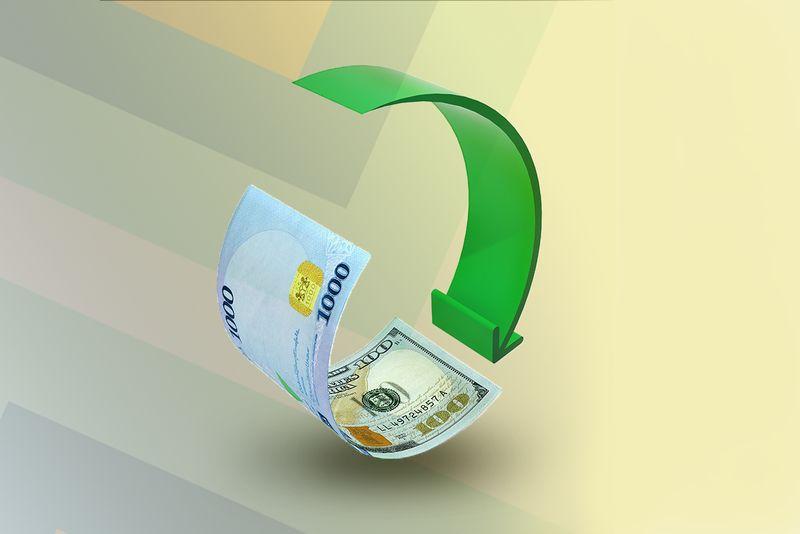
- The gap between the official and parallel market exchange rates is creating new opportunities for traders to profit from small price differences
- Many Nigerians are making money from exchange-rate spreads through legal business activities such as arbitrage, freelance payments, and international commerce
- While the strategy can be profitable, sudden policy changes and market volatility can wipe out gains just as quickly
While many people complain every time the dollar climbs, another group quietly watches every tiny movement in the exchange rate because that's where their money is.
The secret isn't finding a cheaper dollar forever. It's spotting the gap before everyone else does.
Why the N30 difference matters
If the dollar sells for around N1,370 in one market and close to N1,400 somewhere else, that difference is known as the spread. To most people, N30 looks insignificant.
To traders moving thousands of dollars, or businesses making frequent international payments, that spread can translate into meaningful profits.
And that's why exchange-rate watchers refresh currency pages almost as often as football fans refresh transfer news.
The real business is timing
Successful traders aren't simply buying dollars because they expect the price to rise. They're looking for moments when different markets temporarily price the dollar differently.
If they can legally buy at one rate and sell or use those dollars where the value is higher, the difference becomes their margin.
Miss the timing by a few hours, and that opportunity may disappear.
People benefiting from the spread
This isn't only about professional forex traders.
Several groups can benefit from exchange-rate movements.
1. Freelancers
A graphic designer paid in dollars may receive payment when rates are lower but wait until conversion rates improve before exchanging funds 2. Importers
Businesses importing goods constantly monitor exchange rates because a small difference can significantly affect overall costs on large orders.
Saving even a few naira per dollar across thousands of dollars adds up quickly.
3. Exporters
Companies earning foreign currency may also benefit by converting proceeds when market conditions become more favourable, subject to applicable regulations.
4. Travel and Education Consultants
Businesses helping clients pay overseas tuition or travel expenses often monitor exchange movements carefully to secure better pricing for customers and protect their own margins.
Rise of the "dollar watchers"
A growing number of Nigerians now begin their mornings by checking exchange rates before checking Instagram.
Because one announcement from regulators or a shift in market demand can move prices within hours.
That's enough to change buying decisions for businesses and individuals alike.
Exchange-rate spreads don't guarantee profit because markets move fast.
A trader expecting to make N30 per dollar could suddenly face a much smaller spread, or even a loss, if prices shift before the transaction is completed.
That's why experienced participants often focus on risk management just as much as potential returns.
What could change everything?
Government policies, Central bank actions, Foreign exchange liquidity, global oil prices, and international investor confidence.
Any one of these can narrow or widen the spread surprisingly quickly.
That's why today's winning strategy might not work tomorrow.
What everyday Nigerians can learn
You don't need to become a currency trader to understand what's happening.
Watching exchange-rate movements can help you decide when to:
- Pay international school fees.
- Subscribe to foreign digital services.
- Buy gadgets from overseas.
- Convert freelance earnings.
- Budget for travel.
Better timing won't always save huge amounts, but over time, small differences can add up.
The N1,370–N1,400 exchange-rate gap is more than just another number on financial news.
For some Nigerians, it's a business opportunity, and for others, it's a reminder that every movement in the naira affects real money, real businesses, and real decisions.
The biggest lesson is that in today's Nigeria, understanding how the exchange rate works can be almost as valuable as earning the dollars themselves.
Surviving the N1,400/dollar rate: 11 ways to protect your naira in 2026
Earlier, TheRadar compiled 11 practical ways to reduce the impact of currency depreciation without taking unnecessary risks.
As the naira battles an exchange rate of N1,400/$, Nigerians are increasingly looking beyond traditional savings to preserve the value of their money
Protecting your wealth isn't about predicting the exchange rate, it's about building habits that help your money retain value regardless of where the dollar goes next.