
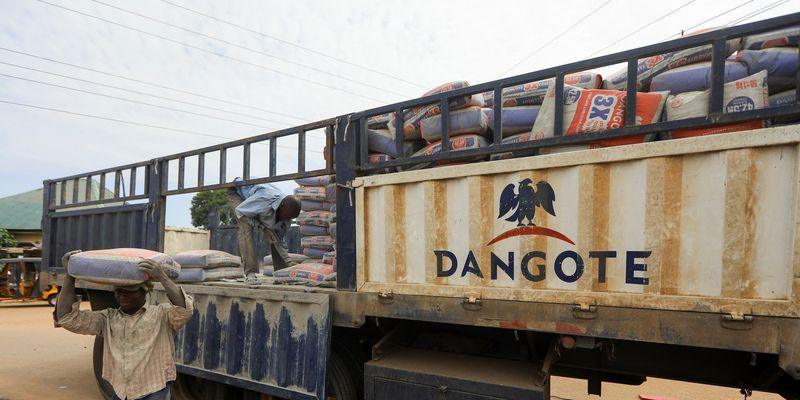
• The FCCPC says preliminary findings give it grounds to keep investigating possible price manipulation in Nigeria’s cement market. It has not made a final finding of wrongdoing.
• The regulator says a 50kg bag that sold for ₦9,300–₦9,700 in January was selling for as much as ₦15,000 in some places by July.
• Key cement-sector players have been summoned to provide records on pricing, production, exports and commercial relationships.
A three-month FCCPC study has put a simple question behind Nigeria’s expensive cement bags: with more local capacity than local demand, why is a bag still getting harder to buy?
By July, a 50kg bag of cement was reportedly selling for ₦13,000 to ₦15,000 in parts of Nigeria. For somebody trying to pour a foundation, finish a room or price a small contract, that is not a number on a policy paper. It is the figure that can pause a building site before the next layer of blocks goes up.
Now the Federal Competition and Consumer Protection Commission says its preliminary investigation has found enough to keep asking harder questions about how the cement market works. The agency is not saying it has proved a crime. It says the evidence so far suggests possible price manipulation and justifies a full continuing investigation.
That distinction matters. So does the question underneath it: why has a locally produced building material become this difficult to afford?
The price moved faster than the building plans
The FCCPC says a 50kg bag of cement reportedly sold for between ₦9,300 and ₦9,700 in January. By the middle of the year, the reported range was ₦10,500 to ₦13,000. By July, it had reached ₦13,000 to ₦15,000 in some parts of the country.
Cement is one of those products whose price travels. It appears first in a block maker’s estimate, then in a landlord’s renovation bill, then in the price of a new flat, a school project or a road contract. That is why an increase can feel larger than one bag: it works its way through labour, materials and every plan waiting on concrete.
TheRadar made a similar point when inflation eased but everyday bills did not immediately follow in its report, “Inflation fell again in Nigeria. Why the food shop may not feel cheaper yet”. A softer headline number does not automatically undo the higher price a person meets at the point of purchase. Cement is now another sharp version of that story.
The capacity question
The FCCPC’s concern is not simply that cement is costly. Its concern is the gap between the price and the market Nigeria appears to have on paper.
The Commission estimates that Nigeria has more than 60 to 65 million metric tonnes of installed cement-production capacity each year, against domestic consumption of about 25 to 30 million tonnes. It also says Nigeria exports cement to neighbouring markets.
In a market with that much spare capacity, the regulator says, consumers would ordinarily expect competition to put some downward pressure on local prices. Its three-month study compared Nigeria with Kenya, Tanzania, South Africa, Egypt, Morocco, Algeria and Togo, looking at limestone availability, population, production, consumption and retail prices.
The comparison is not a promise that a Nigerian bag should cost exactly what it costs elsewhere. Logistics, currencies and energy bills are different. But it is the reason the FCCPC is looking beyond the usual explanation that every price rise is simply inevitable.
What cement companies say is driving the cost
Industry participants have pointed to real pressures: energy costs, the weaker naira’s effect on imported machinery and spare parts, plus transportation and logistics. Cement plants use heavy equipment and power. A bag still has to travel from a production site to a dealer, a contractor or a building site.
Those explanations are part of the record, not something the FCCPC has dismissed. The Commission says it is testing them against verified information on costs, production, pricing and market conditions.
That is the point where this story becomes more than a debate over whether one bag feels too expensive. The next question is whether the price can be explained by genuine cost and market conditions, or whether the structure of the market is adding pressure that competition should have removed.
The documents the FCCPC wants next
The FCCPC has issued Notices of Commencement of Investigation and Summons to Produce to key players in the sector. It wants information on pricing methods, production and capacity use, exports and relevant commercial relationships.
The agency says it will examine whether there is evidence of coordinated conduct, abuse of market power, restrictions on domestic supply or anti-competitive distribution practices. Those are questions, not conclusions. The investigation is still doing the work of separating a hard operating environment from conduct that competition law does not allow.
That makes the next stage important for more than cement executives. If the market is working as it should, the records should help explain why local prices remain so high. If it is not, the answer will reach far beyond a factory gate.
A bag of cement is a small test of the economy
For anyone building a home in stages, the market can feel far away until the supplier changes the price between one weekend and the next. The FCCPC’s investigation cannot make a bag cheaper by announcement. What it can do is test whether Nigerians are paying the full cost of making and moving cement—or something more.
For now, the price of one bag is becoming a small but unforgiving test of how competition works in the economy.
Also read: Inflation fell again in Nigeria. Why the food shop may not feel cheaper yet
Also read: Clea wants to make it easier for Nigerian importers to pay foreign suppliers
Has the cost of cement changed a building or renovation plan around you? Tell us what one bag costs where you are in the comments.
