
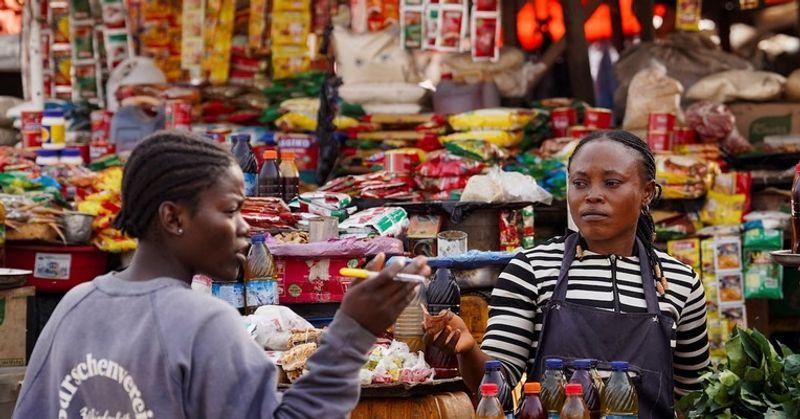
A lower inflation number is supposed to sound like relief. At the food shop, it can sound like a different conversation entirely.
Nigeria's headline inflation rate fell from 15.91% in June to 15.43% in July, according to the National Bureau of Statistics. That is a real improvement. It means prices, on average, were rising more slowly than they were the month before.
It does not mean the bag of rice, pepper, tomatoes, garri or beef in front of you suddenly became cheap.
- Headline inflation fell to 15.43% in July from 15.91% in June, but that measures the speed of price increases, not a general fall in prices.
- Food inflation stood at 20.31% year-on-year, while the monthly food rate was 5.56% in July, up from 3.75% in June.
- The useful question is not whether inflation went down. It is whether the things a household buys often are beginning to cost less, or simply rising more slowly.
The NBS release is good news in one sense. It is not yet a receipt from the market.
Inflation is a speedometer, not a price tag
Think of headline inflation as a speedometer. When the number falls, the car is slowing down. It has not necessarily turned around.
A rate of 15.43% means the general price level was still higher than it was a year earlier. The difference is that the pace of that increase eased from June. On a month-on-month basis, headline inflation was 1.57% in July, down from 1.66% in June.
That is why two statements can be true at the same time. The inflation rate can be lower, and the market bill can still leave you surprised.
Someone who spent more on food last month is not imagining things. The new figure does not say prices returned to where they used to be. It says the average rate at which prices are moving changed.
Food is telling a different story
Food is where the national headline becomes personal.
The NBS put food inflation at 20.31% year-on-year in July. More telling for a weekly market run, food inflation was 5.56% month-on-month, higher than June's 3.75%.
The bureau pointed to items including crayfish, fresh pepper, onions, carrots, rice, water yam, fresh tomatoes, garri, plantain, beef and eggs among the products shaping the change. That is a list that sounds less like a policy paper and more like a kitchen.
This is why a lower headline number does not automatically produce a lighter basket. A household does not buy the average Nigerian price level. It buys actual food, transport, rent, data, medicine and electricity. If the things on that list are still rising quickly, relief stays theoretical.
The market basket is not an average
National data has to cover thousands of goods and services across the country. It is designed to show the broad direction of prices, not to reproduce one family's receipt.
A shopper who cooks often may be hit harder by fresh produce and protein prices than a headline figure suggests. Someone paying school fees, transport or rent may feel a different mix of pressure. Another household may find that some staples eased while the ingredients it buys every week became more expensive.
That is also why people can disagree about whether life is getting cheaper without either person being dishonest. They are buying different baskets.
The better reading of the July release is modest: price pressure may be cooling at the broadest level, but food remains a difficult part of the story.
A lower rate still needs to reach real households
There is a gap between an improvement on a national chart and a change people can use. It is the same gap that shows up whenever a policy promise is announced before delivery is clear. In the startup world, founders are still asking why Nigeria's Startup Act is supposed to help them. At the market, households are asking a simpler version: when does the number reach the price tag?
No single inflation release can answer that. A fall in the rate is worth noting, because it can be an early sign that conditions are stabilising. But it needs to continue, and it needs to show up in the items people buy most often.
That means watching food, transport and energy costs alongside the headline rate. It also means resisting the easy headline that says everything is cheaper because inflation fell. That is not what the data says.
What to look for in the next release
The next NBS update should be read with three questions in mind.
First, does headline inflation keep easing? That would show the broader slowdown is continuing. Second, does monthly food inflation cool from July's 5.56%? That matters more to a household buying fresh food every week. Third, are the same basics—rice, tomatoes, pepper, garri, eggs and beef—still doing most of the damage?
Until those answers improve together, the food shop is likely to remain more convincing than a headline.
Also read: Nigeria's Startup Act is supposed to help founders. Why are they still waiting?
Also read: What to take to GITEX Nigeria if you are looking for a tech job
Has your own weekly food bill changed this month, or does the lower inflation figure feel far away from your market basket? Tell us in the comments.
