• Nigeria Customs' electronic currency declaration form, checked on 27 November 2026, says any traveller carrying foreign currency or items of value worth $10,000 or more, or the equivalent, must declare it, and calls non-declaration a criminal offence that can lead to seizure or prosecution.
• The Customs "Passenger's Concessions" guidance lets a returning passenger bring in personal effects duty-free, with set limits of one litre of spirits, one litre of wine, 200 grammes of tobacco and 284 cubic centimetres of perfume, but nothing meant for sale.
• The $300 duty-free threshold the Customs board approved in September 2025 was reported by Premium Times to cover passenger baggage, yet the official traveller page still shows the older ₦50,000 limit, and TheRadar could not find a Customs notice that reconciles the two.
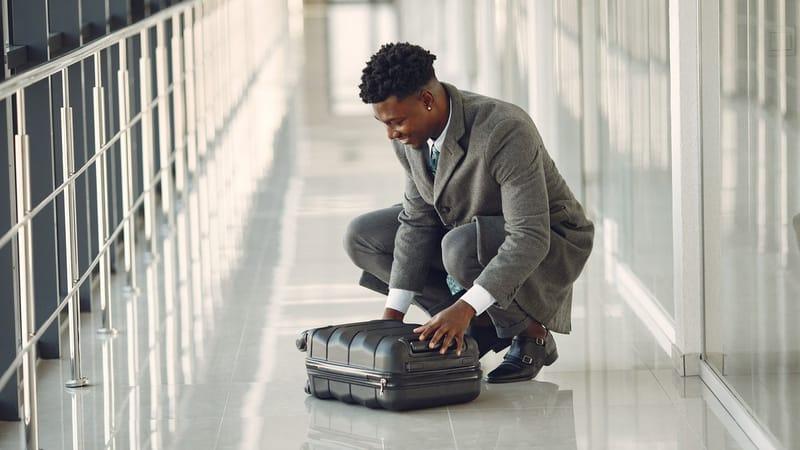
Picture a nurse packing in Birmingham before a Lagos flight: wrapped gifts, a bottle of whisky, perfume, and an envelope of dollars saved for family bills. The envelope is the part that can cause trouble at the airport.
The rules that matter on arrival are set out by the Nigeria Customs Service itself: the Passenger's Concessions guidance on the Customs travellers page, the electronic currency declaration form, and the Revised Import Prohibition List, all checked on 27 November 2026.
The $10,000 line is about cash, not presents
The Customs E-Currency Declaration Form opens with a notice: travellers carrying items of value or foreign currency equivalent to $10,000 or more must declare at the border. It cites the Money Laundering (Prevention and Prohibition) Act 2022, section 12 of the Foreign Exchange (Monitoring and Miscellaneous) Provisions Act 1995 and the Nigeria Customs Service Act 2023.
Customs says the form is free. After filling it in, the traveller must still present themselves to Customs officers for in-person validation, and the declaration stays "pending" until an officer validates it. Declaring is not a tax; the risk comes from not declaring. At the CBN's central rate of ₦1,387.39 to the dollar on 26 November 2026, $10,000 is about ₦13.87 million.
What a returning passenger can bring in without duty
Customs' Passenger's Concessions guidance exempts from import duty the personal and household effects that belong to and travel with a passenger, "to the extent permitted by the Board". It names a specific group that matters to the diaspora: a Nigerian citizen who has lived outside Nigeria for not less than nine months may bring in their personal and household effects, and the guidance lists clothing, children's items, a camera or laptop "provided the quantity is reasonable", and household goods from linen to a television.
The same page sets limits for consumables: one one-litre bottle of spirits, one one-litre bottle of wine, 200 grammes of tobacco in total, and 284 cubic centimetres of perfume. Jewellery must be declared in writing to avoid problems when it is taken out again. The guidance states plainly that baggage does not include a vehicle or any goods intended for sale, barter or exchange, so a suitcase of identical phones for resale is not "personal effects".
₦50,000 on the page, $300 in the news
For unused personal effects and gifts, the Customs page still shows a cap of ₦50,000, excluding jewellery, photographic equipment, electronics and other luxury goods. At the CBN's 26 November rate, that is roughly $36.
In September 2025, a Premium Times report on the Customs board decision said the Nigeria Customs Service Board had approved a $300 duty-free threshold, taking effect on 8 September, covering low-value imports, e-commerce consignments and passenger baggage. A BusinessDay report later that month said each person can claim the exemption once a quarter, up to four times a year, and quoted Customs spokesman Abdullahi Maiwada saying that once a traveller declares, "your record is on the database". TheRadar could not find the $300 traveller rule written into the Customs traveller page itself, so passengers should not assume the officer in the baggage hall will apply one figure rather than the other. At ₦1,387.39 to the dollar, $300 is about ₦416,000.
Some Christmas staples are on the prohibition list
The Revised Import Prohibition List on the Customs website is headed "Trade". It includes live or dead birds including frozen poultry, pork and beef cuts, bird eggs, refined vegetable oil, flavoured or coloured cane or beet sugar in retail packs, tomato paste for retail sale, sweetened or flavoured waters and soft drinks (energy drinks excluded), soaps and detergents in retail packs, and a list of common medicines such as paracetamol, multivitamin and aspirin tablets.
The list does not say how it treats a single packet in a suitcase, and TheRadar could not confirm how officers apply it to small personal quantities.
Green exit, red exit, and the new digital option
At Lagos and Abuja international airports, Customs runs a dual-channel system. The green exit, marked "Nothing to declare", is for passengers carrying nothing dutiable or restricted. The red exit, marked "Goods to declare", is for anyone carrying goods above the concessions or restricted items. Customs' guidance says choosing a channel is itself a declaration, and complaints about duty go to the most senior Customs officer in the baggage hall.
Customs also runs an online advance declaration portal, the Simplified Customs Advance Declaration System, which Nairametrics reported was piloted for inbound passengers at the international wing of Abuja's Nnamdi Azikiwe airport in May 2026. The portal's own home page describes it as a system for clearing e-commerce shipments, and TheRadar could not confirm whether it is now in use at Lagos.
For your own trip, the Customs traveller page is the place to check before you fly, and a licensed customs agent can advise on unusual or high-value items.
The rule with the heaviest consequence is also the simplest: if the cash and valuables you carry reach $10,000, Customs expects the free form and an officer's validation before you leave the hall.
Also read: Buying Black Friday deals from Amazon in Nigeria: card limits, shipping and the $300 Customs rule
Also read: Detty December flights into Lagos: £1,187 median from London, $2,665 from Houston
Has a Customs officer at Lagos or Abuja ever asked you about gifts or cash in your bags, and which limit did they use: ₦50,000 or $300? Tell us in the comments.