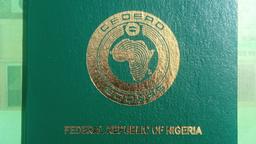
• The Central Bank of Nigeria's Foreign Exchange Manual, 4th Edition, which took effect on 1 June 2026, says a Nigerian living abroad can open a Non-Resident Nigerian Ordinary Account with a valid Nigerian passport, proof of non-resident status such as a visa or work permit, and a BVN through the NRBVN and/or a Tax Identification Number.
• The same manual gives holders of ordinary domiciliary accounts "unfettered and unrestricted access" to their funds, lets them move cash deposits of up to $10,000 a day by telegraphic transfer, and makes Form A optional for remittances from those accounts.
• Individual banks still set their own checklists, so a Nigerian abroad may be asked for notarised ID, recent proof of address and Nigerian referees on top of the CBN list, and TheRadar could not confirm how quickly any bank opens these accounts in practice.
Picture a nurse in Manchester or a software tester in Toronto who wants somewhere in Nigeria to keep part of a salary in pounds or dollars. The first search turns up bank pages with different lists, forum threads with old rules and stories about tellers who say there are no dollars at the counter. The question is what the regulator actually requires.
The answer starts with the Central Bank of Nigeria's Foreign Exchange Manual, 4th Edition, which Nairametrics reported was unveiled in Abuja on 15 May 2026 and took effect on 1 June 2026, replacing the 2018 edition. TheRadar read the manual's sections on domiciliary accounts and on non-resident accounts on 27 November 2026.
Two accounts written for Nigerians abroad
Memorandum 16 of the manual has a section headed "Non-resident account for Nigerians residing in the diaspora". It creates two products. The Non-Resident Nigerian Ordinary Account (NRNOA) is for depositing foreign income such as salaries or business proceeds. It is held in freely convertible foreign currencies, can sit alongside a naira account, and the manual says it is "fully repatriable without restrictions".
The second is the Non-Resident Nigerian Investment Account (NRNIA), meant for buying Nigerian assets such as real estate, stocks and government securities. The manual says foreign currency balances in it, including principal and profits, can be fully repatriated. That matters because a separate part of the same manual says ordinary domiciliary account balances "are not permitted for investment purposes" when buying securities.
The three documents, and what banks add
For both accounts, the manual says any Nigerian citizen living outside Nigeria with documented proof of residence, such as a work permit, student visa or proof of address, is eligible. It lists three items: a valid Nigerian passport, proof of non-resident status such as a visa or work permit, and a Bank Verification Number through the NRBVN and/or a Tax Identification Number.
Banks' own pages go further. Access Bank's diaspora banking FAQ, checked on 27 November 2026, asks for a notarised or sighted copy of a Nigerian passport, a foreign passport with proof of Nigerian origin, or a Nigerian driver's licence; passport photographs; a banker's confirmation, utility bill or bank statement from the last three months; and references, either two Nigerian attestors with current accounts in Nigerian banks or one such attestor plus a letter from a foreign bank. Its domiciliary FAQ lists a $100 minimum opening balance and a 0.5% cash handling charge on withdrawals. Sterling's diaspora page says its Switch app opens tier 3 savings accounts in naira, US dollars, pounds and euros with a Nigerian ID (or, where the customer has no Nigerian ID at all, a notarised foreign passport or driver's licence), a selfie, a signature and a foreign bank statement or notarised utility bill under six months old, with no minimum opening balance.
Where the NRBVN fits
Without a BVN, most of this stops. NIBSS says on its NRBVN page that the Non-Resident BVN lets Nigerians in the diaspora enrol for a BVN remotely, submit ID and proof of address online, and open domiciliary accounts in US dollars, pounds and euros with partner banks, tracking progress on the platform. TheRadar's NRBVN explainer is linked below.
The CBN manual names the NRBVN and the TIN as alternatives ("and or"). TheRadar could not confirm whether every bank accepts a TIN alone without a BVN; readers should check with the bank before applying.
What the rules say about getting money out
Memorandum 20 says withdrawals or payments from domiciliary accounts can be made in foreign banknotes, by mail or telegraphic transfer, or by bank draft. Ordinary account holders have "unfettered and unrestricted access" to their funds, and can send cash deposits of up to $10,000 a day, or its equivalent, by telegraphic transfer, with banks reporting the purpose to the CBN. At the CBN's central rate of ₦1,387.39 to the dollar on 26 November 2026, that is about ₦13.87 million a day. Export proceeds accounts are different: no cash withdrawals are allowed from them.
The manual also says an applicant does not have to disclose the source of funds when opening a domiciliary account or depositing into it, though operations must follow anti-money-laundering rules, and a customer may hold more than one account, at the same or different banks. The ₦500,000 weekly naira cash withdrawal cap for individuals, which Nairametrics reported took effect on 1 January 2026, is a separate rule; a Legit.ng report of 28 September 2026, citing Vanguard, said the CBN's guidance makes clear the naira limits do not cover foreign currency accounts, and that the CBN was investigating banks over complaints of restricted dom account withdrawals. TheRadar could not confirm whether any CBN directive has followed that report.
For your own case, check the CBN manual and your bank's official page, or speak to a regulated financial or tax adviser in the country where you live.
On paper the CBN list is short: a passport, proof that you live abroad, and a BVN or TIN. In practice each bank adds its own checks, fees and timelines. Anyone opening a dom account from abroad gains most by getting the bank's current checklist in writing before paying for notarisation or courier.
Also read: A Nigerian abroad can get a BVN online through the NRBVN: who qualifies, steps and documents Also read: Paid by a client abroad in 2026? What Grey, Raenest, Payoneer and a dom account cost you
Which Nigerian bank opened your dom account from abroad fastest, and what did it ask for? Tell us in the comments.