
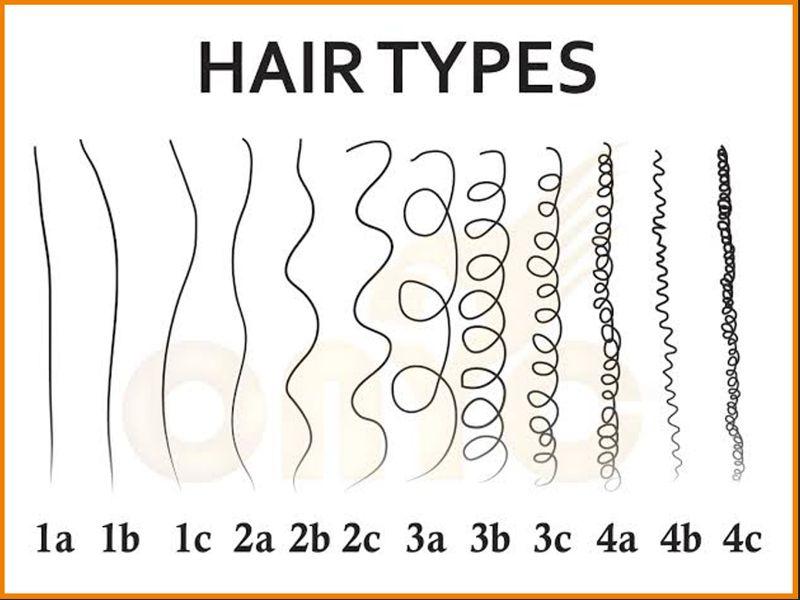
- Knowing your hair type can save you from trying different hair products
- TheRadar has compiled a comprehensive guide on how to know your hair type
- Use your hair type knowledge to choose the right products and styling techniques for healthier and more manageable hair
Understanding your hair type is the first step toward maintaining healthy and manageable hair.
Knowing your specific hair type helps you select the right products, hairstyles, and care routines to keep your hair looking its best.
Hair types are generally categorised based on two key factors: texture and porosity.
TheRadar has compiled a comprehensive guide on how to determine your hair type.
Guide on how to know your hair type
1. Hair texture: Hair texture is the natural pattern of your hair, and it is classified into four types:
Type 1: Straight Hair
Appearance: Straight hair lacks any noticeable curl pattern and tends to lie flat. It is often smooth and shiny because natural oils easily move down the hair shaft from the scalp.
Subtypes:
- 1A: Very straight, fine, and thin.
- 1B: Straight with medium texture and some body.
- 1C: Straight but thick and coarse.
Type 2: Wavy Hair
Appearance: Wavy hair falls between straight and curly, with a soft wave pattern that resembles an "S" shape.
Subtypes:
- 2A: Fine, loose waves that are easy to style.
- 2B: More defined waves with a slightly coarse texture.
- 2C: Thick, coarse waves prone to tangle.
Type 3: Curly Hair
Appearance: Curls are more defined, forming loops or spirals. Curly hair is often bouncier but can be prone to dryness.
Subtypes:
- 3A: Loose, large curls.
- 3B: Tighter, springier curls.
- 3C: Very tight, corkscrew curls that are densely packed.
Type 4: Coily/Kinky Hair
Appearance: Coily or kinky hair has very tight curls or zigzag patterns. It tends to be the most fragile and dry due to its texture.
Subtypes:
- 4A: Soft, defined coils that form an "S" shape.
- 4B: Tighter, less defined curls with a "Z" shape.
- 4C: Very tight coils with minimal definition, often appearing dense and fluffy.
2. Hair porosity: Hair porosity means how well your hair absorbs and retains moisture. You can test your hair porosity with a simple water test:
Drop a clean strand of hair into a glass of water.
- High porosity: If the hair sinks quickly, it means your hair absorbs moisture easily but may lose it quickly. This hair type is often prone to tangle and damage.
- Normal porosity: If the hair floats for a while before sinking, your hair has a good balance of moisture absorption and retention.
- Low porosity: If the hair remains floating on top, it means your hair is resistant to moisture and may take longer to dry.
3. Hair thickness: Hair thickness (also referred to as hair density) measures how much hair you have per square inch of your scalp.
Grab a small section of your hair and examine your scalp in a mirror to check this.
- Thin: If you can see a lot of your scalp, your hair is thin.
- Medium: If you see some of your scalp, but it's mostly covered, your hair density is average.
- Thick: If it's hard to see your scalp, your hair is thick.
4. Hair elasticity: Hair elasticity determines how much your hair can stretch without breaking. It is an essential factor in understanding how well your hair handles styling.
To test: Take a strand of wet hair and gently stretch it.
- High elasticity: Hair stretches and returns to its original length easily without breaking. This indicates healthy hair.
- Low elasticity: Hair stretches and then breaks, signalling that your hair may be fragile and need hydration.
Knowing your hair type helps you tailor your hair care routine, from choosing the right shampoo and conditioner to finding the best styling techniques.
Whether your hair is straight, wavy, curly, or coily, it’s crucial to maintain its health with products and practices suited to your hair's unique needs.
5 tips to know your skin type
Meanwhile, TheRadar earlier reported some tips on five steps to know your skin type and the features of each skin type. It is essential to know your skin type if you want to curate a healthy skincare routine and have flawless skin.
Knowing your skin type will allow you to select the right products for your skincare regimen.
