
• AniWe describes itself as Nigeria’s anime, gaming and pop-culture community, with guilds, events, creator connections and community engagement built into its platform.
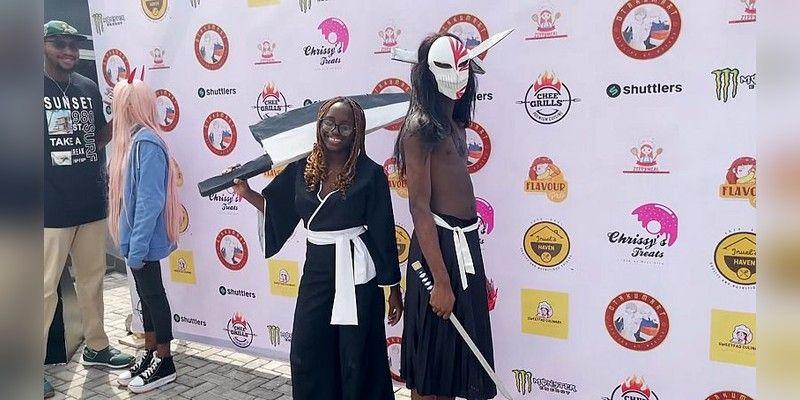
• Organiser material for AniWeCon 2026: Beyond Fury placed the recent 15 August gathering at Paradise Event Arena in Lagos, with anime, gaming, cosplay, art and community activities in the programme.
• The business around fandom is not only ticket sales: it can also create room for costumes, artist tables, merch, game sessions, photography, food, event work and the communities that bring people back.
A cape is not just a cape when someone spent nights sewing it, paid a photographer to catch the final look, learned a character’s pose and turned up early enough to meet the people who would understand the reference without explanation.
For years, that kind of Nigerian fan activity was easy to dismiss as a side hobby: something for people who liked cartoons, games or dressing up on weekends. But the room is becoming easier to see. It has guilds, event pages, independent artists, organisers, gamers, cosplayers and friends who arrive planning to spend a full day around a shared obsession.
The community is no longer hiding in separate corners
AniWe’s official community site calls itself an anime, gaming and pop-culture ecosystem and invites people to join guilds, attend events and connect with creators across Nigeria. That does not prove a national market size. It does show that the community is being organised around more than watching a show alone at home.
Its structure matters because fandom usually becomes visible in layers. First, people find one another online. Then they gather for a screening, a game night or a cosplay shoot. After that, someone needs a venue, a banner, a photographer, a vendor table, a costume repair, a food stand or a way to sell an illustration without carrying it around all day.
None of those things automatically becomes a thriving business. But together, they explain why fandom can be more than a private interest.
A convention is a temporary marketplace
Organiser material for the recent AniWeCon 2026: Beyond Fury put the event at Paradise Event Arena in Lagos on 15 August and highlighted anime, gaming, cosplay, competitions and community. The date has passed, so the useful point is not a ticket plug. It is what a gathering like that asks a scene to do in public.
Cosplayers need materials and time. Artists need prints, portfolios and a table that makes strangers stop. Gamers need a reason to queue, play and return. Organisers need people who can handle programming, equipment, crowd flow and promotion. Small vendors need a sense of what the audience will actually buy rather than what looks good on a mood board.
That is an economy in the ordinary sense: people making, organising, selling and exchanging value around an interest. It does not need a giant national valuation to be real.
The money is often in the work people do not see
When people think about pop culture spending, they usually picture a ticket or a hoodie. The less obvious work is often more revealing. Someone is printing stickers. Someone is making a wig fit. Someone is editing the convention recap. Someone is teaching a first-timer how to enter a cosplay competition. Someone is persuading a parent that a day around anime fans is not a cult meeting.
Those efforts are not all paid, and that is part of the tension. Passion can make communities strong, but it can also make people accept work with no clear value attached. A fandom economy grows more carefully when artists, vendors, creatives and organisers can be honest about what they are offering, what it costs and what they need to keep doing it.
Local taste is the real opportunity
Nigerian fans do not have to copy every convention format from somewhere else. The interesting work is often where a global interest meets local humour, music, fashion, food and storytelling. A cosplay reference can sit beside a Nigerian artist’s original character. A gaming session can become a space where someone sells art, finds collaborators or discovers a small creative business.
That is also why the scene needs room for people who are not experts. The newcomer buying one print, the student trying a costume for the first time, the gamer coming for a tournament and the parent who comes to watch all help decide whether an event feels like a closed club or a community with a future.
Hobby does not mean small
Calling something a hobby should not be an insult. Hobbies are where people practise taste, build skills and find their people. The stronger question is whether the people around the hobby can build reliable ways to meet, create and earn without draining the joy out of it.
Nigeria’s anime, cosplay and gaming scene is not one uniform business. It is many small experiments taking place at once. The next good one may be a convention table, a cosplay maker, a game night or an artist who finally finds the audience they were already drawing for.
Also read: Dream League is Nigeria’s top free game. What that says about how the country plays
Also read: Afrobeats is attracting more outside money. That does not automatically make a deal good
Which part of Nigeria’s fandom scene deserves more support: artists, cosplay makers, gaming spaces, vendors or community organisers? Tell us in the comments.
