
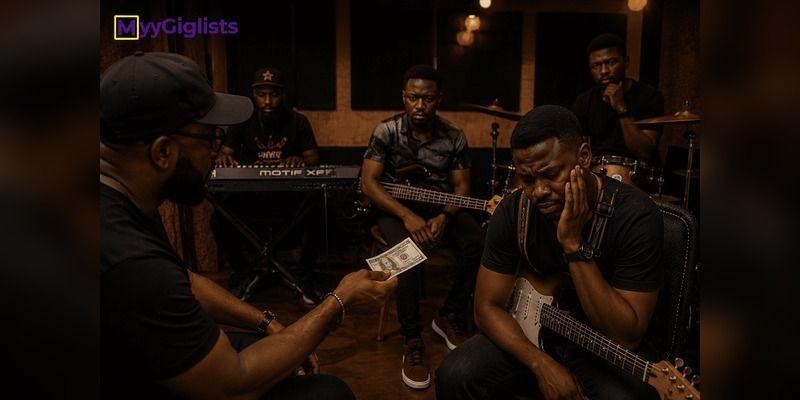
• A successful song can create more than one stream of money, and the person performing it is not automatically the only person entitled to every naira.
• Songwriting, publishing, the sound recording, production and featured performances can involve different rights and different agreements.
• Clear credits, accurate metadata and written splits are not boring admin: they are the record that helps the right people be found when money arrives.
A song can change a person’s life before the people who made it have even agreed what their names should look like on the credits.
There is the artist whose face is on the cover. There is the producer who made the beat at 2 a.m. There is the songwriter who fixed the hook. There is the friend whose vocal sits in the background and the manager who says the paperwork can wait until after release. Then the song catches fire, and every conversation becomes more expensive.
That is why a recent Lagos music-industry workshop brought artists, producers, labels, distributors, policymakers and copyright specialists into the same room to discuss ownership, royalty systems, licensing, contracts and monetisation. The U.S. Consulate General’s account of the workshop describes more than 120 participants examining the commercial foundations behind Nigeria’s global music moment.
One song can carry more than one right
The easiest way to understand the money is to separate the song from the recording.
The song, often called the composition, includes lyrics and melody. The people who wrote those elements may be songwriters or composers. Their agreed shares can matter when the work is published, performed, licensed or otherwise used.
The recording, often called the master, is the particular audio file listeners stream. Who owns or controls that can depend on the deal between an artist, producer, label or other partners. A producer may have a contractual share, a fee, a credit or a mix of all three. A featured artist may have their own agreed arrangement. The answer is not “who was in the studio the longest”; it is what the creative contribution and the signed deal say.
That is why two people can honestly say “I worked on that song” while being entitled to different things. Credit and payment are related, but they are not the same conversation.
Metadata is where a lot of money gets lost
When a track is uploaded to a distributor or a digital service, the song travels with data: title, artist name, writers, contributors, identifiers and ownership information. That data helps a platform, publisher, label or collecting system know what it is dealing with.
If the names are missing, misspelled or disputed, fixing them after a record starts moving can be painfully slow. A producer may be known in the room by a nickname, a writer may use a different legal name, and somebody’s phone note may be the only evidence of an early split conversation. None of that makes it easy for a rights organisation to find the right person later.
The Nigerian Copyright Commission says its Copyright e-Registration System is available for registration and that the presumptions under section 43 are available only to registered works. It also regulates collective management organisations, which help manage rights and distribute royalties to copyright owners. Registration is not a substitute for a clear contract, but it is part of building a record around original work.
Do the awkward conversation before release day
The useful habit is simple: agree the basics while the beat is still fresh and everyone can remember what happened. Who wrote what? Is a person being paid a one-off fee, receiving a share, or both? Who controls the master? Who is responsible for submitting the correct credits and data?
Put the answers in writing. It does not need to begin as a thirty-page document full of legal theatre. A clear written split sheet or deal memo can at least record the contributors, roles, percentages and the plan for formal agreements. When the stakes are significant or the terms are unclear, get a qualified music or intellectual-property lawyer to review the deal before signing.
That is not distrust. It is respect for the work. The Nigerian music business has grown too large for “we will settle it later” to be a strategy.
A hit may look like one person’s victory on a playlist cover. Behind it can be a chain of writers, musicians, producers and partners whose names need to be correct before the celebration becomes an argument.
Also read: Beyond streaming: How Nigerian musicians build income through publishing, licensing and live tours
Also read: Why Nigerian creatives are spending their workweek chasing payments instead of making work
Which credit should every emerging artist, producer or writer agree before a song goes out? Tell us in the comments.
