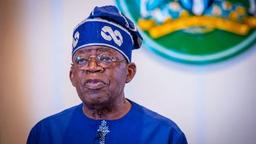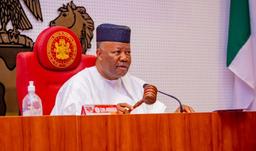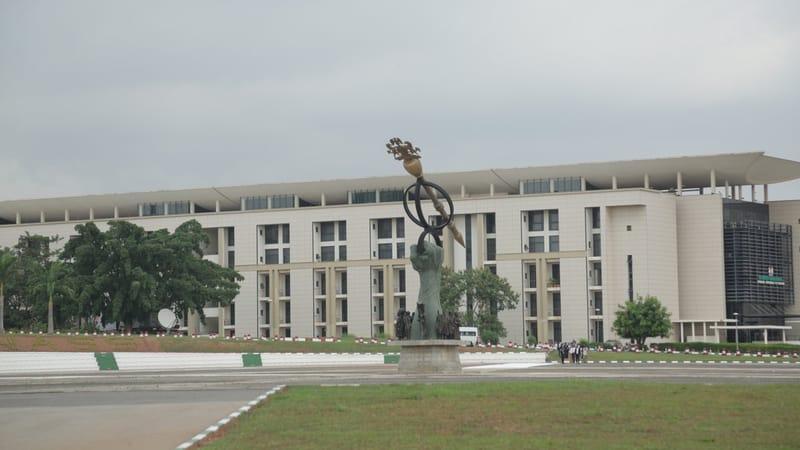
• The Senate on Tuesday, 24 November 2026, approved by voice vote President Bola Tinubu's 2026-2027 external borrowing plan of $20.517 billion and €1.045 billion, the same day the House of Representatives passed it.
• Senators also approved a separate N10.79 trillion (about $7.707 billion) foreign loan facility to part-finance the 2026 budget deficit, and Senate President Godswill Akpabio said it is part of the bigger approval, not money on top of it.
• The approval lets the government go to lenders and negotiate; no lender, interest rate or repayment period has been published, and the Senate's debt committee said the money will be drawn in stages over 2026 and 2027, not at once.
Picture a trader in Onitsha scrolling past "Senate approves $20.5bn loan" on a news alert and wondering whether that is money already sitting in an account somewhere. Or a civil servant in Abuja doing the maths and adding the $20.5 billion to the N10.79 trillion. Neither picture is quite right, and the difference matters for anyone trying to follow Nigeria's debt.
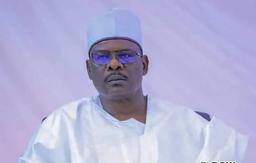
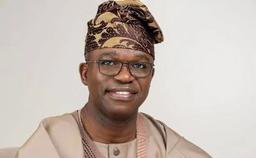
On Tuesday the Senate adopted the report of its Committee on Local and Foreign Debts, presented by Senator Adetokunbo Abiru (Lagos East), and approved two borrowing requests from the President, according to Leadership's report on the Senate approval. BusinessDay reported that the House of Representatives approved the same $20.52 billion and €1.04 billion plan at its own plenary that day.
Two approvals that are meant to be read as one
The first approval is a "rolling" plan for 2026 and 2027: $20.517 billion and €1.045 billion. Vanguard put that at about N29.6 trillion combined. The second is an external facility of N10.79 trillion, which Leadership put at about $7.707 billion, to part-finance the 2026 budget deficit.
Akpabio told senators: "This approval that is being granted under two is part of the approval granted in one. It is not a new addition." Leadership reported that he said the two were split so the public would not add them together as separate loans. Abiru said the N10.79 trillion was already provided for in the 2026 budget and was not an extra borrowing request.
Approval is not money in the account
Abiru told the Senate the facilities give the federal government, participating state governments and other eligible agencies a framework to approach lenders and negotiate terms. He said the committee recommended drawing the money progressively over 2026 and 2027, tied to projects that are ready, according to Leadership.
The channels allowed include concessional and commercial loans from multilateral and bilateral lenders, the IMF, bridging finance, loan syndication and Eurobonds. No specific lender has been named. Deputy Senate President Barau Jibrin said the loan would not be drawn down immediately, and put Nigeria's debt-to-GDP ratio at about 35%, possibly rising to about 42%, which he said is below a 70% ECOWAS threshold. Those are his figures; TheRadar could not confirm them from an official document today.
A request that was said to be replaced, then passed
Vanguard reported that the first request reached the Senate on 2 October 2026, and ThisDay reported its reading in the chamber in late October, saying Tinubu's letter listed infrastructure, agriculture, health, education, water supply and security, but gave no project-by-project breakdown or loan terms. Former Vice President Atiku Abubakar, in a statement issued by the ADC Presidential Campaign Council and reported by ThisDay, urged lawmakers to hold back approval until full details were published, saying: "No public money should be borrowed in the dark."
In a letter dated 26 October and read in the Senate in early November, Tinubu sent a narrower request for $7.7 billion (N10.79 trillion at N1,409 to the dollar), and Leadership reported Akpabio saying it "effectively supersedes" the earlier request, which he put at $20.3 billion. On 24 November the Senate approved both anyway. Senator Olamilekan Adeola cited the Lagos-Calabar Coastal Highway, the Sokoto-Badagry Superhighway and the Kaduna-Kano railway as examples of projects receiving borrowed funds, according to Vanguard.
Where this sits in the budget and the debt
In the same week, Tinubu asked the Senate to cut the 2026 budget. Vanguard's report on the revised 2026 budget put aggregate spending at N65.176 trillion (the same report also gives N66.1 trillion elsewhere), with the deficit unchanged at N31.4 trillion, or 5.6% of GDP. Vanguard put new borrowing at N29.2 trillion: N18.4 trillion from the domestic market and N10.7 trillion from abroad. That revised budget is still a proposal before the Senate's Appropriations Committee; the Senate adjourned to 1 December.
Nigeria's total public debt stood at N166.79 trillion ($120.93 billion) on 30 June 2026, up from N159.35 trillion at the end of March, according to Nairametrics' report on the Debt Management Office figures, which used the CBN rate of N1,379.1842 to the dollar. Any money raised under this week's approval would come on top of that, but only as each loan is signed and drawn.
The lawmakers attached conditions. The Debt Management Office must send the National Assembly regular reports on each deal closed, including the amount, source, interest rate, repayment period and fees, and the Senate committee is to monitor drawdowns and how the money is spent. Those reports, and the DMO's quarterly debt releases on dmo.gov.ng, are the official place to see what is actually borrowed.
For now, what Nigerians have is permission, not a loan. The questions that decide the cost (who lends, at what rate, for how long, and for which projects) are still to be answered in negotiations the public has not yet seen. The first DMO report to the National Assembly will be the moment the $20.5 billion becomes real numbers.
Also read: CBN holds its rate at 23% and leaves bank rules alone. What it means for loans, savings and naira
Also read: What Nigerian savings earn now: T-bills, apps and banks against 14.06% inflation
Should the National Assembly have demanded a project-by-project list before approving the $20.5bn plan? Tell us in the comments.