
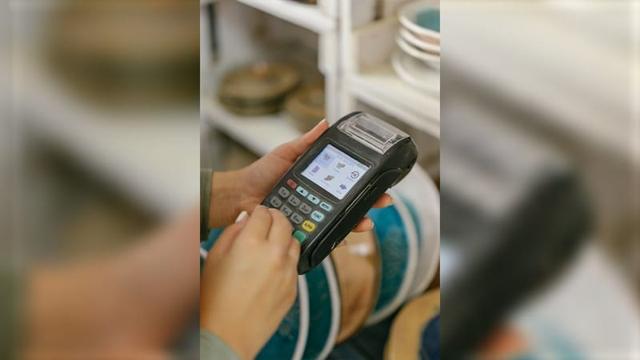
• Moniepoint Microfinance Bank commissioned its North Central regional headquarters in Abuja on Friday 20 November 2026, a place where customers can meet relationship managers and get help in person, according to reports of the event.
• A Central Bank of Nigeria director said in January that Moniepoint, OPay, Kuda and others had been upgraded to national licences, and reports of his remarks said national fintechs and microfinance banks must keep a physical presence in key locations, because many of their customers need somewhere to report a problem.
• None of the reports we opened gives a deadline for that physical-presence requirement, the 31 December 2026 date in circulation belongs to a different CBN rule on market share, and no report says whether the Abuja office handles cash or gives its street address.
A POS agent in Nyanya has a customer standing at her kiosk. The transfer left the customer's account twenty minutes ago and has not landed. The agent opens the app, sends a chat message, and waits, because the app and the phone line are the only doors she knows to knock on.
For agents and customers in and around Abuja, there is now a building as well. Moniepoint Microfinance Bank opened its North Central regional headquarters in the capital on Friday 20 November, with the bank's managing director, Babatunde Olofin, speaking at the commissioning, according to a Legit.ng report on the opening. Legit.ng and DNE Africa both report that Vice-President Kashim Shettima was represented at the event by Taiwo Oyedele.
What Moniepoint opened, and what it did not
The reports describe a regional headquarters and customer hub; none describes a banking hall or tellers. Ahead of the event, BusinessDay's preview of the Abuja office said it would offer face-to-face guidance on business banking, credit and tools such as Moniebook, alongside personal savings accounts, debit cards and payment products. Olofin was quoted as saying the office "brings our support teams even closer to merchants".
After the opening, the reports added that customers can meet relationship managers there, get help with problems that are hard to settle through digital channels, and be attended to in local languages. DNE Africa reported Olofin as saying the bank was not copying the branch-heavy model of commercial banks, and Legit.ng said it plans to keep its hubs small to contain costs.
Three things are missing from every report we opened. None gives a street address. None says whether a customer can pay in or withdraw cash there. And although Legit.ng's headline calls it a physical bank branch and its photo caption a first physical office, the same report says the bank already runs offices and service centres in Borno, Bauchi, Kaduna, Kano and Sokoto. Olofin said the Abuja model will be repeated in other regions, without naming the next one or a date.
What the CBN asked for, and of whom
The reported requirement traces to January. Yemi Solaja, director of the CBN's Other Financial Institutions Supervision Department, told a bankers' conference in Lagos that institutions such as Moniepoint MFB, OPay and Kuda had been upgraded to national licences because their activities were already "all over the country". Premium Times' report on the licence upgrades said the regulator wants nationally licensed fintechs and microfinance banks to keep a physical presence in key locations, and that national microfinance banks must now hold ₦5 billion in capital, up from ₦2 billion.
Solaja's reasoning was about ordinary customers. "Most of their customers are informal people. They need to know where to report to when there is a problem," he said, as quoted by Nairametrics and Premium Times.
Two boundaries matter here. The first is that those January reports summarise remarks at a conference; none of them quotes a circular saying how many offices a national microfinance bank must open, or where. The second is the date. The 31 December 2026 deadline that has been attached to this story comes from the CBN's June circular on market-share caps, which TheRadar covered at the time. No report of the January remarks or of the Abuja opening puts a deadline on physical locations.
What changes at the kiosk
For most Moniepoint users, very little changes this week. Olofin said the bank has 21 million customers, and Legit.ng reports that its POS network reaches all 774 local government areas. One office in Abuja, plus service centres in five northern states, cannot stand in for that network. An agent in Aba or Abeokuta with a stuck transaction still starts where she started last week: the app, the support line and the complaint reference she is given.
What the office adds is a place to escalate, for those close enough to reach it. A merchant whose account is restricted, or whose terminal dispute has run for weeks on chat, can now sit across a desk from a member of staff. That is the gap Solaja described in January. Whether the Abuja staff can actually reverse a transaction or lift a restriction on the spot, rather than log the case for another team, is not stated in any report.
Anyone thinking of starting a POS business may want to ask that question before choosing a provider. Since April, agents work with one principal, so that provider's complaint route is the only one an agent has.
The other app banks
Kuda is the only other one of the four with a stated plan on record. After its own national licence, managing director Musty Mustapha said the licence "gives us the flexibility to create more physical touchpoints", and the bank said it would open more experience centres, according to an Innovation Village report in January. Its old unit licence limited it to a single location. Kuda said each new site needs regulatory approval. It has since put about 7.5% of its roles at risk of redundancy, and we found no update on how many centres have opened.
For OPay and PalmPay, we found no announcement this year of a new customer office tied to the reported requirement, and our search may be incomplete. Solaja named Moniepoint, OPay, Kuda "and others"; PalmPay appears in some outlets' lists of upgraded firms, such as DNE Africa's, not in his quoted remarks. The absence of an announcement does not show non-compliance, and neither company has said anything on the point that we could find.
The next things to watch are concrete. Moniepoint has promised more regional hubs but given no list. The CBN has not published, in anything we could open, a count of locations it expects or a date by which it expects them. And a bill that would let the CBN supervise big fintechs more like banks has passed the House of Representatives but is not yet law. Until one of those moves, the Abuja office is one door in one city.
Also read: Reps pass bill to let CBN supervise big fintechs like banks. It is not law yet
Also read: Starting a POS business in 2026: terminal costs, CBN limits and what agents charge
Would a physical office near you change which app you trust with your money, or is fast chat support enough? Tell us in the comments.