
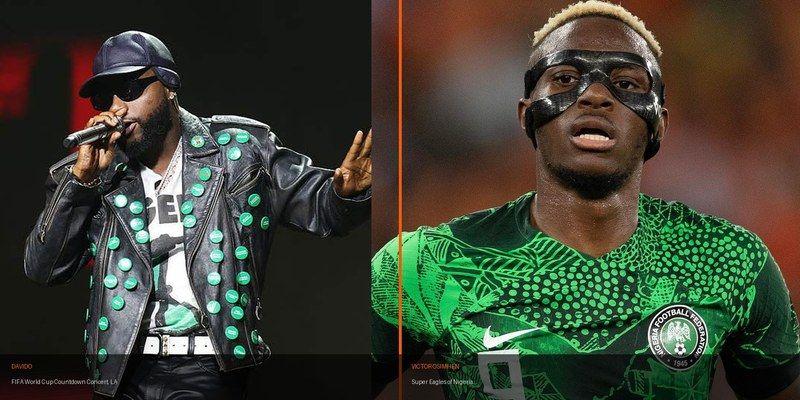
- Despite the Super Eagles failing to qualify, Nigerian culture is dominating the 2026 World Cup through music, with Burna Boy performing the official anthem alongside Shakira
- Davido cemented his status in football history by headlining the FIFA World Cup Countdown Concert in Los Angeles, becoming the first African artist to perform at back-to-back tournaments
- On social media, Nigerians have embraced "hate-watching" as a new form of entertainment, turning the tournament into a digital warzone of memes and banter
The 2026 FIFA World Cup was supposed to be a quiet affair for Nigeria. When the Super Eagles failed to secure a ticket to North America, the general assumption was that the country's football-obsessed population would simply tune out.
That assumption was entirely wrong.
Instead of ignoring the tournament, Nigerians have found a way to insert themselves directly into the centre of the conversation. If the players could not make it to the pitch, the culture would simply have to dominate everything surrounding it.
And dominate it has.
From the opening ceremony to the daily social media discourse, Nigeria's presence at this World Cup is impossible to ignore. The country has effectively decoupled its cultural influence from its sporting performance, proving that you do not need a team in the tournament to win the World Cup of public attention.
The soundtrack of the tournament
The most visible Nigerian victory has been musical.
When Shakira took the stage for the opening ceremony, she was not alone. She was joined by Burna Boy to perform "Dai Dai," the official song of the 2026 World Cup. The collaboration brought Nigerian Afrobeats, Latin pop and global football culture together on the biggest stage in the world, instantly becoming the soundtrack of the summer.
But Burna Boy was not the only Nigerian artist making history.
Days earlier, Davido headlined the FIFA World Cup Countdown Concert at the Crypto.com Arena in Los Angeles. By taking the stage in LA, Davido cemented his place in football history as the first African artist to perform at back-to-back FIFA World Cup events, following his appearance in Qatar.
He used the platform not just to entertain, but to draw global attention to the abducted schoolchildren and teachers from Oyo State — a powerful moment of advocacy that transcended the sport.
The art of hate-watching
While the musicians secured the official platforms, everyday Nigerians took control of the unofficial ones: social media.
Without a team to support, Nigerian fans have embraced a new, highly entertaining spectator sport: "hate-watching." Rather than adopting a second team to cheer for, many have chosen teams to actively root against, turning every match into an opportunity for premium banter.
As noted in an earlier TheRadar report on the hate-watch phenomenon, when South Africa suffered a 2-0 loss to Mexico in their opening match, the timeline exploded. Nigerian fans, fuelled by recent xenophobic attacks and the toxic "takeover" narrative, flooded X and TikTok with sombreros, mariachi bands and tacos, gleefully celebrating the defeat.
It is petty, it is hilarious, and it is driving massive engagement.
Winning off the pitch
The 2026 World Cup has revealed a fascinating shift in how global events are consumed.
Nigeria's failure to qualify is undeniably a sporting tragedy. But the country's cultural machinery is now so powerful that it can manufacture relevance out of thin air. Between Burna Boy's anthem, Davido's historic performance and the relentless humour of Nigerian Twitter, the green and white flag is flying just as high as it would have if the Super Eagles were actually playing.
In 2026, Nigeria isn't playing in the World Cup. But they are absolutely winning it.
Turning Water into Wealth: The business behind FIFA's hydration breaks, why others may follow suit
Earlier, TheRadar reported that FIFA's mandatory World Cup hydration breaks created a lucrative new advertising window that could generate hundreds of millions of dollars for broadcasters while fundamentally altering football's traditional flow.
What began as a player-safety measure for extreme heat conditions has evolved into a valuable commercial asset, raising questions about whether future tournaments will retain hydration breaks even when the weather does not warrant them.
