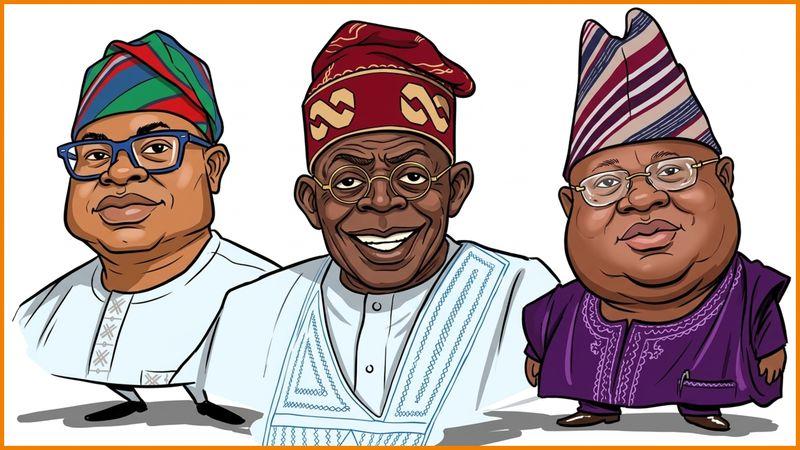
Passing by the Independent National Electoral Commission (INEC) office at Abere, Osogbo, Osun State, on Friday, August 14, 2026, I almost mistook the place for a war front. Armoured tanks, arms and ammunition, rifle-wielding security officers and itchy-fingered soldiers were all over the place, making residents rethink whether it was an election coming up or a counter-terrorism staging.
However, looking at the build-up to the election that eventually took place on August 15, those measures were probably necessary. But more than that, it is an indication of the kind of democracy we practise in Nigeria and how we continue to plunge into deeper, darker versions of it, versions that the originators would dissociate themselves from at a distance.
Deaths
Before the first vote was cast in the state that was formally established in 1991, about 29 people had, according to a KDI pre-election security assessment, died in election-related violent incidents in the build-up to the election. They included Dele Ayegbo, a nephew of the APC campaign director-general and federal lawmaker, Honourable Wole Oke; 14-year-old Ezekiel Olapade in Ilobu; Ajayi Aderogba in Esa-Oke; and Kolade Eluyera in Ikire, among others.
And Osun State is not even one of the ‘Kardashian’ states, the KKK of Kaduna, Kano and Katsina, which are deemed consequential to the presidential election scheduled for next year. Why, then, this high level of mortality?
Open ‘kill them’ threats and curses
A video emerged showing Senator Francis Fadahunsi, who represents Osun East Senatorial District in the Red Chamber, allegedly instructing his supporters, in Yoruba, to confront and kill members of the ruling Accord Party.
The clip went viral, and the backlash was so much that the police had to invite him for questioning. His defence was that he never meant physical violence and was speaking metaphorically about defeating the Accord Party with votes.
It is baffling that a politician can publicly use language that ordinary citizens would understand as violent, then retreat into “I was speaking metaphorically” when challenged.
Another APC chieftain, Yusuf Falilat Arike, popularly known as Ero Arike, was captured distributing rice packs to people, swearing and laying curses on those who collected their party goodies but refused to vote for them. It was brazen and obviously reflective of the ideology-less, stomach-infrastructure brand of politics that Nigerians have become used to.

Vote-buying seems to have become a norm in Nigeria. Credit: Gemini
Vote-buying as a norm
Weeks before election day, I spoke to several residents who said they had received N50,000 in cash after they submitted their PVCs and passport-sized photographs, presumably for the verification of their identities. I know many who benefited from this.
Their documents were returned afterwards anyway.
A couple of days before the election, I spoke to a few others who also claimed that they were given N15,000, which looked like an attempt to sway them to use their ballot papers to support a particular political party.
On election day, a similar pattern emerged, ranging from N5,000 to N20,000, while promises of N50,000 rented the air as the throats of voters were whetted with the promise of cool cash.
You wonder where the place of ideology is, or conviction and integrity. But poverty has been weaponised by the ruling class, and money as little as N5,000 is often enough to buy an average voter.
Many do not even earn up to N50,000 in a month. Therefore, the promise of N50,000 for a vote is enough to make them forget that they are selling away the next four years.
Voters’ intimidation and vote disruption
This has existed for a long time and continues to. A few polling units that I know of were disrupted in Osogbo and its environs. Thugs attacked voting centres wielding weapons, carted away ballot boxes or chased voters away entirely.
Shadow of federal power
When up to 18 governors out of 36, the Senate President, his deputy, numerous federal lawmakers, former governors and other heavyweights of the APC converge on Osun, intimidation is expected to follow.
Mind you, 10 days before the election, on August 5, the EFCC froze Osun State’s allocation accounts, claiming it had noticed suspicious movement of funds from the account and prompting the decision to freeze it.
“The Commission noticed huge transfers of funds into different corporate entities and had to swiftly halt the trend by freezing the accounts from which such heavy funds are being moved,” it said in a statement.
The outrage that followed even made Governor Ademola Adeleke more popular, spiking sympathy for Davido’s uncle, and even a foolhardy observer in the state could see that it was boomeranging for the APC.
The move was eerily convenient, with President Bola Tinubu admitting that the “timing of the action of EFCC is inauspicious” and, as such, mandating the anti-graft agency to stop the move.
“Osun State is only a few days away from its gubernatorial election. Therefore, nothing ought to be done to give an impression that the EFCC or indeed any other agency of the federal government is being used to interfere with the election,” he said.
Reversing it was only commonsensical, as allowing the account freeze to last until election week would have seriously damaged the contest.

2027: Direction of Nigeria’s democracy
If all these are happening barely five months before the 2027 general elections, in Osun, what should we expect when the big polls come up?
Has this now become our brand of democracy? Is this what we have reduced elections to: a battle of political warlords, security operatives, inducements, threats and intimidation, where the ballot is treated as an afterthought?
If Osun, a state with three senatorial districts and 30 local government areas, can become this militarised and combustible, one can only imagine what the stakes will look like when the presidential and National Assembly elections arrive in 2027.
The worrying thing is that none of this is new. Nigeria has seen vote-buying before. We have seen political violence before. We have seen thugs, intimidation and the abuse of state institutions before. What is changing is the scale, the brazenness and our growing willingness to accept these things as normal features of elections.
Democracy is supposed to make the ballot more powerful than the bullet. Yet, in Osun, the bullet, the threat of the bullet and the fear of what might happen appeared to hover over the ballot before many voters even got to cast it.
That should worry us.
Because if the road to 2027 is already looking like this, it won’t be an overstretch to say that Nigeria does not have an election to prepare for. Rather, we have a democracy to rescue.
The views expressed in this article are those of the author and not of the organisation TheRadar.
Tinubu signs Electoral Act 2026 Amendment Bill into law
In an earlier report by TheRadar, President Bola Tinubu signed the Electoral Act 2026 Amendment Bill into law, paving the way for 2027 general elections
The law introduced reforms to improve transparency, logistics, and address gaps from previous election cycles.