
A result can appear on a phone before it becomes official.
That gap is where a lot of election-night confusion begins. A polling-unit sheet is shared. A party posts its own figures. Someone screenshots an IReV upload and announces a winner. But a governorship election is not settled by the fastest post on social media.
In Osun, the votes have been cast. What follows is a process that moves from the polling unit to the ward, then the local government, before a State Returning Officer can make the declaration that counts.
- A polling-unit result is the first record of the vote, not the final state result.
- IReV makes result sheets available to help transparency, but it does not replace formal collation.
- For a governorship election, INEC’s State Returning Officer makes the final declaration after receiving results from all local governments.
The point is not to make election night less exciting. It is to know the difference between a number that is visible and a result that is official.
The polling unit is only the first stop
The process starts where voters actually vote.
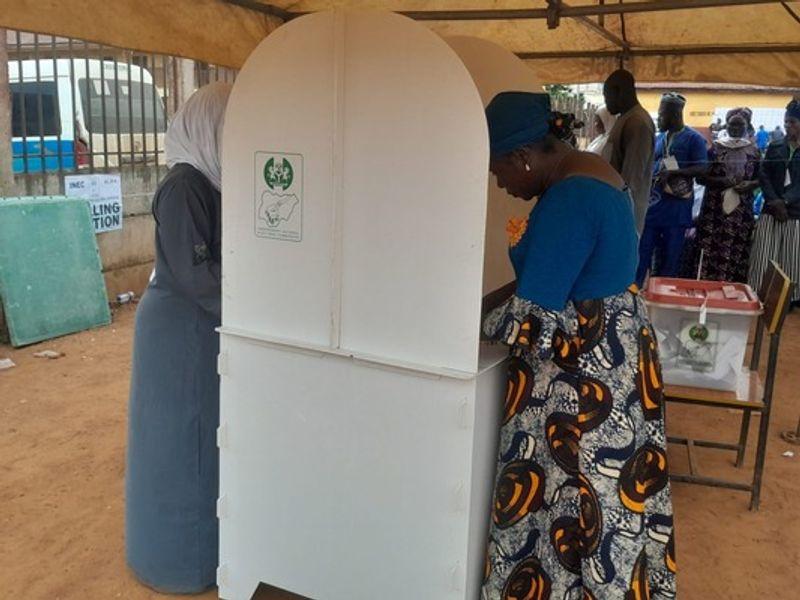
After accreditation, voting and counting, the Presiding Officer records the scores at the polling unit. Party agents who are present can countersign the result sheet, and copies are made available while the original begins its journey to the next level of collation.
That sheet matters. It is the first formal record of what happened at that polling unit.
But Osun is not one polling unit. It is not one ward either. A candidate can win a busy location, trend online for an hour and still have a long way to go before the statewide numbers are added up.
That is why the first result sheet should be read as evidence from one place, not a shortcut to the final answer.
IReV makes results visible, not final
INEC’s IReV platform exists to help people see election information and follow result uploads. That visibility is valuable. It gives voters, journalists, observers and party agents something to compare with the physical documents moving through the system.
But IReV is not the official voice declaring a governor-elect.
The commission describes the platform as a tool that provides information to aid election transparency. It is not a replacement for collation. An upload can show what a polling-unit sheet says; it does not by itself sum every ward, resolve every issue or make a statewide return.
That distinction is especially important when screenshots are moving faster than verification. A post showing that hundreds or thousands of polling-unit results have been uploaded may tell readers that the process is moving. It does not tell them that the final result has been declared.
The safest habit is simple: use IReV to follow transparency, then wait for INEC’s formal collation process to settle the result.
From ward to local government
For a governorship election, the polling-unit result does not go straight to the State Returning Officer.
INEC’s published process says Presiding Officers send the results to Registration Area, or Ward, Collation Officers. At that stage, results from polling units in the ward are added together. The Ward Collation Officer then sends the collated result to the Local Government Area Collation Officer.
The LGA Collation Officer does the next addition: the ward results are brought together into an LGA result.
Only after that does the LGA result move to the State Returning Officer.
This is why election coverage can feel slow even after voting has ended. The work is not only about adding numbers. Officials have to receive documents, check the figures, address issues where they arise and complete the result forms at each level. Speed matters, but a result that is rushed or poorly documented can create a bigger problem later.
The State Returning Officer makes the call
The final step for a governorship election happens at the state level.
According to INEC’s collation and declaration guide, the State Returning Officer receives the collated results from the LGAs, collates them and declares the result. That is the declaration that returns a candidate as governor-elect.
The legal test is more than simply having the highest raw number of votes. INEC says a candidate for governor must have the highest number of votes cast and at least one-quarter of votes cast in at least two-thirds of the LGAs in the state.
That is why an unofficial statewide total, however convincing it looks in a thread or group chat, is not enough on its own. The final process has to show both the votes and the required spread.
A close race can change the route
Not every election ends with a straightforward declaration.
INEC notes that if the margin between the leading candidates is not more than the number of registered voters in polling units where an election was cancelled or did not hold, the Returning Officer should not make a return until another poll has taken place in those affected units and the results have been added.
This is another reason to be careful with early victory posts.
A small margin, cancelled polling units or questions that have to be addressed during collation can all affect what happens next. That does not mean every close election will be rerun. It means the process has rules for deciding whether the available numbers are enough for a valid declaration.
Why the process matters after election day
Election night is built for speed. The formal process is built for a result that can be defended.
Voters deserve to see polling-unit results. Parties deserve copies of the forms. Journalists and observers should be able to compare what is uploaded with what is announced at collation centres. But none of those steps makes social-media arithmetic the final authority.
That is the useful Osun lesson. The election does not become official when a hashtag says it is over. It becomes official when the result has travelled through the required levels of collation and INEC’s State Returning Officer makes the declaration.
Before the vote, we explained how Osun voters could avoid PVC and BVAS problems. After the vote, the next civic skill is knowing when a result is real—and when it is still only a claim.
Also read: Osun Election 2026: How to avoid PVC and BVAS problems before August 15
Also read: Onaiyekan vs presidency: The meeting, the interview, the fallout
What makes you trust an election result: the polling-unit sheet, IReV uploads or the final INEC declaration? Drop your take in the comments below.
