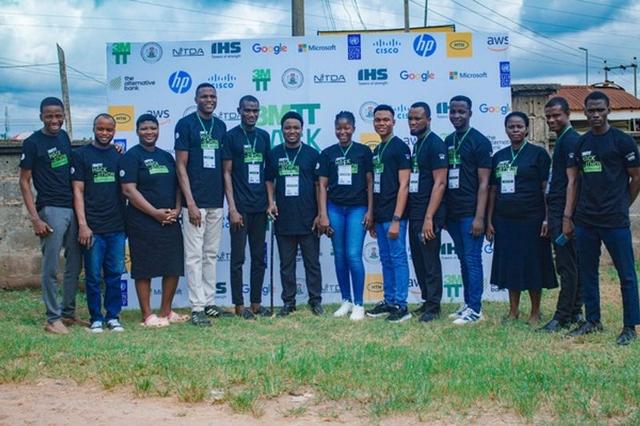

• Training organisations and experts have until 23:59 WAT on 30 November 2026 to apply for Cohort 5 funding through the 3MTT Delivery Network, which the Federal Government opened on 11 November with about ₦4 billion in partner funding earmarked for verified outcomes across Cohorts 5 and 6.
• Under the programme's own rules, funded partners are paid in four stages per fellow, and the last two stages depend on the fellow securing a job, freelance work or a business earning above minimum wage and still earning six months later.
• The fund is for training providers, not individual learners, and neither the announcement nor the portal says how many fellows Cohort 5 will take, what rate partners will be paid per fellow, how the ₦4 billion splits between the two cohorts, or how a learner gets onto the shortlist.
A certificate on a phone screen has been the visible end of many free tech courses in Nigeria. The harder part comes afterwards: the first client on a freelance platform, the first remote contract, the first salary that actually covers data, power and transport.
The Three Million Technical Talent (3MTT) programme says its next phase is built around that harder part. With ten days left for providers to apply, the details are worth a closer look. The Ministry of Communications, Innovation and Digital Economy announced on 11 November, in a statement from Isime Esene, the minister's special assistant on media and communications, that it had opened applications for organisations and individual experts to join the 3MTT Delivery Network, with ₦4 billion in partner funding set aside, according to a Nairametrics report on the ministry's statement. The detailed rules sit on the programme's delivery partner portal.
The money follows the fellow, not the classroom
The portal describes two kinds of partner. Enabled Delivery Partners get federal recognition, shared training standards, access to the national training platform and the National Talent Registry, and learning licences and credits, but no funding. Funded Delivery Partners are described as organisations that train people for jobs, freelance work or business opportunities, and they receive what the portal calls results-based payments.
Each funded partner agrees a rate per successful fellow for each training offer. The portal says payment is "based on verified results, not training completion alone", and it is released in stages as four results are checked. The first is that learning has started, with the fellow's identity verified, active participation confirmed and a baseline assessment done. The second is that the fellow passes the end-of-training assessment. The third is that the fellow secures a job, freelance work or a business opportunity earning above minimum wage. The fourth is that the fellow is still employed or earning six months later.
For anyone who has finished a free course and then found no work at the end of it, that is the part to watch. A training provider under this model does not collect the later payments simply because a class ran. It has to show that its fellows went on to earn.
Freelance work counts, which matters for remote earners
The portal names freelance work alongside jobs and businesses as an outcome that can trigger payment. That puts online gigs, remote contracts and client work in the same column as a salaried post, as long as the income clears the minimum wage line and lasts.
What the portal does not spell out is how a freelancer's income will be verified. Freelance income can come from several clients, in foreign currency, and in uneven amounts from month to month. The rules say outcomes must be verified, but they do not say what evidence a fellow or partner will have to show for freelance earnings.
The ministry's statement, as carried by Nairametrics and a News Agency of Nigeria report published by Peoples Gazette, describes the phase as a demand-led, results-based approach that shifts the focus from expanding training numbers to meeting demonstrable industry demand. According to NAN, Minister Bosun Tijani said reaching the three million target needs a delivery ecosystem that is responsive to industry demand, accessible across communities and capable of scaling.
Who can apply, and the dates that follow
The delivery network is open to organisations and experts that provide digital or technical skills training, in Nigeria or abroad, and the portal says a physical training space is not required. For funding, the lead organisation must be registered and operating in Nigeria, and consortiums led by a registered Nigerian training organisation can apply. The portal's checklist asks for CAC registration, evidence of teaching experience, details of founders or directors, a training programme completed within the last 24 months and evidence of results such as cohort records or employer confirmations. Its readiness check also asks whether a provider can train at least 100 fellows within six months.
The portal sets out the Cohort 5 timetable. Applications opened on 11 November and information sessions run from 13 to 20 November. Funding applications close on 30 November at 23:59 WAT, selected partners are to be announced on 9 December, and contracting begins on 10 December. Fellow matching and screening is scheduled for 4 January 2027, and training is due to begin on 20 January 2027. Membership of the wider network stays open, with applications reviewed every quarter.
According to the ministry's statement as reported, Cohort 5 is supported by the European Union and Denmark through GIZ Digital Transformation Centre Nigeria, HAUS and ESTDEV, with a MacArthur Foundation grant through Blue Sapphire Hub.
What learners still cannot see
This round is a call for training partners, not an application window for individual learners, and the ₦4 billion is not money a learner can apply for. The portal says individual learners have no application route through it: fellows are selected by 3MTT from a shortlist, with funded partners helping to choose them, and matching starts on 4 January. It does not explain how an individual gets onto that shortlist or how many places there will be. For someone hoping to reach a paid tech job through 3MTT, the practical change is on the provider's side: under these rules, a funded provider collects its later payments only if its fellows find paid work and keep earning. The main 3MTT website still describes earlier phases and says there was no fee for that phase of the programme.
The ministry gives the programme's scale so far as more than 1.8 million registrations since 2023 and about 179,000 fellows trained across four cohorts and the DeepTech programme. It has not, in this announcement, published how many past fellows went on to paid work, which is the figure the new payment model is designed to produce. Nor has it said what rate partners will be paid per fellow, or how much of the ₦4 billion goes to Cohort 5 rather than Cohort 6.
Any message offering a paid shortcut into Cohort 5 should be treated with caution until the programme itself opens learner applications through its official channels.
The next markers are 30 November, when partner funding applications close, and 9 December, when the selected partners are due to be named. The test of the model comes later: whether, six months after training starts in January, the programme can show how many Cohort 5 fellows are still earning.
Also read: 3MTT has trained 135,000 Nigerians—but why are tech jobs still hard to get?
Also read: The job link is not a job. How to spot a fake government recruitment page before it gets your money
Should free tech training providers be paid only when their students start earning? Tell us in the comments.