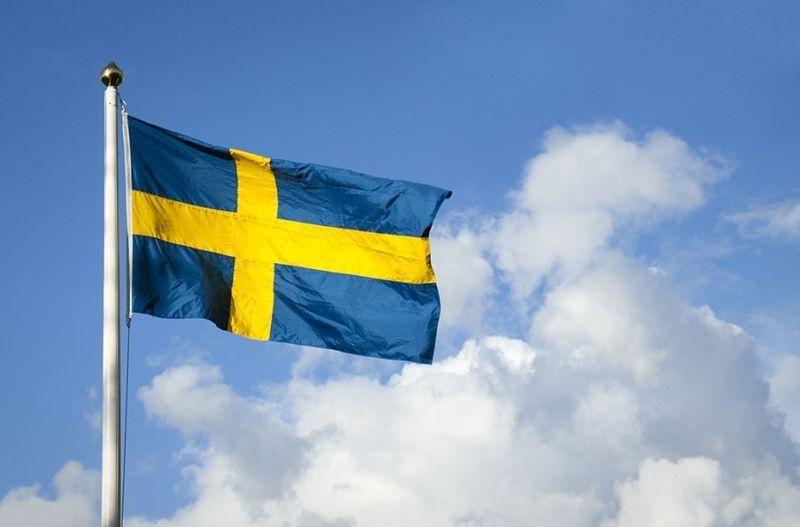
- Sweden announced plans to enforce stricter citizenship rules from June 6, 2026 as residency requirement rises from five years to eight years
- The new rules apply to both fresh and pending citizenship applications
- Welfare dependence could hurt citizenship eligibility as applicants must prove financial self-sufficiency and stable income
Sweden has approved sweeping reforms to its citizenship system, significantly raising the bar for foreign nationals seeking naturalisation from June 6, 2026.
The changes introduce longer residency requirements, mandatory proof of income, and new language and civics tests in one of the country’s toughest citizenship overhauls in recent years.
Under the revised framework, the standard residency requirement for citizenship will increase from five years to eight years, becoming the new baseline for most applicants.
Swedish lawmakers said “the requirement that the individual has lived in Sweden for a certain period, that is been resident here, will be raised from five to eight years as a starting point.”
The stricter timeline will not only affect new applicants. It will also apply to pending applications that are still undecided when the law takes effect, meaning eligibility will be determined by the rules in place at the time of approval, not when an application was submitted.
This removes any transition buffer for thousands already in the queue and could delay citizenship prospects for migrants nearing the current five-year mark.
Authorities say applicants must now complete at least eight continuous years of residence in Sweden before they can qualify for citizenship, with only limited exemptions available, mainly for Nordic citizens and select special cases.
The move marks a sharp shift in Sweden’s naturalisation policy and is expected to lengthen the path to citizenship for many migrants already living and working in the country.
Another major change is the introduction of a financial self-sufficiency rule.
From June 2026, applicants must prove they can support themselves financially and show they are not dependent on welfare benefits.
According to Sweden’s parliament, “applicants for citizenship will be required to be able to support themselves.”
Officials say the requirement is intended to strengthen long-term integration and ensure applicants can sustain themselves independently.
However, the measure may affect migrants with irregular employment histories, unstable earnings or prior reliance on state support.
Sweden is also introducing formal language and civics tests for citizenship applicants for the first time.
From October 1, 2027, or earlier if the government accelerates implementation, applicants will be required to pass tests in Swedish reading and listening comprehension, with broader civics and language requirements to follow.
Parliament said “sufficient knowledge of the Swedish language and of Swedish society will be required for Swedish citizenship.”
The reforms also narrow access to simplified citizenship routes. Sweden will limit the notification procedure and other accelerated pathways, requiring more applicants to go through the stricter standard process instead.
One of the few softer changes in the new framework concerns minors.
Children will now be allowed to apply for Swedish citizenship independently rather than being tied solely to a parent’s application, giving them a more direct route under the revised system.
The Swedish government said the goal of the reforms is “to enhance the status of citizenship and to increase the individual’s opportunities to actively participate in society.”
The tougher citizenship rules come just weeks after Sweden moved in the opposite direction for skilled foreign workers.
In March 2026, the government extended the validity of the EU Blue Card from two years to four years, aiming to attract more highly skilled professionals amid labour shortages. That reform gave eligible foreign workers a longer and more stable stay in Sweden before renewal.
Sweden had also earlier tightened work permit rules for non-EU nationals.
In November 2023, it raised the monthly salary threshold for work permits from 13,000 kronor to 27,360 kronor, affecting new applicants, renewals and pending cases, including many non-EU workers such as Nigerians.
Sweden opens applications for foreign professionals’ scholarship
Meanwhile, TheRadar earlier reported that the Swedish government announced the opening of applications for the Swedish Institute Scholarship for Global Professionals 2026, a fully funded programme for international students seeking to pursue master’s degrees in Sweden.
The Swedish Institute confirmed that the application window opened on Monday, February 9, 2026, and will close later in the month, giving prospective applicants only a brief period to apply.
The SI Scholarship is aimed at individuals with strong professional and leadership backgrounds who plan to contribute to development in their home countries after completing their studies.