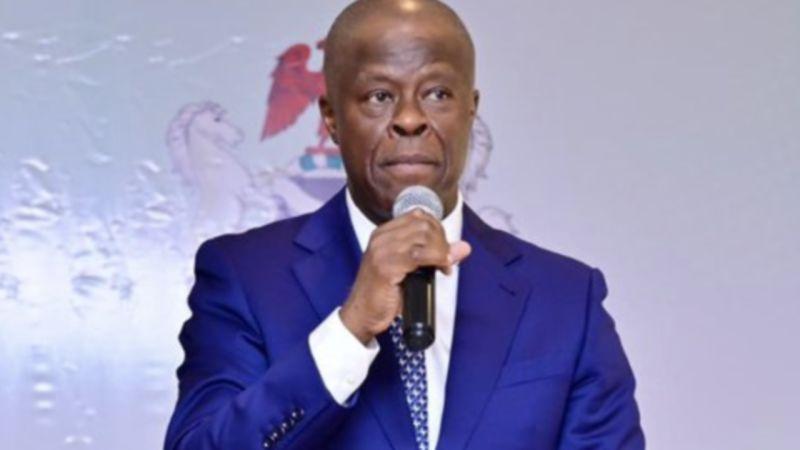
- Nigeria’s Minister of Finance and Coordinating Minister of the Economy, Wale Edun, said the country has no immediate plans to seek financial assistance from the International Monetary Fund
- Edun said Nigeria’s economic reforms over the past two years have helped restore confidence in the economy
- He called on the International Monetary Fund and the World Bank to provide cheaper financing options, more liquidity and better risk management tools for developing countries
Nigeria’s Minister of Finance and Coordinating Minister of the Economy, Wale Edun, has said the country has no immediate plans to seek financial assistance from the International Monetary Fund, insisting that ongoing domestic reforms are helping Nigeria withstand growing global economic pressures.
Speaking during the African Finance Ministers’ briefing at the IMF and World Bank Spring Meetings in Washington, Edun said Nigeria’s market-driven reforms over the past two years had restored confidence in the economy and strengthened the country’s ability to absorb shocks.
According to him, Nigeria has deliberately avoided administrative controls, particularly in the foreign exchange market and petroleum pricing, relying instead on market-based adjustments that have allowed smoother economic transitions.
Edun said the reforms had helped Nigeria build stronger buffers and reduced the need for multilateral lending support for now.
However, while ruling out any immediate move towards IMF support, the minister stressed that many African countries remain vulnerable and urgently need external financial assistance.
He called on the IMF and the World Bank to reduce borrowing costs for developing nations, warning that high interest rates and rising debt servicing burdens are making it harder for governments to invest in critical sectors such as infrastructure, healthcare and education.
“We would like them, especially at this time, to provide additional liquidity and risk management tools that reduce the cost of financing,” Edun said.
He added that many developing economies are now under severe pressure because a growing share of government revenues is being used to service debt rather than fund long-term development.
Edun also pointed to the broader impact of the ongoing conflict in the Middle East, which has pushed up global fuel, fertilizer and shipping costs, creating fresh inflationary pressures across Africa and complicating ongoing reform efforts.
He noted that while higher oil prices may boost revenues for producers like Nigeria, they also increase domestic fuel prices and living costs.
The minister said Nigeria’s reliance on market mechanisms had enabled smoother economic adjustments, reduced disruptions and sustained macroeconomic stability despite global uncertainties.
He further argued that countries pursuing reforms should not be punished with expensive borrowing conditions.
“We would like them to do more, we definitely like them to provide, particularly at this time, additional liquidity risk management tools that bring down the cost of financing,” Edun said.
Edun’s comments come at a time when debt pressures are rising across Africa.
According to recent estimates, African countries are expected to spend more than $90 billion on external debt servicing this year, with Nigeria among the countries facing significant repayment obligations.
Nigeria alone spent $5.21 billion on external debt servicing in 2025, accounting for more than 72 per cent of its total international payments.
Meanwhile, Fitch Ratings projects that the country’s foreign exchange reserves could fall to $47 billion by the end of 2026.
The IMF recently downgraded Nigeria’s 2026 growth forecast from 4.4 per cent to 4.1 per cent, citing rising fuel and transport costs as well as pressure on non-oil sectors.
Despite that outlook, Edun maintained that Nigeria’s reform path remains the best option for long-term resilience and growth.
Nigeria must reduce borrowing, build stronger revenue base, says finance minister Wale Edun
Meanwhile, TheRadar earlier reported that the Minister of Finance and Coordinating Minister of the Economy, Wale Edun, had emphasised that Nigeria must reduce its reliance on borrowing and strengthen its domestic revenue base to achieve fiscal stability and fund sustainable development.
Edun warned that the global financial environment has become increasingly hostile to developing economies, making debt-driven financing more costly and less reliable.