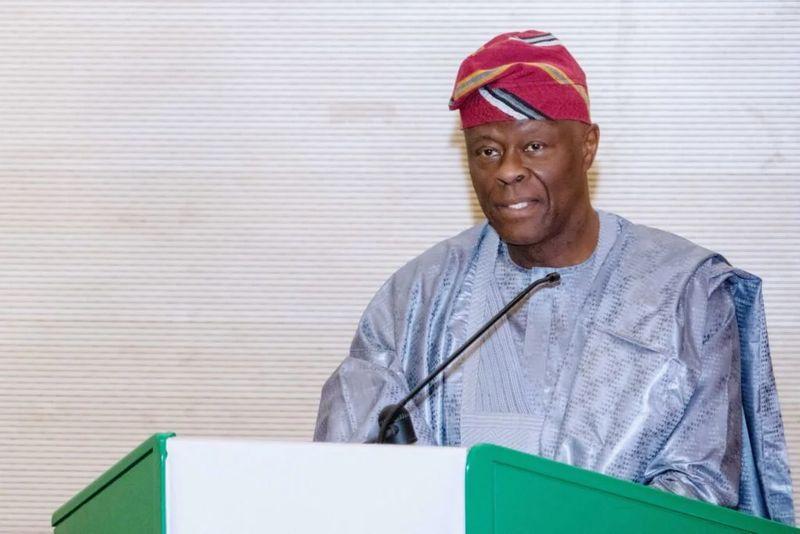
- Minister Wale Edun warned that Nigeria must reduce borrowing and increase domestic revenue to achieve fiscal stability
- He linked rising debt pressures to global shocks and stressed the importance of tax reforms and public compliance
- Edun and NRS Chairman Zacch Adedeji highlighted the revenue service’s role in funding infrastructure, healthcare, and development
The Minister of Finance and Coordinating Minister of the Economy, Wale Edun, has emphasised that Nigeria must reduce its reliance on borrowing and strengthen its domestic revenue base to achieve fiscal stability and fund sustainable development.
Edun spoke on Tuesday during the management retreat of the Nigerian Revenue Service (NRS) in Abuja, warning that the global financial environment has become increasingly hostile to developing economies, making debt-driven financing more costly and less reliable.
“And of course, we need to reduce our dependence on debt. Revenue mobilisation within this context is a developmental imperative,” Edun said, highlighting the growing need for self-sustaining fiscal policies. He noted that the retreat from multilateral cooperation has left poorer nations facing an unfavourable balance between foreign assistance and debt obligations.
Citing 2024 data, Edun revealed that developing countries paid approximately $163 billion in debt service, compared with just $42 billion in overseas development assistance and $97 billion in foreign direct investment. “The primary anchor of our fiscal sustainability… is going to be our own fiscal efforts, our own ability to generate savings, which then can be used for investment,” he said.
The minister linked Nigeria’s rising debt pressures to global shocks such as the COVID-19 pandemic, geopolitical conflicts, and trade tensions, which have forced many developing countries to borrow more while paying higher interest rates. He stressed that sustainable domestic revenue is crucial to financing infrastructure, healthcare, education, and social programmes.
Edun highlighted Nigeria’s ongoing tax reforms as central to reducing debt dependency, stressing that effective execution and strong compliance are critical. “No fiscal reform can deliver results if compliance is weak or uneven. Yet compliance cannot be achieved through enforcement alone. It is carrot and stick,” he said.
He urged citizens to trust the tax system, noting that visible benefits from their contributions are key to improving compliance and reducing reliance on borrowing. “People must see the benefits of their contributions in infrastructure and in services,” he added.
Speaking at the same event, NRS Executive Chairman Zacch Adedeji said the institution represents a new era for Nigeria’s revenue administration, stressing that leadership, accountability, and execution would determine its success. “What brought us here will not be sufficient for where we are going,” Adedeji warned, urging senior managers to rethink leadership styles and decision-making processes to achieve measurable outcomes.
The NRS, according to Edun and Adedeji, will be central to achieving Nigeria’s fiscal reform objectives, strengthening public trust, and ensuring sustainable national development.