- The United States lawmakers are seeking tighter restrictions on Nigeria’s access to American aid over worsening security concerns
- A proposed U.S. funding bill would withhold up to 50% of certain aid to Nigeria until security benchmarks are met
- Congressman Riley Moore said Nigeria must show “effective steps” in tackling violence and resettling displaced communities
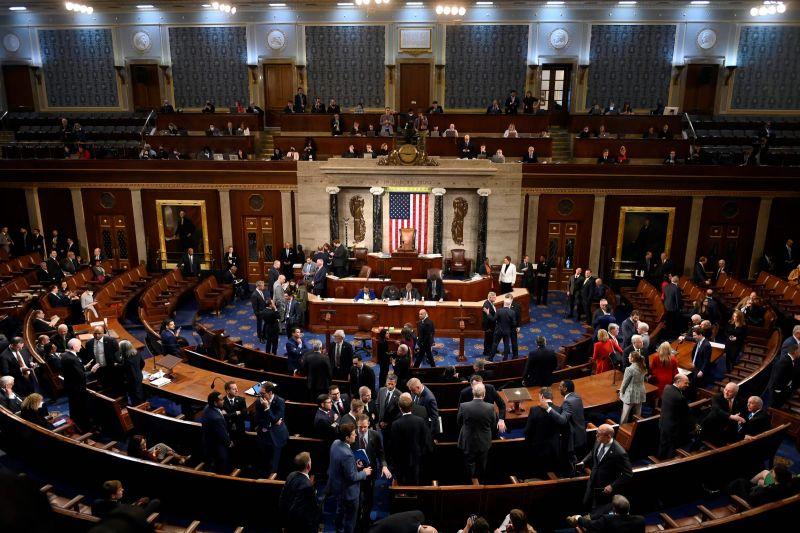
The United States Congress is moving to tighten restrictions on American aid to Nigeria, with lawmakers proposing stricter conditions tied to security, governance and humanitarian accountability amid growing concern over violence and displacement in parts of the country.
The push was disclosed in a statement posted on Wednesday, April 29, by U.S. Congressman Riley Moore on his official X account, where he outlined new provisions in a proposed U.S. State Department funding bill that would place tougher conditions on Nigeria’s access to certain American funds.
According to Moore, the bill would withhold up to 50 per cent of some U.S. funds meant for Nigeria’s central government until the U.S. Secretary of State certifies that Abuja is taking “effective steps” to tackle violence, protect vulnerable communities and support the safe return of displaced persons.
The proposed conditions would also require Nigeria to demonstrate stronger support for victims of violence, improve accountability for perpetrators and commit sufficient resources to restoring affected communities.
Lawmakers say the move is aimed at ensuring U.S. aid is tied more directly to measurable progress on security and humanitarian outcomes.
Moore said the bill would strengthen congressional oversight of American assistance to Nigeria through tighter spending plans and stricter monitoring of humanitarian and security-related disbursements.
He also accused the Nigerian government of spending heavily on lobbying efforts in Washington while failing to adequately address worsening insecurity.
“The Tinubu Administration is spending millions lobbying Congress while failing to adequately address the genocide Nigerian Christians face daily.
“@HouseAppropsGOP just passed our annual State Department funding bill which takes serious steps to address this crisis.
“In this bill, I worked with Mario Díaz-Balart to restrict Security Assistance to Nigeria unless certain criteria are met,”
Moore said the proposal prioritises atrocity prevention, religious freedom, stronger accountability for security forces and expanded humanitarian relief, while also calling for a more coordinated response to armed violence in affected regions.
The latest move reflects growing concern in Washington over insecurity in Nigeria, especially in the Middle Belt, where lawmakers have repeatedly raised alarm over killings, displacement and attacks on farming communities.
The proposed restrictions build on earlier U.S. actions tied to Nigeria’s security situation. In October 2025, President Donald Trump designated Nigeria a “Country of Particular Concern,” citing attacks on Christians and broader religious freedom concerns. That designation prompted a wider congressional review of Nigeria’s security challenges and America’s response.
Subsequent congressional recommendations included calls for stronger economic pressure, expanded support for Nigeria’s security architecture, disarmament and reintegration programmes for armed groups, and possible sanctions or visa restrictions on individuals linked to violence. These recommendations were captured in a report titled Ending the Persecution of Christians in Nigeria.
The Nigerian government has repeatedly rejected claims that Christians are being systematically targeted, insisting that the country’s insecurity is driven by terrorism, banditry and communal conflict rather than state-backed religious persecution.
Earlier this year, reports indicated that the Federal Government was paying about $750,000 monthly to a Republican-linked lobbying firm in the United States to counter narratives around “Christian genocide” in Nigeria and shape conservative opinion in Washington.
Despite rising tensions, both countries have continued to deepen security cooperation. Nigeria and the United States recently agreed to establish a Joint Working Group on defence coordination, while Washington has also signalled support for expanded intelligence sharing and faster defence approvals.
The latest proposal underscores growing scrutiny in Washington over how U.S. assistance to Nigeria is structured, with lawmakers pushing for stricter conditions as concerns over insecurity, displacement and accountability continue to shape bilateral relations.
Africa’s development must move beyond aid, VP Shettima urges
Meanwhile, TheRadar earlier reported that Vice President Kashim Shettima had called for a fundamental shift in how Africa finances its development, emphasising that aid alone is no longer sufficient to meet the continent’s challenges.
Shettima highlighted the urgent need for patient capital, catalytic investment, blended finance, and private sector participation at scale.
He added that strategic capitalism, rather than aid disguised as charity, would yield long-term returns by fostering stable societies, educated workforces, resilient communities, and sustainable ecosystems.