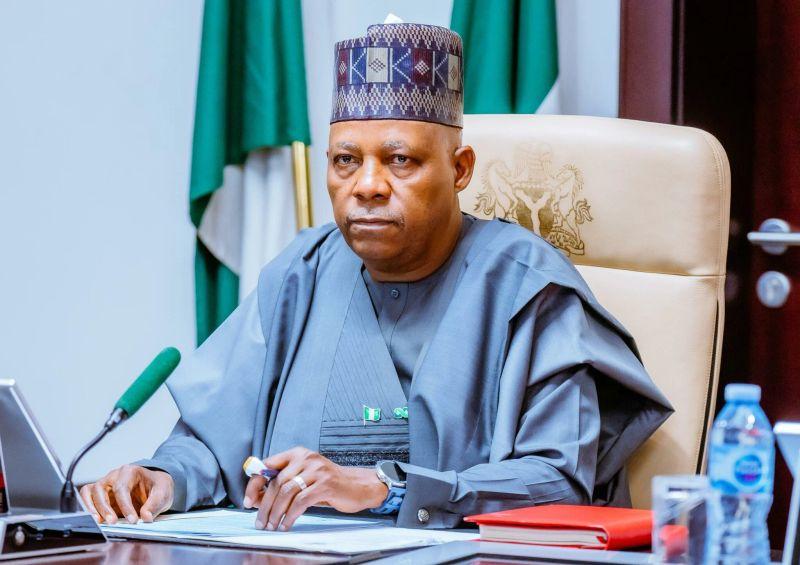
- Vice President Kashim Shettima urged Africa to shift from aid to investment, emphasising private-sector participation, blended finance, and strategic capitalism
- Three flagship initiatives—the Business Coalition for Education, Nigeria Foundational Learning Fund, and WYFEI platform—were launched to boost literacy and economic inclusion
- ASIS 2026 convened over 200 leaders, reinforcing collaboration between governments, civil society, and development partners to drive inclusive growth
Vice President Kashim Shettima has called for a fundamental shift in how Africa finances its development, emphasising that aid alone is no longer sufficient to meet the continent’s challenges. Speaking on Wednesday at the Africa Social Impact Summit (ASIS) 2026 High-Level Policy Engagement in Abuja, Shettima highlighted the urgent need for patient capital, catalytic investment, blended finance, and private sector participation at scale.
Represented by his Technical Adviser on Women, Youth Engagement and Impact, Hauwa Liman, the Vice President stressed that the government cannot tackle development challenges in isolation. “For decades, development was framed primarily as expenditure. Our responsibility today is to reframe it as an investment—investment in human capital, productive systems, climate resilience, digital infrastructure, and inclusive markets,” he said. He added that strategic capitalism, rather than aid disguised as charity, would yield long-term returns by fostering stable societies, educated workforces, resilient communities, and sustainable ecosystems.
Shettima also underscored the importance of inclusivity, noting that the most profitable markets of the future will be the most inclusive. He commended President Bola Tinubu for policy reforms aimed at enhancing opportunities for youth and women, while urging development partners, social innovators, civil society, and citizens across Africa to collaborate to prevent fragmentation. “Development is not done to people. It is built with them,” he stressed.
A major feature of the summit was the launch of three flagship initiatives: the Business Coalition for Education, the Nigeria Foundational Learning Fund, and the Women and Youth Financial and Economic Inclusion (WYFEI) Nigeria platform. These initiatives aim to accelerate foundational literacy, address out-of-school children, and advance economic empowerment through co-investment frameworks and accountability mechanisms.
Minister of Budget and Economic Planning, Atiku Bagudu, represented by Dr Sampson Ebimaro, highlighted that ASIS 2026 aligns with the Federal Government’s Renewed Hope Agenda, reinforcing public-private collaboration for development. The United Nations Resident Coordinator, Malick Fall, added that states must become the primary engines of Sustainable Development Goal implementation, while mobilising resources strategically.
The summit, now in its fifth year and themed “Scaling Action – Driving Inclusive Growth through Policy and Innovation,” brought together over 200 leaders from government, private enterprise, development institutions, civil society, and the diplomatic community to focus on financing, innovation, and partnerships for Africa’s growth.
Shettima concluded that history will remember leaders not for speeches, but for the systems, institutions, and futures they build.
Vice President Shettima defends Nigeria, responds to Kemi Badenoch’s remarks
Meanwhile, TheRadar earlier reported that Vice President Kashim Shettima expressed his displeasure with the UK Conservative Party's new leader, Kemi Badenoch, because of her negative comments about Nigeria.
He stated that she could remove "Kemi" from her name, but it wouldn't change the undeniable fact that Nigeria is the greatest black nation in the world.