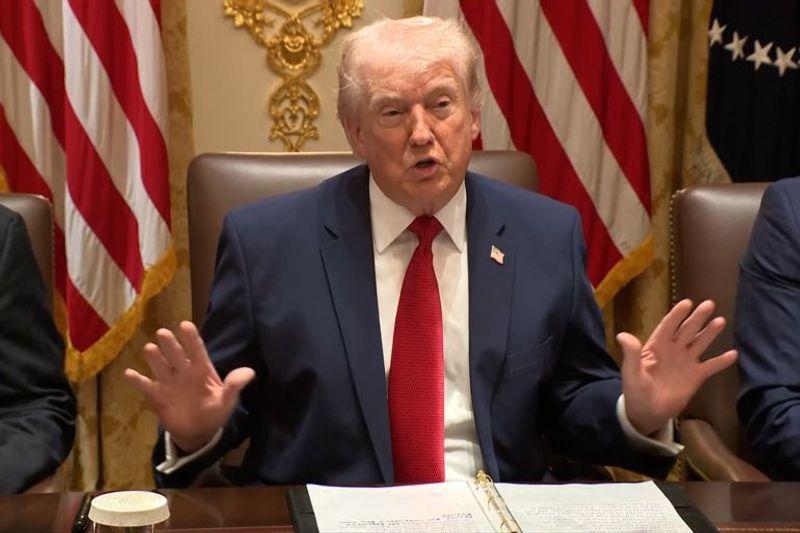
- US President Donald Trump has extended the deadline for potential strikes on Iran’s energy infrastructure by 10 days, now set for April 6, 2026
- The decision follows what Trump describes as positive progress in ongoing US-Iran negotiations
- Meanwhile, Israel launched a fresh large-scale airstrikes targeting Tehran’s infrastructure
Tensions in the Middle East showed signs of a possible diplomatic shift after the United States president, Donald Trump, delayed a previously issued ultimatum targeting Iran’s energy infrastructure, citing progress in ongoing negotiations.
President Trump announced on Thursday, March 26, that the deadline for potential strikes on Iranian power facilities would be extended by 10 days, moving it to April 6, 2026.
The decision comes amid intensified military activity between Israel and Iran, even as diplomatic channels remain active.
“As per Iranian Government request… I am pausing the period of Energy Plant destruction by 10 Days to Monday, April 6, 2026, at 8 P.M., Eastern Time,” Trump stated.
The conflict, which began on February 28 following coordinated US-Israeli strikes on Iran, has continued to escalate, affecting global energy supply chains.
A key flashpoint remains the Strait of Hormuz, through which roughly 20 percent of global oil and liquefied natural gas flows under normal conditions.
Earlier, Trump had issued a 48-hour ultimatum demanding Iran reopen the strait to oil tankers, warning of severe consequences, including attacks on its energy facilities. That deadline has now been extended twice.
Despite skepticism, Trump insisted negotiations were progressing positively.
“Talks are ongoing and, despite erroneous statements to the contrary by the Fake News Media, and others, they are going very well,” he said.
US envoy Steve Witkoff revealed that Washington had presented a 15-point proposal to Tehran via Pakistani intermediaries, describing “strong signs” of Iran’s willingness to negotiate.
“We will see where things lead, and if we can convince Iran that this is the inflection point with no good alternatives for them, other than more death and destruction,” Witkoff said.
Iran has reportedly responded to the proposal, according to the Tasnim news agency, demanding war reparations and recognition of its sovereignty over the Strait of Hormuz, along with a cessation of US and Israeli military actions across the region.
Amid these developments, Israel intensified its military campaign.
The Israeli military confirmed carrying out “a wide-scale wave of strikes targeting infrastructure of the Iranian terror regime in the heart of Tehran.”
The conflict has also spread to neighboring regions. In Lebanon, airstrikes were reported in Beirut’s southern suburbs, a stronghold of Hezbollah, while the group claimed responsibility for rocket attacks on northern Israel.
Iran’s Revolutionary Guards also reported launching missile and drone attacks targeting Israeli positions and US-linked military facilities in the Gulf.
The ongoing war has triggered a global energy crisis, forcing countries to adopt emergency measures.
Japan is considering lifting restrictions on coal-fired power plants, while Vietnam has temporarily removed fuel taxes to ease rising petrol costs.
The World Bank warned that prolonged damage to critical infrastructure could deepen the crisis, stating it is “ready to respond at scale.”
Despite his temporary diplomatic tone, Trump maintained a hardline stance toward Iran.
“They want to make a deal. The reason they want to make a deal is they have been just beat to shit,” he said.
He also suggested that the United States could potentially take control of Iran’s oil resources, drawing comparisons to previous US actions in Venezuela.
Meanwhile, concerns are growing within Israel over the sustainability of the war. Opposition leader Yair Lapid warned that the military is overstretched.
“The military is stretched to the limit and beyond,” Lapid said.
He criticised the government for engaging in a multi-front conflict without adequate planning or manpower, while military officials acknowledged the need for additional combat troops to secure buffer zones, particularly in southern Lebanon.