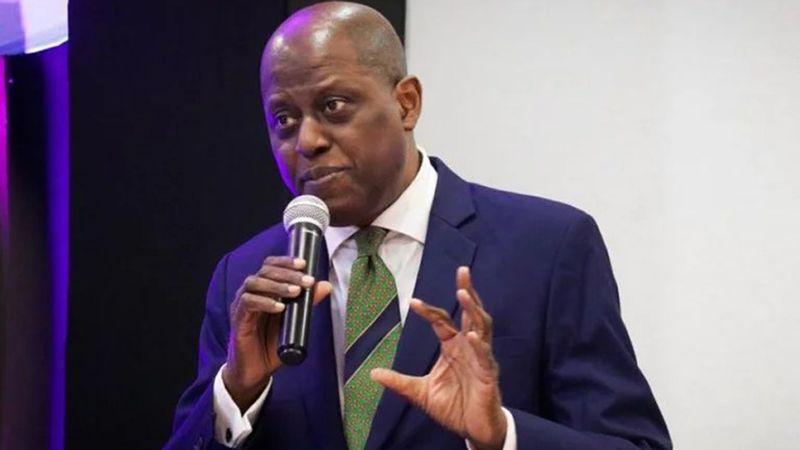
- CBN Governor Olayemi Cardoso disclosed that Nigeria has built economic buffers against Middle East inflation shocks
- He attributed recent inflation increases mainly to external geopolitical tensions and rising energy prices
- The CBN governor insisted that Nigeria remains on a long-term disinflation path despite temporary inflationary pressure
The Governor of the Central Bank of Nigeria, Olayemi Cardoso, has said Nigeria is better positioned to withstand inflationary pressures triggered by the ongoing crisis in the Middle East due to policy measures implemented by the apex bank.
Speaking after the 305th Monetary Policy Committee meeting in Abuja on Tuesday, May 19, Cardoso explained that the recent uptick in inflation was largely caused by external factors, particularly geopolitical tensions and rising global energy prices.
Despite the pressure, he maintained that the country has built enough economic safeguards to absorb the shocks while sustaining the broader disinflation trend already underway.
“We believe that what we have now is something that has resulted from external shocks. But notwithstanding that, we have been able to create buffers that have protected us during this period,” Cardoso said.
The CBN governor stressed that the current inflationary trend is temporary and expressed confidence that inflation would resume its downward path in the coming months.
“We have consistently been on the path of disinflation. This, we believe, is temporary, and in due course we should go back to the trend we had embarked upon,” he added.
Cardoso identified exchange-rate stability as a major pillar of the bank’s monetary strategy, noting that maintaining a stable foreign exchange market remains central to controlling inflationary pressures.
“It is key that the centrepiece of our toolkit, which is ensuring that the foreign exchange rate remains stable, remains intact,” he stated.
He also pointed to Nigeria’s recent sovereign rating upgrade by Standard & Poor's as evidence of increasing investor confidence in the country’s economic reforms and policy direction.
According to the CBN, recent economic indicators suggest that underlying inflationary pressures may be easing despite the rise in headline inflation.
Nigeria’s headline inflation rate increased slightly to 15.69 per cent in April 2026 from 15.38 per cent recorded in March.
Food inflation climbed to 16.06 per cent from 14.31 per cent, driven mainly by rising transportation and logistics costs.
However, core inflation moderated to 15.86 per cent from 16.21 per cent, indicating some easing in underlying consumer price pressures.
The 12-month average inflation rate also declined to 19.16 per cent in April from 20.05 per cent in March, marking the sixth consecutive monthly decline.
Cardoso further noted that month-on-month headline inflation slowed sharply to 2.13 per cent in April compared to 4.18 per cent in March, a sign that inflation momentum may be easing.
On the broader economy, the CBN governor said Nigeria’s macroeconomic fundamentals remain relatively stable despite growing global uncertainty linked to geopolitical tensions involving Iran, Israel and the United States.
Nigeria’s real Gross Domestic Product expanded by 4.0 per cent in the fourth quarter of 2025, slightly higher than the 3.98 per cent recorded in the previous quarter.
The non-oil sector grew by 3.99 per cent, supported by stronger performance in information and communication, transportation and storage.
Meanwhile, the oil sector recorded 6.79 per cent growth during the same period, boosted by increased refining activities.
Gross external reserves also rose to $49.49 billion as of May 15, 2026, compared to $48.35 billion at the end of March, providing import cover for about 9.04 months.
According to Cardoso, the stronger reserve position continues to support exchange-rate stability while reinforcing investor confidence in Nigeria’s economy.
Global economic uncertainty has intensified in recent months following escalating tensions in the Middle East, with rising crude oil prices and supply chain disruptions increasing inflation risks across several economies.
The Monetary Policy Committee retained the Monetary Policy Rate at 26.5 per cent during its 305th meeting, maintaining a cautious approach amid persistent inflationary and global risks.
The Cash Reserve Ratio was also retained at 45 per cent for commercial banks and 16 per cent for merchant banks, while the Standing Facilities Corridor remained at +50/-450 basis points around the MPR.
The apex bank warned that global inflationary pressures remain elevated due to geopolitical tensions, energy market disruptions and tightening financial conditions worldwide.
Middle East crisis threatens Nigeria’s economy, CBN governor warns
Meanwhile, TheRadar earlier reported that the Governor of the Central Bank of Nigeria, Olayemi Cardoso, had raised alarm over the economic implications of the ongoing Middle East crisis, warning that it poses a serious threat to Nigeria’s stability.
Cardoso highlighted how escalating tensions between Iran and Israel have disrupted global oil markets, pushing crude prices above $100 per barrel due to instability in the Strait of Hormuz.