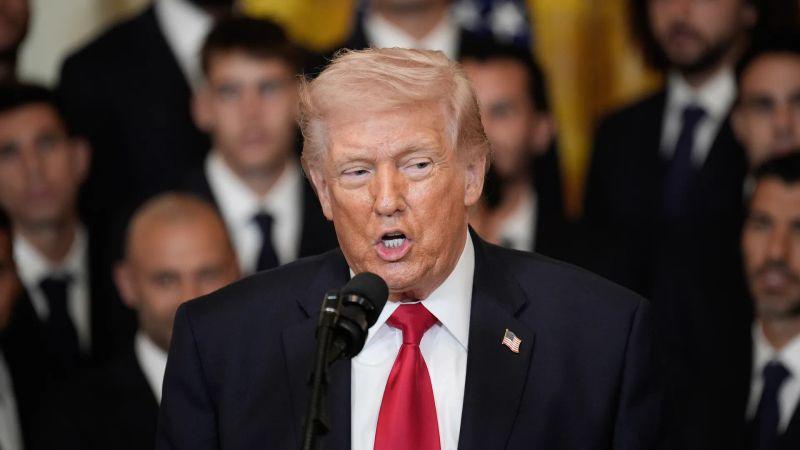
- President Donald Trump says the Middle East war will only end if Iran agrees to “unconditional surrender,” rejecting renewed diplomatic negotiations
- The conflict has entered its seventh day, expanding beyond the immediate region and disrupting global energy and transport sectors
- The United Nations High Commissioner for Refugees declares the escalating conflict a major humanitarian emergency
United States President Donald Trump declared on Friday, March 6, that the ongoing Middle East war would end only if Iran agrees to “unconditional surrender,” as Israel said its military campaign was “crushing” the Iranian ruling system.
Now in its seventh day, the conflict has expanded beyond the immediate region, disrupting global energy and transport networks and bringing instability even to normally calm areas around the Gulf.
The fighting has spread into Lebanon, where the country’s prime minister warned of a looming humanitarian crisis as the number of casualties rises and tens of thousands of residents flee intense Israeli bombardments.
Amid mounting global concern, United Nations Secretary-General António Guterres warned the world faces “a situation that could spiral beyond anyone’s control,” urging nations to begin “serious diplomatic negotiations.”
Trump, however, has pushed back against renewed diplomatic talks and maintained a hardline stance.
“There will be no deal with Iran except UNCONDITIONAL SURRENDER,” Trump wrote on his Truth Social platform.
Despite the remarks, the White House later said that Washington’s objectives in the conflict remain unchanged.
Trump also pledged that the United States would help rebuild Iran’s economy if Tehran installs someone “acceptable” to him to replace the country’s supreme leader Ali Khamenei, who was killed last weekend.
Following Trump’s comments, the benchmark US crude oil price surged by 11 percent, as markets reacted to fears over disruptions in the Strait of Hormuz, a key global energy shipping route that has effectively been blocked during the conflict.
Heavy strikes on Tehran
Iran’s capital Tehran faced some of the heaviest Israeli bombardments yet on Friday, March 6, according to journalists on the ground.
“It’s really very scary,” a Tehran businessman identified only as Robert told AFP.
Israel and the United States have signalled that their attacks will intensify. US Defense Secretary Pete Hegseth warned that strikes were “about to surge dramatically.”
Meanwhile, Israel’s military chief Eyal Zamir said the country’s forces were “crushing the Iranian terrorist regime.”
Iran’s health ministry reported that US and Israeli attacks have killed 926 people, although AFP said it could not independently verify the figure.
Iran has responded with missile and drone strikes targeting Israel and several Gulf states. AFP journalists in Tel Aviv reported hearing multiple explosions on Friday, March 6.
At least 10 people have been killed in Israel, according to emergency responders, while the US military confirmed the deaths of six American personnel.
Lebanon drawn deeper into conflict
The war has also engulfed Lebanon after Iran-backed group Hezbollah fired missiles at Israel in retaliation for Khamenei’s killing.
Israeli forces launched new strikes on Beirut, particularly the southern suburbs known as Hezbollah strongholds and home to hundreds of thousands of residents.
AFP correspondents described widespread panic as residents fled after Israel issued an unprecedented evacuation order for the area.
Lebanon’s Prime Minister Nawaf Salam warned that “a humanitarian disaster is looming,” while the Norwegian Refugee Council said about 300,000 people have been displaced.
Lebanon’s health ministry reported that the death toll in the country had climbed to 217 by Friday, March 6.
Two Ghanaian peacekeepers serving with the United Nations were critically injured when their base in southern Lebanon was struck.
Conflict spreads across region
The crisis has also pulled Iraq into the fighting. Iraqi officials said several airports were attacked on Friday, including a complex at Baghdad that houses a military base and a US diplomatic facility.
The US embassy warned that Iranian-backed fighters may target hotels in Erbil, a major city in Iraqi Kurdistan frequented by foreigners.
Shortly after the warning, an explosion was heard in Erbil and smoke was seen rising from a hotel, according to AFP reporters.
Elsewhere, Azerbaijan said it had foiled several Iranian attacks targeting its territory.
On Friday, March 6, the United Nations High Commissioner for Refugees declared the conflict a major humanitarian emergency.
Gulf states also targeted
The war has also reached the wealthy Gulf nations that were once seen as relatively safe in the Middle East.
Qatar said it intercepted a drone attack aimed at a US air base on its territory, while Saudi Arabia reported destroying a cruise missile near the central Al-Kharj region.
Across Gulf countries, 13 people have been killed since the war began, including an 11-year-old girl in Kuwait named Elena Abdullah Hussein.
Two hours before she died, the girl phoned her father at work to tell him she loved him.
“It was as if she was trying to say goodbye,” her father, Abdullah Hussein, told AFP during her funeral.
Fighting spreads beyond the region
The conflict has even extended beyond the Middle East. Off the coast of Sri Lanka, a US submarine reportedly torpedoed an Iranian frigate.
Meanwhile, countries around the world have been scrambling to evacuate tourists stranded in the Gulf, as air traffic remains heavily restricted with missiles and drones dominating the skies across the region.