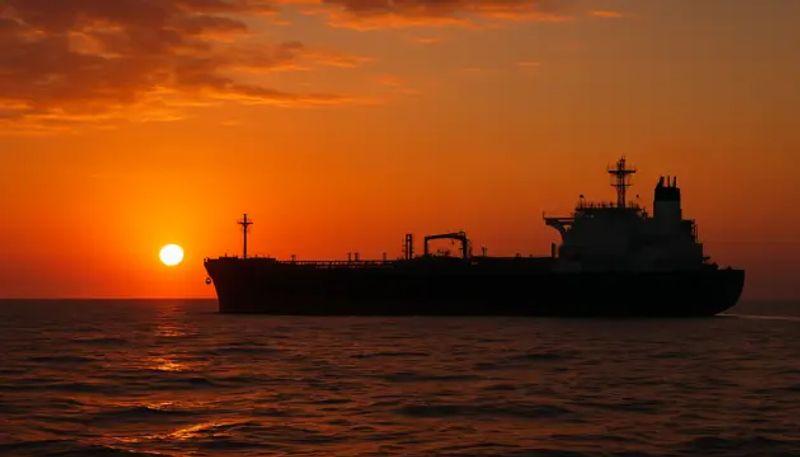
- Global oil prices have surged above $100 per barrel amid escalating attacks on energy infrastructure in the Middle East
- The International Energy Agency announced a record 400 million-barrel strategic reserve release, the largest in its history
- Reports of attacks on oil tankers, fuel storage facilities, and drones targeting energy infrastructure across the Gulf heightened supply concerns
- Governments including New Zealand and Australia are considering emergency measures to manage potential fuel shortages
Global oil prices surged above $100 on Thursday, March 12, as escalating attacks on energy infrastructure in the Middle East and fears of prolonged conflict rattled markets, overshadowing a historic release of crude reserves by the International Energy Agency.
The renewed tension pushed oil markets higher while equity markets around the world declined, as investors worried about potential disruptions to one of the world’s most critical energy supply routes.
On Wednesday, March 11, the International Energy Agency (IEA) announced that its member countries would release 400 million barrels of oil from strategic reserves, marking the largest coordinated stockpile release in the organisation’s history.
Despite the unprecedented move, the measure failed to calm markets amid rising fears that energy flows from the Middle East could face severe disruptions.
Concerns intensified after shipping activity through the Strait of Hormuz, a critical passage that carries roughly one-fifth of global crude oil supply, was effectively halted.
Iran has stepped up actions aimed at disrupting regional energy supplies.
Reports on Thursday, March 12, indicated that two oil tankers in Iraqi waters were struck, prompting further alarm in global markets.
The Iraqi government had already signalled plans to reduce oil production due to the escalating crisis, while Kuwait and Saudi Arabia announced similar precautionary measures.
Elsewhere in the Gulf, Bahrain said Iranian forces had attacked fuel storage tanks within the country. Saudi authorities reported intercepting drones targeting the Shaybah oil field, while drones also struck fuel storage tanks at Oman’s Salalah port, forcing operations there to be temporarily suspended.
In another incident, the United Kingdom Maritime Trade Operations (UKMTO) issued an alert stating that a container ship near the United Arab Emirates had been hit by an “unknown projectile.”
The mounting geopolitical tension sent crude prices sharply higher. Brent crude rose to $101.59 per barrel, while West Texas Intermediate (WTI) approached $96 per barrel.
Both benchmarks had already experienced dramatic volatility earlier in the week. On Monday, March 9, oil prices jumped as much as 30 per cent, briefly approaching $120 per barrel, before retreating slightly.
Even with the pullback, analysts believe oil prices could remain elevated if the conflict continues.
Market observers warn that crude trading between $90 and $100 per barrel may become the new normal in the near term.
Iran has also suggested it is prepared for a prolonged confrontation, warning that an extended conflict could damage the global economy and targeting vessels linked to the United States and its allies.
The Islamic Revolutionary Guard Corps (IRGC) issued a warning on Wednesday, March 11, that it could target “economic centres and banks” associated with US and Israeli interests.
“They must consider the possibility that they will be engaged in a long-term war of attrition that will destroy the entire American economy and the world economy,” Ali Fadavi, an adviser to the Guards’ commander-in-chief, said in comments broadcast on state television.
Iran’s Tasnim news agency also published a list of potential technology-related targets, including regional offices of major global firms such as Amazon, Google, Microsoft and Nvidia located in Gulf states and Israel.
Analysts caution that prolonged disruption to shipping through the Strait of Hormuz could trigger a severe economic shock. The waterway also transports roughly one-third of the fertiliser used in global food production, making it vital to global supply chains.
The aviation sector has already begun to feel the impact. Airlines are reconsidering flight routes through the Middle East while grappling with rising fuel costs.
Air New Zealand announced on Thursday, March 12, that it would cancel about 1,100 flights over the next two months, while Cathay Pacific said it would introduce new fuel surcharges on most routes that are nearly double existing charges.
Governments are also preparing contingency measures.
New Zealand’s government said it may invoke decades-old emergency laws that restrict vehicle use if domestic fuel supplies decline.
Meanwhile, Australian authorities revealed plans to temporarily relax fuel quality standards by allowing higher sulphur levels in petrol for roughly two months. Officials said the move could release about 100 million litres of additional fuel into the domestic market.
The sharp increase in oil prices has revived concerns about rising global inflation, potentially forcing central banks to rethink plans to cut interest rates after previously signalling a more accommodative stance.
Those fears weighed heavily on stock markets across Asia on Thursday, March 12. Major indices in Tokyo, Hong Kong, Shanghai, Sydney, Seoul, Mumbai, Wellington, Singapore, Taipei, Manila and Jakarta all ended the day lower.
European markets followed suit, with stocks in London, Paris and Frankfurt opening in negative territory.
According to Stephen Innes of SPI Asset Management, the IEA’s reserve release is unlikely to significantly calm markets as long as tensions around the Strait of Hormuz remain unresolved.
“When the geopolitical fire alarm is still ringing around the Strait of Hormuz, dumping barrels from emergency stockpiles is less a solution than a symbolic gesture,” he said.
“It might dampen volatility for a few hours, but it cannot change the geometry of risk when the world’s most important shipping artery is under threat.”
In trading terms, he added, the IEA move was “the equivalent of pointing a garden hose at a refinery blaze.”
Meanwhile, US President Donald Trump insisted that recent strikes had already dealt a severe blow to Iran.
“They are pretty much at the end of the line,” he told reporters after addressing supporters.
During the speech he also declared, “We’ve won. We won — in the first hour it was over.”
However, Israel’s military suggested the confrontation could continue, saying it still had “a broad bank of targets.”
Oil prices remained elevated during early trading on Thursday, March 12, with WTI rising to $90.72 per barrel and Brent crude reaching $96.04.
Financial markets reflected investor caution. Japan’s Nikkei 225 closed 1.0 per cent lower at 54,452.96, while Hong Kong’s Hang Seng Index fell 0.7 per cent to 25,716.76. The Shanghai Composite slipped 0.1 per cent to 4,129.10.
In Europe, London’s FTSE 100 dropped 0.6 per cent to 10,296.02, while the Dow Jones Industrial Average in the United States had earlier closed 0.6 per cent lower at 47,417.27.
Currency markets also reflected a cautious global mood. The euro traded at $1.1542, the British pound stood at $1.3379, and the US dollar was valued at 158.89 yen.