
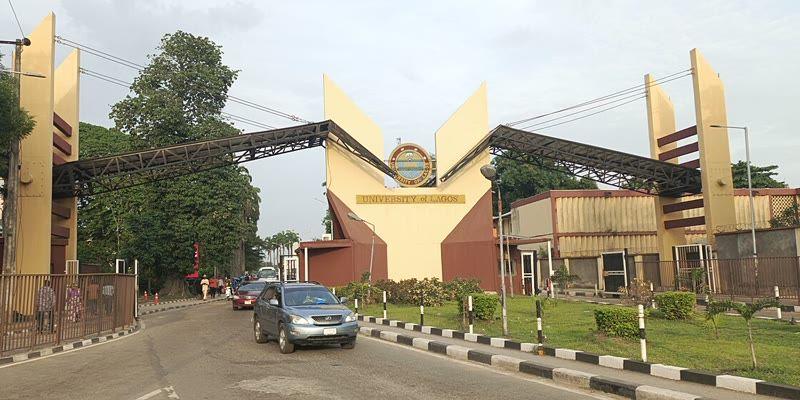
• The University of Lagos is joint 697th worldwide in the QS World University Rankings: Sustainability 2027, released on Tuesday 17 November, up from the 1,401–1,500 band last year and the highest placing of the six Nigerian universities in the table.
• Covenant University (1,151–1,200) and the University of Ibadan (1,201–1,250) follow, while Ahmadu Bello University, Obafemi Awolowo University and the University of Nigeria, Nsukka sit in the 1,501+ band, and South Africa's University of Cape Town leads Africa at 88th.
• This is a ranking of environmental, social and governance performance, not QS's main World University Rankings, so it does not directly measure teaching quality, admissions difficulty or how quickly graduates find jobs.
In family WhatsApp groups this week, a screenshot has been doing the rounds: UNILAG, "Nigeria's number one", next to a world ranking number. For a parent weighing where a child should apply after the 2027 UTME, or a final-year student polishing a CV, the claim lands differently. It sounds like a verdict on the whole university.
The ranking itself is real. The University of Lagos said in a statement from its Communication Unit that it placed joint 697th in the QS World University Rankings: Sustainability 2027, up from the 1,401–1,500 band in the previous edition, and that it is 14th among 82 African institutions in the table. What the number covers, and what it leaves out, is the part worth reading slowly.
A jump of more than 700 places in one edition
UNILAG improved on all 11 indicators QS assessed, with the strongest gains in Environmental Education, Governance and Equality, according to the university's statement and a BusinessDay report on the results. BusinessDay, citing the Nigerian Tertiary Education Ranking Advisory Committee (NiTERAC), said the rise was the largest recorded by any African university among institutions ranked in both the 2026 and 2027 editions, and one of the three biggest globally.
The Vice-Chancellor, Professor Folasade Ogunsola, congratulated staff, students and alumni on behalf of management, the university said, and expressed confidence that UNILAG would build on the momentum. The statement reports her message rather than quoting her at length.
NiTERAC's chairman, Professor Peter Okebukola, was more pointed. "The belief that global standing is beyond the reach of Nigerian universities has been answered with evidence," he said, according to BusinessDay. That direct quote appears only in the BusinessDay report; the university's own statement paraphrases him.
Six Nigerian names on a list of about 2,000
Covenant University, which BusinessDay and The Sun both say led Nigerian institutions in the 2026 edition, is now second nationally in the 1,151–1,200 band. The University of Ibadan is third at 1,201–1,250, up from 1,301–1,400 last year according to BusinessDay, which also reported that UI posted Nigeria's best score in Employability and Opportunities, at joint 495th on that measure. Ahmadu Bello University, Obafemi Awolowo University and the University of Nigeria, Nsukka are all in the 1,501+ band, according to Tribune and The Sun.
That makes six Nigerian universities in a table that QS's own press release puts at 2,003 institutions from 107 countries and territories. NiTERAC described six as a concern for a country with more than 300 tertiary institutions, BusinessDay reported, and proposed a target of at least 10 Nigerian universities in the 2028 edition, three of them inside the top 1,000. That is a recommendation, not a commitment by government or the universities.
How many Nigerian universities were ranked in the 2026 edition is not stated in any of the reports TheRadar reviewed. BusinessDay says ABU, UNN and OAU "remained" in the 1,501+ band, which suggests they were also listed last year, but the full 2026 Nigerian count could not be confirmed because the QS rankings site blocked automated access.
South Africa still sets the pace in Africa
For context, Africa's top end of this table belongs to South Africa. QS said in its English-language press release that the University of Cape Town is Africa's highest-ranked university for sustainability at 88th globally, and that South Africa holds the continent's four highest places. Egypt has the most ranked universities in Africa, with 31, the release said.
The Sun's list puts the University of Pretoria at 243rd and Stellenbosch University at joint 688th, just ahead of UNILAG, with several Egyptian universities, including Alexandria and Cairo, in between. BusinessDay says UNILAG now sits above the University of Ghana, Makerere University, Addis Ababa University and the University of Nairobi, and that Nigeria has the highest-ranked university in sub-Saharan Africa outside South Africa. At the top of the world table, Sweden's Lund University kept first place, ahead of ETH Zurich and the University of Toronto, according to QS.
What this ranking measures, and what it does not
The sustainability table scores universities through three lenses: Environmental Impact (45%), Social Impact (45%) and Governance (10%), according to QS's release and the University of Bologna's published summary of the methodology. Environmental Impact covers things like environmental education, environmental research and how sustainably a campus is run. Social Impact covers equality, knowledge exchange, the impact of education, employability and opportunities, and health and wellbeing. Governance is made up of small indicators such as transparent financial reporting, student representation and publishing governing board decisions.
That explains why policy changes can move a university quickly. BusinessDay reported NiTERAC's view that Nigeria's weak spots, including Governance, Environmental Research and Equality, relate mainly to policies, documentation and public disclosure rather than funding.
It is also the boundary. This is not QS's flagship World University Rankings, which weighs academic reputation, research citations and staff-to-student ratios differently, and it is not a measure of how good lectures are, how crowded hostels feel or how long a degree takes to finish. Employability carries some weight inside the Social Impact lens, but the table does not tell a candidate how quickly a UNILAG graduate finds work compared with one from UI or Covenant.
The next test is whether the gain holds. NiTERAC's 2028 target of 10 Nigerian universities, and whether Covenant and UI close the gap or UNILAG slips back, will show whether this is a one-year leap or a lasting shift, and whether more of Nigeria's 300-plus institutions choose to submit data at all.
Also read: NELFUND logs a record 8,397 loan applications in a day. What the numbers do not show
Also read: JAMB plans a pre-registration app for the 2027 UTME. What candidates can prepare now
Would a sustainability ranking change which university you or your child picks? Tell us in the comments.
