

• On Jumia on 26 November 2026, a Luminous 220Ah tubular battery was listed at ₦288,000 and an itel Energy 1.28kWh lithium battery at ₦233,990, but the tubular one stores about 2.64kWh on paper and the itel about half of that, so the sticker prices cannot be compared directly.
• Adjusted for usable energy and the lifespans sellers and installers claim, a tubular battery works out at roughly ₦120 to ₦300 per kWh delivered over its life, against about ₦76 for the itel lithium unit if it really reaches its listed 3,000 cycles.
• These are TheRadar's own sums from listing prices and unverified lifespan claims, not a test, and they leave out the inverter, the panels or mains power that charge the battery, installation and any warranty terms Jumia did not display.
A family in a Lagos flat that has just paid for a new inverter is asked by the electrician which battery to put behind it. One costs less today, the other is said to last far longer, and neither claim can be checked from the sofa.
The question has a plain answer in naira per kilowatt-hour stored and used, and TheRadar worked it out from a Jumia listing page opened on 26 November 2026, a Legit.ng interview with a solar installer published on 4 May 2026 and a Techpoint price guide dated July 2025.
What the two batteries cost on the same page
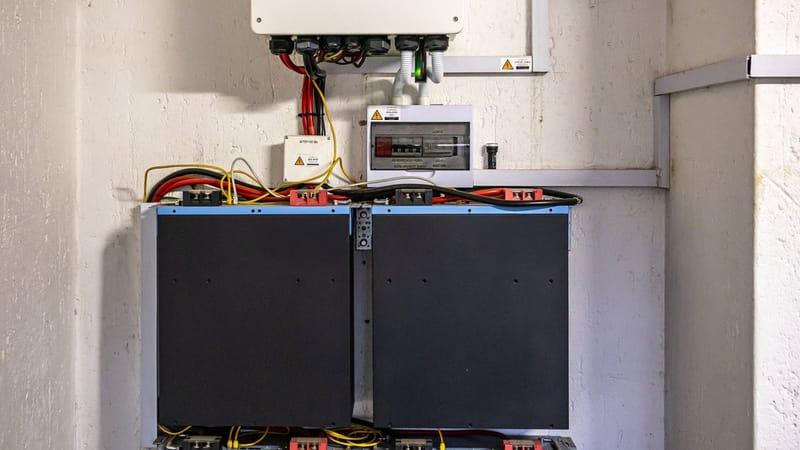
Jumia's listing page showed a Luminous NGRT tubular tall battery, 220Ah and 12V, at ₦288,000, down from ₦352,000. Multiplying 220Ah by 12V gives about 2,640Wh, or 2.64kWh of nominal capacity. Other Luminous 220Ah listings on Jumia's tubular search page ranged from about ₦261,000 to ₦400,000, with one outlier at ₦756,800.
The same page listed an itel Energy 12.8V, 100Ah lithium iron phosphate battery at ₦233,990, down from ₦299,000, with a Bluetooth monitor and "3000+ cycles" in the title. That is 1.28kWh of nominal capacity. A cycle is one full charge and discharge. Jumia displayed no warranty period for either product.
Why a battery cannot be used down to zero
Capacity on the label is not what you can draw. In a Legit.ng interview published on 4 May 2026, a solar installer known only by her TikTok handle, @lillysolar24, said tubular batteries should be discharged to about 50%, and that they typically last two to four years, or up to five for a good one. Pushing them harder shortens their life, she said.
Techpoint's price guide says lithium iron phosphate batteries allow up to about 80% usable capacity and are often rated for 3,000 to 6,000 cycles. Those figures come largely from sellers' specifications, and TheRadar could not test them.
Applying those percentages, the Luminous gives about 1.32kWh of usable energy, so ₦288,000 is about ₦218,000 per usable kWh. The itel gives about 1.02kWh, or roughly ₦229,000 per usable kWh. On day one the two are about the same.
The sum that changes after year one
Use the battery every night and the Luminous delivers about 482kWh a year. Over two years that is about 964kWh, or ₦299 per kWh. Over five years it is about 2,409kWh, or ₦120 per kWh. The installer's range is the whole difference.
The itel, at its listed 3,000 cycles and 80% usable, would deliver about 3,072kWh, which is about ₦76 per kWh. That is also about eight years of daily use, so it only wins if it lasts as long as the title says and the seller honours it. A one-year warranty on a bigger lithium unit, an ECOLiON 5kWh at ₦1,085,500 on Jumia, shows how short the written cover can be next to the claimed lifespan.
What the sticker price hides
Lithium prices vary widely. Techpoint's June 2025 survey found 5kWh units from different brands listed anywhere from about ₦1.15m to ₦1.74m across sellers, and prices have moved since. Tubular batteries are also bulkier for the energy they store and need regular topping up with water, the installer said.
A battery is also only storage. It needs an inverter, wiring and something to fill it, whether that is the mains, a generator or panels, and each has a monthly cost that is not in any figure above. For a small flat with a fridge, fans and lights, the right size matters more than the chemistry. Ask the installer for the battery's rated cycles at the depth of discharge you will use, in writing.
The installer and Techpoint spoke of battery types in general, not these two models, and TheRadar found no independent test of either. The sums are a guide to which question to ask, not a verdict.
Also read: Home solar in Nigeria is listed from ₦70,000 to ₦4.7m for 5kW. What a small generator burns instead Also read: MRS cuts Abuja petrol to ₦1,295. What Abuja, Lagos and Ogun pumps were last charging
Which battery did your inverter come with, and how many years has it lasted? Tell us in the comments.