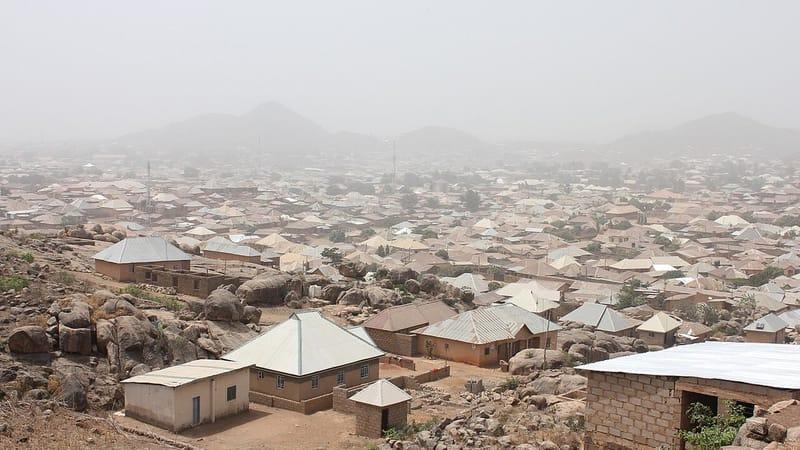
• NiMet's latest three-day outlook, issued on 25 November 2026 and valid until the end of Saturday 28 November, expected moderate dust haze across the North with visibility of 2km to 5km, and possibly 1,000 metres or less over parts of Yobe, Jigawa, Kano, Katsina and Bauchi.
• The Nigeria Centre for Disease Control and Prevention (NCDC) lists cerebrospinal meningitis among the risks of the dry season and advises good ventilation, covering the mouth and nose when coughing or sneezing, vaccination in high-risk areas and no self-medication.
• NiMet had not published a December 2026 outlook on its website when TheRadar checked on 28 November, so how dusty or cold December will be, and when the haze reaches the South, is not yet officially forecast.
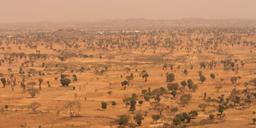
Picture a morning in Kano or Potiskum when the far side of the street is a pale blur and the sun looks like a white coin. Windscreens carry a film of dust, and a dry cough starts going round the house.
That is the picture behind the Nigerian Meteorological Agency's (NiMet) weather outlook issued on 25 November 2026 by its Central Forecast Office, valid from Thursday 26 November to Saturday 28 November. It is the most recent outlook listed on NiMet's forecast bulletin page as of Saturday morning.
From slight haze to sub-1km in a week
The outlook shows how fast the harmattan has thickened. For Monday 23 to Wednesday 25 November, NiMet's Sunday outlook forecast only slight dust haze with good visibility over Kano, Katsina, Kebbi, Sokoto and Zamfara, according to a P.M. News report on that outlook.
By the outlook issued on 24 November, moderate dust haze was expected over Katsina, Kano, Zamfara, Kebbi, Jigawa and Yobe from Wednesday 25 November, with slight haze and good visibility over the rest of the North. A day later, the 25 November outlook moved the whole Northern region to moderate dust haze with visibility of 2km to 5km from Thursday through Saturday, and said there was a "prospect of dust reducing the visibility to less than or equal to 1000m" over parts of Yobe, Jigawa, Kano, Katsina and Bauchi.
What the North-Central and the South can expect
For the North-Central, the 25 November outlook expected partly cloudy skies in a hazy atmosphere over parts of Kogi, Kwara, Benue and the Federal Capital Territory, and sunny, hazy weather over the rest of the region. The 24 November outlook had expected only slight dust haze with good visibility across the North-Central.
The South is not yet in full harmattan. NiMet's 24 November outlook expected partly cloudy skies across the region in the morning, with isolated thunderstorms and light rain later in the day over parts of the region. NiMet's three-day outlooks are written for regions and named states, not individual towns, so local conditions can differ.
What NiMet has said about December so far
TheRadar checked nimet.gov.ng on 28 November and found no December 2026 monthly outlook or harmattan bulletin. NiMet's November outlook, as reported by Nairametrics on 10 November, projected minimum temperatures of 14.6°C to 25.8°C and maximums of 28.6°C to 37.7°C across the country, and advised people to stay hydrated and avoid long exposure to direct sunlight.
That means there is no official forecast yet of how cold December mornings will get in the North, whether the haze will be thicker than last year, or when it will spread to Lagos and other southern cities. NiMet's bulletin page listed new outlooks almost every day from 19 to 25 November, but none dated after 25 November when TheRadar checked on 28 November.
Dust, the dry season and meningitis
NiMet's own advice with its 22 November outlook, as reported by P.M. News, is that people with asthma and other breathing problems should take extra care because dust is suspended in the air. It also warns that dry harmattan winds can spread fires, so cigarettes, matches and charcoal should be disposed of carefully, bush burning avoided and appliances unplugged when not in use.
The NCDC's festive-season public health advisory of 23 December 2025 describes cerebrospinal meningitis as "a life-threatening infection of the brain and spinal cord linings, common during the dry season". It advises avoiding overcrowded spaces, keeping homes and gatherings well ventilated, covering the mouth and nose when coughing or sneezing, watching for neck stiffness, fever, nausea, sensitivity to light or seizures, vaccinating children and adults in high-risk areas, and not self-medicating. It also recommends face masks in crowded or poorly ventilated places.
In a later advisory this March, reported by Premium Times, the NCDC said meningitis cases are more common from December to April, when dusty weather, overcrowding and poor ventilation help the disease spread, and that "fever and headache during the dry season should not automatically be assumed to be malaria." The NCDC's 24-hour toll-free line is 6232. TheRadar could not find a new NCDC meningitis advisory for the 2026-27 dry season on the pages it opened.
For now the thickest dust is in the far North, and the official picture beyond Saturday is still blank until NiMet's next outlook and its December forecast come out. Until then, people in Yobe, Jigawa, Kano, Katsina and Bauchi should plan for poor visibility on the roads, and anyone with a sudden high fever and a stiff neck should go to a health facility rather than treat it at home.
Also read: NiMet's latest harmattan outlook sends airlines to airport weather reports
Also read: El Niño is near record strength. What NiMet has said about Nigeria's dry season
How thick is the haze where you live this weekend, and has it reached your city yet? Tell us in the comments.