
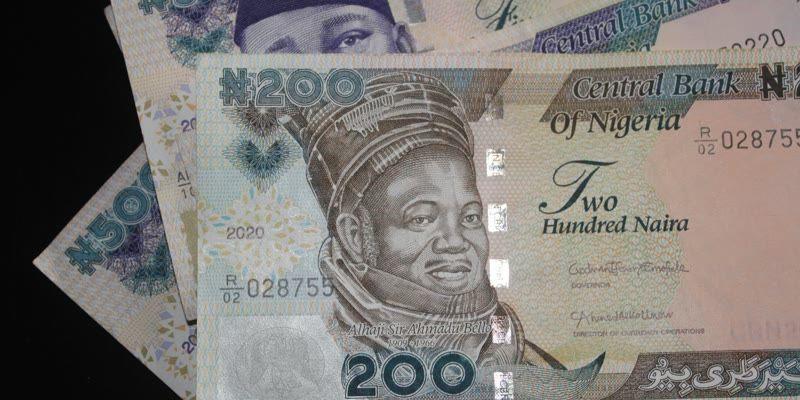
• Nigeria's national minimum wage is still ₦70,000 a month under the 2024 amendment to the National Minimum Wage Act, and no new figure has been agreed by government, employers and labour.
• Unions are asking for very different numbers, with the Association of Senior Civil Servants of Nigeria and the TUC seeking ₦300,000 for the lowest-paid worker while the public service negotiating council says labour's ₦500,000 template still stands.
• What is not settled is when talks formally start or when any new wage would take effect, because the Federal Government says the current wage is due for review on 1 June 2027 and the NLC says the process should already be under way.
A clerk on grade level one walks to the bus stop at the end of the month and does the sums again: transport, a bag of rice shared with a sibling, school fees due in January. The ₦70,000 on the payslip has not changed since 2024. The prices around it have.
That gap is why "minimum wage" is trending again in Nigeria. On Tuesday, the Trade Union Congress (TUC) said the Federal Government had approved a committee to review its demands, according to TheWill's report on the new committee. It came days after senior civil servants put a ₦300,000 figure on the table, and three weeks after the government and the Nigeria Labour Congress (NLC) agreed to a six-month transport payment while wage talks are organised.
The only number in law is still ₦70,000
The current floor comes from the National Minimum Wage (Amendment) Act 2024, which raised the wage from ₦30,000 to ₦70,000 and, according to the Minister of Labour and Employment, Muhammad Maigari Dingyadi, provides for a review every three years. In a 12 October letter reported by ThisDay and Leadership, the minister said the current wage was signed in July 2024 and "will expire and become due for review on 1 June 2027".
Everything else in the current debate is a proposal. On 12 November, the Association of Senior Civil Servants of Nigeria (ASCSN) used its National Executive Council meeting in Abuja to demand that the Federal Government raise the pay of its lowest-paid worker to ₦300,000 immediately, with matching adjustments for higher grades, as reported by Leadership, Tribune and Legit. Its president, Shehu Mohammed, said the union would not wait for the next statutory cycle.
The TUC has pushed a similar figure. In a statement reported by Ripples Nigeria on 29 October, TUC President Festus Osifo and Secretary-General Nuhu Toro proposed raising the lowest-paid worker's salary to ₦300,000, though that figure appears in only one of the reports TheRadar reviewed. Separately, Gbenga Olowoyo, national secretary of the Joint National Public Service Negotiating Council, told Arise News on 27 October that "the template of ₦500,000 is still subsisting", the figure the NLC and TUC put forward in August.
A transport payment is not a wage increase
The most concrete decision so far came out of a conciliation meeting in Abuja on 27 October. According to PM News's account of the agreement, the government and labour agreed a ₦70,000 monthly "transport intervention" for workers at all levels, starting November 2026 and running for six months. Pulse reported the same terms. The same meeting agreed that a Minimum Wage Negotiation Committee would be set up and meet "immediately", but the memorandum recorded a disagreement on the effective date of any new wage.
That payment is temporary relief, not a change to the legal minimum. It ends after six months, and the reports describe it as a public-service measure, with state and local governments only urged to adopt it. A private-sector worker on ₦70,000 has no claim to it under that agreement.
The TUC rejected the arrangement, arguing that a permanent pay rise would be more dependable than another temporary allowance. That is what the committee announced on 17 November deals with. TheWill reports it includes three TUC representatives, the offices of the Secretary to the Government of the Federation and the Head of Service, the National Salaries, Incomes and Wages Commission and the labour ministry, and must report within two weeks. It is a review of the TUC's grievances, not the tripartite body that negotiates a new national minimum wage.
The fight is over the calendar
Both sides cite the same law and read it differently. The government's position is that a fresh review "barely two years into the implementation of the current wage" would be premature. The NLC argues that the Act separates negotiation from implementation. "The government is not being asked to implement a new wage today, but to commence the process of negotiation," NLC President Joe Ajaero wrote, as quoted in Leadership's report on the timetable dispute. The congress says talks should begin at least six months before the current wage lapses.
In remarks reported by Vanguard on 8 November, NLC Acting General Secretary Benson Upah said negotiations "ought to have been on the way" and that the congress could go to court for an interpretation if necessary. He also dismissed suggestions from some labour leaders that a new wage would start in August 2027.
On the government's own reading, June 2027 is when the current wage becomes due for review, not when a new figure is guaranteed to start. The 2024 increase only became law when the amendment was signed in July that year, so any new figure would still need agreement among government, employers and labour, and then legislation.
What ₦70,000 buys now
The National Bureau of Statistics put headline inflation at 14.06% in October 2026, down from 14.63% in September and 18.97% in October 2025, according to reports by PM News and Vanguard on the latest figures released this week. Prices still rose 0.43% in the month itself, faster than September's 0.06%. Vanguard's reading of the report puts food inflation at 19.13% year-on-year.
Slower inflation means prices are rising less quickly, not falling. A year-on-year rate of 14.06% means that, on average, what cost ₦70,000 in October 2025 cost about ₦79,800 a year later, and food has risen faster than that. The ₦70,000 wage itself has not moved since 2024.
Some workers are already paid above the floor. A May 2026 state-by-state tally by Nairametrics lists Imo at ₦104,000, Lagos and Rivers at ₦85,000 and several states at ₦80,000, while noting that Zamfara had not shown full implementation of ₦70,000. Against those numbers, ₦300,000 would be more than four times the national floor and ₦500,000 more than seven times.
The next markers are close. The TUC committee's two-week report is due around the start of December, the October agreement said both sides would reconvene after one month, and the first transport payments are due this month. Watch whether the Minimum Wage Negotiation Committee is formally inaugurated with a named membership and agenda, because until that happens, every figure on the table remains a demand.
Also read: Oshiomole believes Tinubu cares about workers with ₦70,000 transport allowance
Also read: Inflation is down, but food is still getting harder to buy. Why the numbers do not feel like relief
Would a temporary ₦70,000 transport payment change your month, or does only a new minimum wage count? Tell us in the comments.
