
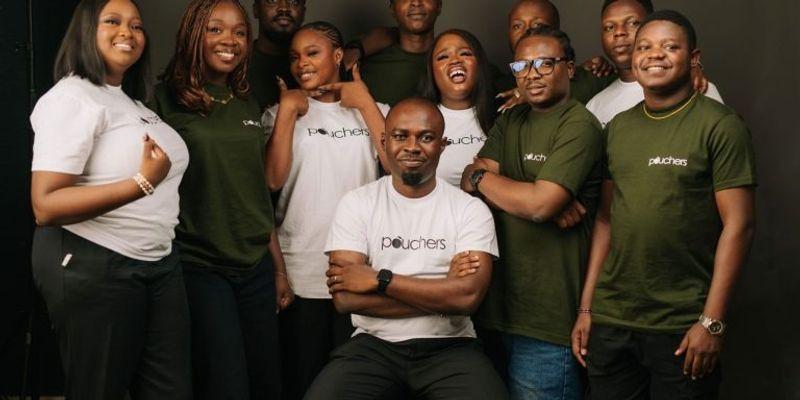
• Pouchers has secured $500,000 in pre-seed funding led by Stack Directory LLC, and says the round accompanies its exit from beta and plans to expand cross-border payments infrastructure.
• The platform leverages stablecoins such as USDT and USDC across multiple blockchain networks to enable users to hold, send, and spend foreign currencies including USD, EUR, GBP, and CAD.
• While the fresh capital underscores growing investor confidence in digital-asset payment rails, users must carefully navigate inherent risks regarding stablecoin stability, wallet custody, exchange rates, and evolving regulatory compliance.
For thousands of Nigerian remote professionals, software developers, and creative freelancers working with international clients, the end of every month brings a familiar digital ritual. It begins with an invoice sent across time zones, followed by days of anxious refreshing as payment winds its way through legacy correspondent banking networks. By the time the wire transfer finally lands in a local domiciliary account, hefty intermediary deductions, sluggish settlement times, and unfavourable bank conversion rates have already taken a painful bite out of hard-earned income. It is against this backdrop of persistent cross-border friction that digital-asset startups continue to pitch alternative rails designed to bypass traditional banking bottlenecks.
The latest entrant capturing attention in the local tech ecosystem is Pouchers, a Nigerian fintech startup that has officially stepped out of its beta phase after securing a $500,000 pre-seed funding round. According to reporting by WeeTracker, the early-stage investment was led by Stack Directory LLC. The report says Pouchers plans to expand its cross-border payments infrastructure, launch foreign-currency accounts, strengthen partnerships and reach more users.
Breaking down the $500,000 pre-seed and beta exit
Securing venture backing in the current macroeconomic climate is no small feat, particularly for early-stage infrastructure plays operating in volatile emerging markets. The $500,000 pre-seed injection gives Pouchers capital to pursue its core thesis: that a multicurrency wallet using stablecoin rails can make cross-border money movement more practical for its intended users. For months, the startup operated in a controlled beta environment, stress-testing its underlying technology, onboarding early users, and iterating on product features based on direct feedback from freelancers and remote workers.
Emerging from beta with fresh capital allows the company to transition from experimental validation to active market expansion. In the competitive landscape of Nigerian fintech, where startups must constantly prove their resilience against regulatory headwinds and infrastructure deficits, this funding milestone provides the runway needed to acquire users at scale. However, capital injection is only a start: long-term survival in the cross-border payment sector demands robust compliance frameworks and security architectures capable of earning user trust.
How stablecoins and multicurrency wallets operate
At its core, Pouchers positions itself as a multicurrency wallet powered by stablecoins, bridging the gap between decentralised digital assets and everyday financial utility. According to official product documentation on Pouchers, the platform supports stablecoins such as USDT and USDC across multiple blockchain networks, allowing users to hold balances in USD, EUR, GBP and CAD.
For readers less familiar with financial jargon, stablecoins are cryptocurrencies designed to track a reserve asset, most often the US dollar. That design does not erase risk: users still need to understand the issuer, the network they are using, how the wallet holds funds and the rate applied when money moves between currencies. Pouchers says it is built for people who earn, spend or send money across borders, and lists virtual cards, currency balances and transfer features among its products.
Navigating risks: custody, pricing and compliance
Despite the efficiencies promised by stablecoin-powered wallets, users should approach digital-asset platforms with a clear understanding of the practical questions. Pouchers does not eliminate every fee, guarantee a rate under every market condition, or solve every cross-border payment challenge. Before funding a wallet, customers should check the terms that apply to the specific transfer, card or conversion they intend to make rather than assume a promotional claim applies to every transaction.
The important questions are direct: who holds the assets, how transfers are authorised, what protections apply when a transaction goes wrong and how the service handles network congestion or identity checks. Regulatory oversight across the African digital-asset landscape is also evolving quickly. As financial watchdogs scrutinise virtual-asset service providers, platforms must navigate shifting compliance mandates to protect user funds and maintain uninterrupted operations.
What this means for Nigeria’s freelance economy
The rise of venture-backed stablecoin startups mirrors a broader structural shift within Nigeria’s digital economy. For freelancers and remote workers paid by clients outside Nigeria, the appeal of a multicurrency wallet is easy to understand: it promises fewer steps between receiving money, holding a foreign-currency balance and paying for work tools or online services. That promise still has to be tested against the platform’s pricing, reliability, support and compliance practices.
This dynamic is reshaping how local tech ecosystems interact with global capital. As large banking groups explore acquisitions and partnerships, and as regulators design sandboxes to supervise innovation, the boundaries between traditional finance and cryptocurrency continue to blur.
Ultimately, Pouchers’ pre-seed raise highlights the enduring need to solve real payment friction in frontier markets. Whether its digital-asset rails can earn mainstream adoption will depend heavily on sustained execution, transparent pricing and proactive engagement with financial regulators.
Also read: Standard Bank is eyeing OPay ahead of a possible US IPO
Also read: CBN wants fintech and crypto startups in its sandbox
What is your preferred method for receiving international client payments as a Nigerian freelancer? Share your experience in the comments.
