
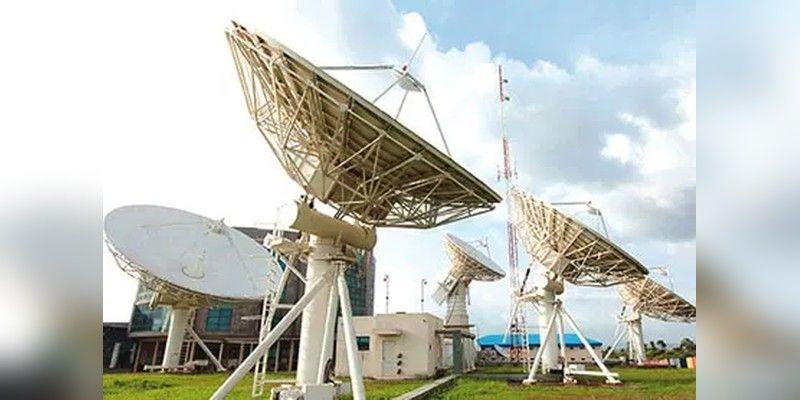
• The Federal Executive Council has approved NIGCOMSAT-2A and NIGCOMSAT-2B, two planned communications satellites intended to expand national capacity.
• The project is still in planning and contracting, not a new consumer internet service; reported target dates are 2028 for 2A and 2029 for 2B.
• Better satellite capacity could matter for hard-to-reach communities and enterprise networks over time, but it will not make a data bundle cheaper or faster tomorrow morning.
There is a particular kind of small-business frustration that starts with a perfectly good phone and ends with somebody standing by a window, trying to send one image before a customer loses patience.
Nigeria has just made a long-term move that may eventually matter to moments like that. The Federal Executive Council has approved two next-generation communications satellites, NIGCOMSAT-2A and NIGCOMSAT-2B, as the country prepares for the ageing NigComSat-1R to reach the end of its working life.
The announcement is easy to turn into a “your internet is about to change” headline. It should not be. The work is still in its planning and contracting stage. But it is worth understanding because small businesses outside the best-connected parts of Lagos, Abuja and other cities know how expensive a weak connection can become.
Two satellites are a long-term infrastructure bet
Space in Africa, reporting NIGCOMSAT’s 23 August announcement, says the approval allows the agency to move towards selecting partners, finalising contracts and technical planning. The satellites are expected to be supplied by Thales Alenia Space and Israel Aerospace Industries, with NIGCOMSAT coordinating implementation alongside the communications ministry and other agencies.
The current timetable reported for the project points to 2028 for NIGCOMSAT-2A and 2029 for 2B. Those are targets, not a launch button a customer can press. The first honest thing to say about the story is that there is a large gap between approval and a person seeing better service on their phone.
Still, the case for replacement is real. NigComSat-1R was launched in 2011. A country that wants to run more services online cannot casually wait for a capacity gap before thinking about what comes next.
What satellite capacity can actually help with
Satellites are not only for a dish in somebody’s compound. They can support backhaul, broadcasting, government systems and connections in places where laying fibre is difficult or uneconomic. NIGCOMSAT has described the new capacity as part of a plan to extend connectivity to underserved communities and support services in education, healthcare, agriculture and finance.
For a small enterprise, that future can sound distant until you picture the real work: a pharmacy that needs a dependable payment link, a rural school uploading records, a logistics firm tracking vehicles outside dense urban routes, or a studio trying to send a client’s work before deadline. Connectivity is not a luxury in those moments; it is part of the service.
But a satellite in the sky does not solve every last-mile problem by itself. Ground equipment, licences, service providers, power, pricing and network management all decide whether the capacity reaches a business in a way it can actually use.
Do not mistake approval for instant relief
Nigeria’s data users have heard enough grand technology announcements to know the difference between a project and a lived experience. The FEC approval is a necessary early step, not a reason to assume that coverage gaps will disappear next month or that every data plan will suddenly fall in price.
That restraint matters for small-business planning. A founder choosing an office, a market seller relying on transfers or a creator sending big files should make decisions using the connection available today. The satellite plan is not a substitute for testing the actual network where the work happens.
The more useful reading is that Nigeria is trying to protect and expand a layer of infrastructure that sits behind many things people take for granted. If it is delivered well, the benefit may not arrive as a dramatic “satellite internet day.” It may arrive as fewer moments where the business stops because the signal did.
Also read: Before you buy another data plan, check the network around you
Also read: Nigeria wants every home and business on a digital map. What that could mean for online sellers
Where does a poor connection cost your work or business the most: payments, deliveries, client calls or sending files? Tell us in the comments.
