
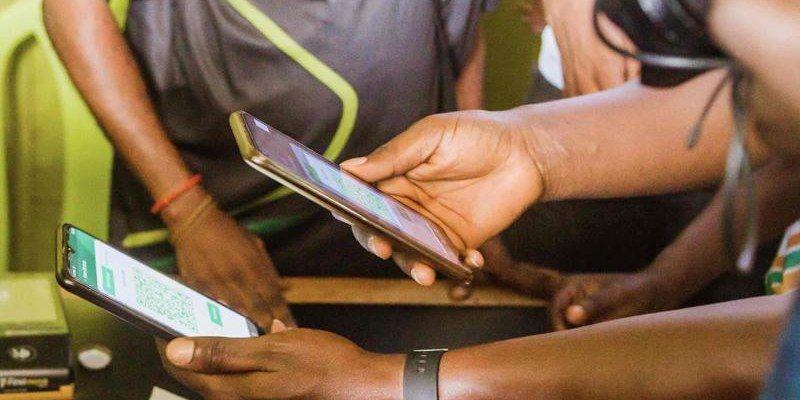
- Nigerian fintech giants like Kuda, OPay and Flutterwave are actively integrating Artificial Intelligence into their platforms in 2026
- AI is being used to process millions of transactions, detect fraud in milliseconds and approve loans for users without formal credit histories
- Kuda Bank recently announced plans for deep AI integration, including a specialised chatbot, after processing ₦14.3 trillion in Q1 2026
If you use a banking app in Nigeria today, you are already interacting with Artificial Intelligence — you just might not realise it yet.
While the world is obsessed with AI chatbots writing essays and generating images, Nigeria's biggest financial technology companies are quietly deploying AI to solve real-world money problems. From stopping scammers before they steal your funds to approving a quick loan when you have zero credit history, AI is completely rewiring how money moves in Nigeria.
With the Nigerian AI market projected to reach $434 million by 2026, the country's fintech sector is leading the charge. Here is exactly how platforms like Kuda, OPay and Flutterwave are using Artificial Intelligence right now.
Kuda Bank: AI for customer service and growth
Kuda, Nigeria's first fully digital bank, is leaning heavily into AI following a massive quarter. After processing an astonishing ₦14.3 trillion across over 300 million transactions in Q1 2026, the bank announced strategic plans to integrate AI across its operations.
The most visible change for users will be customer service. Kuda has been training a specialised AI chatbot tailored specifically to Nigerian customer interaction patterns.
"Customer service is an area where we are testing how AI can help us scale without losing the human touch," noted Ore Fakorede, Head of Content, Community and Creative at Kuda. By handling routine queries instantly, the AI frees up human support staff to deal with complex issues, drastically reducing wait times.
But Kuda's AI ambitions go beyond chatting. The bank is applying machine learning to analyse the behaviour of its retail customers, identifying users who are actually running small businesses from personal accounts and offering them tailored business banking tools.
Flutterwave and Paystack: the invisible fraud detectors
If you have ever bought something online in Nigeria, your transaction was likely processed by Flutterwave or Paystack. For these payment giants, AI is not a customer service tool — it is a digital security guard.
Both companies process billions of dollars annually, making them prime targets for sophisticated cybercriminals. To combat this, they deploy real-time AI fraud detection systems.
These machine learning models are trained on massive datasets of Nigerian transaction patterns. When you click "Pay," the AI analyses dozens of variables in milliseconds — your location, spending habits, device type and the time of day. If the transaction looks suspicious, the AI blocks it instantly. More importantly, it is smart enough to reduce "false positives," so your legitimate late-night food order doesn't get declined by mistake.
OPay and digital lenders: AI-powered credit scores
One of the biggest challenges in Nigeria is access to credit. Traditional banks require extensive paperwork, collateral and a formal credit history — things most Nigerians simply do not have.
AI is solving this through "alternative credit scoring." While OPay continues to lead conversations on financial inclusion at major events like the BusinessDay Fintech Summit 2026, digital lending platforms like FairMoney, Carbon and Branch are using AI to rethink who gets a loan.
Instead of a traditional credit bureau report, these AI models analyse alternative data: your mobile phone usage patterns, how often you buy airtime, your mobile money history and even how quickly you reply to messages. The AI uses this to predict your likelihood of repaying a loan — allowing these platforms to instantly approve hundreds of millions of dollars in micro-loans to Nigerians who would have been automatically rejected by a traditional bank.
The future of your money
As Nigeria continues its $1 billion infrastructure boom in local AI data centres, the capabilities of these fintech apps will only increase. We are moving toward hyper-personalised banking, where your app doesn't just hold your money but actively uses AI to tell you how to save it, invest it and protect it.
The AI revolution in Nigeria isn't just about robots — it's about making your money work smarter.
Also read: Nigeria Is Building $1 Billion in AI Data Centres — Here Is What It Means for Your Job and Your Data
Also read: Easy Ways Nigerian Freelancers Can Receive Dollar Payments from Foreign Clients in 2026
Which Nigerian fintech app do you think has the best features right now? Have you noticed any AI tools in your banking app? Drop your thoughts in the comments below.
