
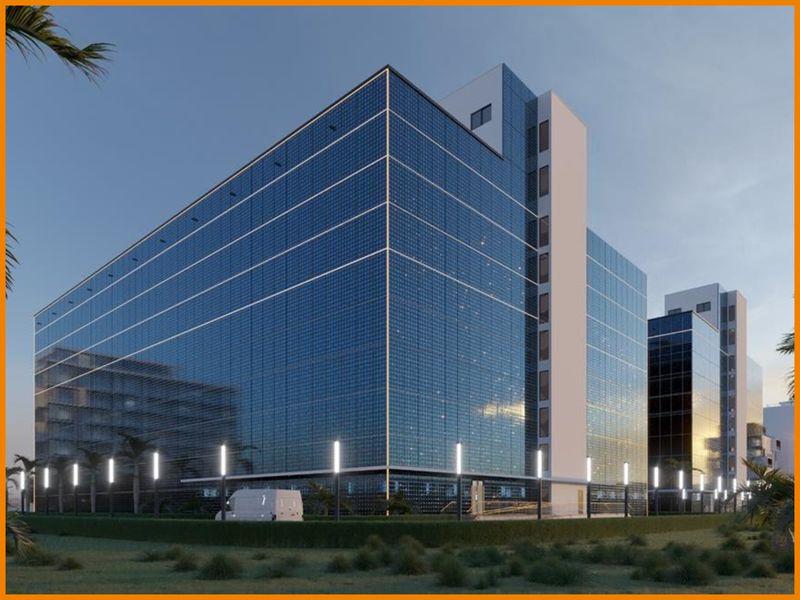
- Nigeria is currently seeing a massive $1 billion investment in AI-ready data centres, led by Kasi Cloud, MTN, and Airtel
- For decades, Nigerian startups and banks paid over $850 million annually to host data on foreign servers
- This infrastructure shift will lower internet latency, create thousands of tech jobs, and stop the massive capital flight out of the country
Every time you open a banking app, stream a Nollywood movie, or ask an AI chatbot to write an email, your data goes on a very long, very expensive trip.
For decades, despite being Africa's largest economy and a powerhouse of tech talent, over 90% of Nigeria's digital data has been hosted on foreign servers in Europe or the United States. This reality forces Nigerian businesses to spend an estimated $850 million every year paying foreign cloud providers in dollars — a massive drain on the economy.
But in 2026, that is finally changing. Nigeria is currently in the middle of a quiet but massive $1 billion infrastructure boom, building hyperscale, AI-ready data centres right here at home.
From MTN's network upgrades to the historic commissioning of Kasi Cloud's new campus in Lagos, the hardware required to power Nigeria's digital future is finally being built on Nigerian soil. Here is what this means for the economy, your internet speed, and your career.
The $1 billion infrastructure boom
The shift toward "digital sovereignty" — the idea that a country's data should be stored within its own borders — is accelerating. As of early 2026, Nigeria has approximately 21 major data centre facilities operational, but the new wave of investments is focused specifically on Artificial Intelligence.
The most significant development happened in May 2026, when Kasi Cloud Datacenters officially commissioned West Africa's first hyperscale-ready, AI-capable data centre campus in Lekki, Lagos. The facility, backed by the Nigerian Sovereign Investment Authority (NSIA), is designed to scale to 100 Megawatts (MW) of critical IT capacity.
To put that in perspective, before Kasi's launch, Nigeria's total national installed capacity was just 30MW.
But Kasi is not alone. The major telecom operators are also building out their own AI infrastructure. MTN is developing a 4.5-megawatt facility in Ikeja, Lagos, as part of its massive ₦1 trillion network upgrade. Meanwhile, Airtel's Nxtra division is building a 38-megawatt hyperscale data centre at Eko Atlantic City, Victoria Island, Lagos — expected to be fully live in 2026.
Altogether, the Nigerian data centre market was valued at $288 million in 2025 and is projected to reach $1.09 billion by 2031 — a growth rate of nearly 25% per year.
 MTN Nigeria Data Center and Cloud Services concept image showing server racks and a glowing cloud icon] MTN Nigeria is investing heavily in network upgrades, including a 4.5-megawatt data centre facility in Ikeja. Photo: Telecom Review Africa
What this means for everyday Nigerians
You might not care about "hyperscale infrastructure" or "megawatts," but you will absolutely feel the impact of these data centres on your daily life.
1. Faster internet and zero lag
When data is hosted in Europe, it takes time to travel back and forth — this is called latency. For gamers, this means lag. For fintech apps, this means delayed transactions. The new AI data centres guarantee "sub-50 milliseconds latency" for local workloads. Because the servers are physically located in Nigeria (often right next to the subsea cables landing in Lagos), your apps, games, and streaming services will load noticeably faster.
2. Cheaper cloud costs for Nigerian startups
Right now, Nigerian tech founders have to pay for Amazon Web Services (AWS) or Microsoft Azure in US Dollars. When the Naira fluctuates, their server costs skyrocket, often forcing them to lay off staff or shut down. By hosting locally, Nigerian companies can pay for world-class cloud and AI infrastructure in Naira, shielding them from foreign exchange volatility.
3. A massive job creation engine
Data centres are essentially factories for the digital economy. Building and maintaining them requires a massive workforce. The ongoing boom is creating thousands of jobs for electrical engineers, network architects, cybersecurity experts, project managers, and facility operators. Beyond the direct jobs, having local AI infrastructure means Nigerian startups can finally train their own AI models locally, creating a surge in demand for data scientists and machine learning engineers.
The challenge: Powering the AI cloud beast
While the infrastructure boom is exciting, it faces one massive, very Nigerian hurdle: electricity.
Data centres consume an extraordinary amount of power, and AI servers consume even more than traditional servers. With the national grid historically struggling to maintain uptime, data centre operators cannot rely on public power.
To keep the servers running 24/7, companies are forced to over-invest in captive power, relying on gas turbines, massive diesel generators, and solar hybrids. Industry reports indicate that operators are spending approximately $1 million per megawatt just on backup generation.
If Nigeria wants to truly become the digital hub of West Africa, fixing the energy trilemma is not optional — it is the only way to keep the cost of these data centres low enough for local businesses to actually afford them.
The end of data export
For years, Nigeria has exported its raw digital potential and imported the finished product. Our startups were built here, but hosted abroad. Our businesses generated data here, but processed it elsewhere.
As the Minister of Finance, Taiwo Oyedele, noted during the Kasi Cloud commissioning: "We cannot remain consumers of artificial intelligence, paying foreign exchange to access AI capability hosted abroad. We can become producers, hosts, and builders."
With $1 billion flowing into local AI data centres, Nigeria is finally building the foundation to do exactly that.
