
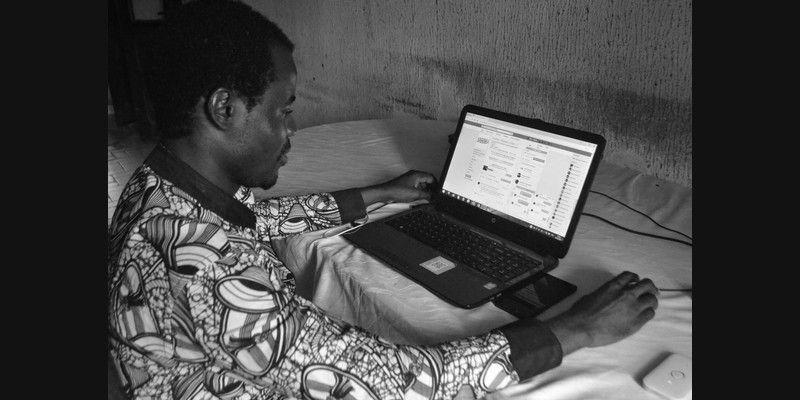
• CBN maintains a public list of licensed International Money Transfer Operators, while banks provide the formal channels that receive and document many foreign-currency inflows.
• A clean trail — contract, invoice, payment description and bank records — makes a freelancer’s payment story easier to explain when a provider asks questions.
• Receiving overseas income does not remove a Nigerian tax resident’s reporting obligations; the exact position depends on the individual’s circumstances.
As Nigeria's remote digital economy expands, freelancers earning in foreign currencies face an intricate labyrinth of foreign exchange controls, banking documentation standards, and evolving tax reporting frameworks.
The gentle hum of the ceiling fan in a Victoria Island apartment competed with the quiet ping of notification bells as Chinedu refreshed his screen for the third time that afternoon. For months, the software developer had been designing user interfaces for clients scattered across London, Berlin, and San Francisco. Each project delivered clean code and satisfied clients, yet getting those hard-earned dollars safely and legally into his local account felt like navigating an obstacle course. Across Nigeria, thousands of talented digital professionals share this exact daily reality. Balancing global invoicing platforms with domestic banking regulations is no longer just an administrative footnote—it is the foundational pillar of a sustainable freelance career.
Understanding foreign exchange channels and commercial banking
Operating as a freelance digital professional in Nigeria requires a firm grasp of how international currency enters the domestic financial ecosystem. Nigerian freelancers navigating international digital marketplaces often face structural hurdles, including strict foreign exchange controls, documentation requirements for opening domiciliary accounts, and evolving tax reporting standards for foreign-sourced income. When funds cross international borders, they must transit through authorized institutional corridors to prevent transaction freezes or compliance investigations.
Under current monetary frameworks overseen by the apex bank, Nigerian freelancers can receive international payments through CBN-authorized dealer banks via domiciliary accounts or licensed International Money Transfer Operators (IMTOs). These designated channels ensure that foreign currency inflows are properly accounted for within the formal banking architecture. Choosing the right financial institution and maintaining clear records of service agreements helps remote workers establish a transparent audit trail for every incoming wire transfer or electronic payout.
Furthermore, structural reforms introduced by monetary authorities continue to shape how digital earners interact with global liquidity. Reviewing official updates regarding Central Bank of Nigeria Payment Systems provides valuable insight into authorized payment service providers and electronic transaction guidelines. When freelancers align their operational workflows with approved banking frameworks, they significantly reduce the likelihood of delayed payouts and unexpected account restrictions.
Meeting Know Your Customer and Anti-Money Laundering requirements
The ease of opening digital wallets on international platforms often contrasts sharply with the rigorous verification standards enforced by domestic financial institutions. The Central Bank of Nigeria regulates foreign exchange inflows and requires compliance with basic Know Your Customer (KYC) and Anti-Money Laundering (AML) standards across all authorized financial touchpoints. When setting up a domiciliary account or receiving wire transfers through commercial banks, freelancers must present valid identification documents, proof of address, and verifiable documentation detailing the origin of funds.
Compliance is not merely a bureaucratic hurdle; it is a vital shield protecting remote workers from fraudulent actors and illicit financial flows. Financial institutions are mandated to monitor unusual transaction spikes, unverified third-party transfers, and sudden large-scale currency conversions. For independent contractors working with diverse international clients, maintaining comprehensive invoicing records—including signed contracts, project briefs, and detailed payment descriptions—satisfies internal bank compliance checks and reassures reviewing officers that all incoming funds stem from legitimate freelance services.
As regulatory bodies continue to refine oversight mechanisms, staying informed about broader institutional shifts is essential. Keeping abreast of CBN Reforms and Initiatives allows remote professionals to anticipate policy adjustments before they impact day-to-day operations. For a deeper dive into equipping your remote workstation with the right operational infrastructure, explore our guide on Top remote work tools and platforms for African professionals.
Navigating tax reporting and foreign-sourced income obligations
Beyond foreign exchange and banking regulations, tax compliance represents another critical dimension of sustainable remote freelancing in Nigeria. Under Nigerian tax laws and recent reforms, tax residents earning foreign-sourced income are required to declare earnings and fulfill personal income tax obligations through relevant tax authorities. Many freelancers mistakenly assume that income generated from offshore clients escapes local tax jurisdiction, but statutory frameworks mandate transparency regarding global digital earnings.
Fulfilling tax responsibilities involves accurately tracking gross earnings, converting foreign currency amounts at recognized exchange rates, and filing annual returns with the appropriate state internal revenue service or federal tax agency. Maintaining organized financial ledgers throughout the fiscal year transforms tax season from a stressful scramble into a straightforward administrative task. To better understand how recent legislative shifts impact digital earners, read our comprehensive breakdown on Understanding Nigeria's latest tax reforms for digital creators and remote workers.
Balancing global payment platforms with local commercial bank compliance is essential to avoid blocked transactions, frozen accounts, or regulatory penalties while maintaining sustainable freelance operations within Nigeria's evolving digital economy. By proactively addressing tax liabilities, freelancers build commercial credibility that facilitates future business expansion, equipment financing, and corporate partnerships.
Back in his Victoria Island workspace, Chinedu closed his laptop after successfully reconciling his monthly invoices with his designated domiciliary account. The initial anxiety of managing international compliance had given way to a steady, predictable routine anchored in regulatory awareness and banking discipline. For Nigeria's burgeoning community of digital freelancers, mastering the legal and financial architecture of cross-border payments is the ultimate key to unlocking long-term global success.
What is your go-to payment channel for international gigs? Drop your experience in the comments below.
Build a payment paper trail before you need it
The awkward moment usually comes after the work is done. A client has paid. The money is visible somewhere. Then a bank, payout provider or accountant asks the question that should have been answered at the beginning: what exactly was this money for? A freelancer who can immediately show an agreed scope, invoice, proof of delivery and a payment reference has a very different experience from one trying to reconstruct a six-month-old job from WhatsApp messages.
That is why the least glamorous part of freelancing can be the most useful. Give every client job a simple name. Keep the invoice amount, currency, date and payment route together. Save the email that confirms the work. Where a platform allows it, make the payment description match the service actually delivered. This is not a trick for bypassing checks; it is the ordinary record-keeping that makes legitimate work legible to the institutions handling it.
There is also no universal ‘best app’ answer. A route that works for one client, currency or contract may be unavailable, slower or more expensive for another. Before choosing a payout channel, check whether it is available for the client’s country, whether the receiving bank can explain the settlement process, the conversion or withdrawal cost, and what documents may be requested if the payment is reviewed. The CBN’s licensed-operator list is a better starting point than social-media recommendations alone.
None of this replaces tailored tax, legal or banking advice. But it turns the first question from ‘How do I get this money out?’ into the more durable one: ‘Can I show, clearly and honestly, what I was paid for?’ For a freelancer building a career across borders, that is a much stronger operating system.
