
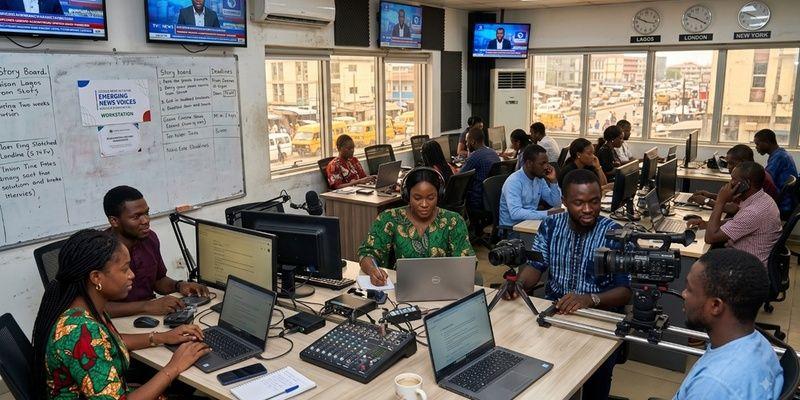
• Google’s Emerging News Voices Growth Lab has selected six Nigerian independent news creators: Onlinebanker, Adetunji Films, More Branches TV, Wearegst, Iswellthecapitalist and The Republic.
• The virtual programme runs through late September and covers AI tools, video strategy, audience development and sustainable revenue.
• Its quieter focus may matter most: helping young newsrooms build direct relationships with readers instead of relying entirely on social platforms.
Google’s new Growth Lab is an opportunity for six Nigerian news creators, but it also puts the hardest part of the creator economy in plain view: reach is not the same thing as an audience you can keep.
On a Nigerian phone, news now arrives in fragments. A breaking clip on TikTok. A thread on X. A voice note in a WhatsApp group. A creator explaining an issue in two minutes while the traditional newsroom tries to catch up.
That is the audience Google’s latest newsroom programme is looking at. The Google News Initiative has selected six Nigerian independent news creators for its Emerging News Voices Growth Lab, a multi-month virtual programme for a 20-creator Sub-Saharan African cohort that runs through late September.
The six Nigerian participants are Onlinebanker, Adetunji Films, More Branches TV, Wearegst, Iswellthecapitalist and The Republic. The names work across social-first news, video and digital-native publishing. Together, they point to a simple fact about where younger Nigerians increasingly meet the news: not only on a newspaper homepage, but in the feeds where they already spend their time.
Six names in a changing news room
The Growth Lab is not a prize for one kind of creator. It brings together operations built around different formats and audiences, but the problem underneath is familiar. A creator can earn attention quickly and still have little control over how that attention turns into a lasting business.
Google says the programme is designed to help emerging newsrooms strengthen their use of AI, video, audience development and revenue strategy. That sounds like a lot of industry language until it is brought back to the daily reality of a small newsroom: someone is researching, filming, editing, publishing, answering comments and trying to make the work pay — often at the same time.
For an outlet like The Republic or a social-first operation such as More Branches TV, new tools may make the work faster. They do not automatically solve the bigger question of whether a viewer who watches one video will ever return.
The AI is only one part of the story
AI is the headline-friendly part of the programme. Participants are expected to work with tools including Gemini, NotebookLM, Google Trends and SynthID for research, transcription, translation and verification, according to BusinessDay’s report on the programme.
But the Growth Lab is not selling AI as a magic wand. Video strategy, YouTube growth, product development and revenue models are in the same package. That matters because the real bottleneck for a creator-led newsroom is rarely just production. It is finding a model that lets good reporting survive after the post stops trending.
A viral clip can make a page visible. It cannot, by itself, build a newsroom that knows who its readers are, what they return for, or how to reach them when an algorithm changes the rules.
Owning the audience is the real prize
The most interesting line in Google’s plan is its focus on direct relationships with readers through newsletters and the open web. In other words, the people who see a creator on a platform should have a way to find that work again without hoping the platform serves it to them.
That may sound less exciting than a new AI tool, but it is the bit that changes the balance of power. A social following belongs partly to the platform that hosts it. A newsletter subscriber, a returning website reader or a paying community member is closer to an audience a newsroom can actually understand and serve.
Nigerian creators know how quickly a platform can decide what travels. One week, short clips are everywhere. The next, a new format, an altered recommendation system or a monetisation change can make the same work harder to find. The Growth Lab’s direct-audience focus recognises that a creator economy built only on borrowed distribution is fragile.
What the six creators can show the rest of the market
The six selected creators are not expected to represent every Nigerian publisher. But the programme makes their experiments worth watching. If AI shortens the time spent on transcription or research, where does that saved time go? If video brings people in, what makes them stay? If a social post gets the first click, what makes a reader choose a direct connection with the brand?
Those are business questions, not just technology questions. They apply to a one-person explainer page, a student-run newsletter, an established publication and anyone building a personal media brand around a clear point of view.
Google can provide training and tools. The harder work will be turning a moment of attention into a relationship that lasts longer than the next scroll.
Also read: PodFest Naija is looking for Nigeria’s next big podcaster. What the festival is offering creators
Also read: Selar creators may see 5% withheld from their sales. What the tax dispute means
Do you follow a Nigerian news creator more closely than a traditional news outlet? Tell us who — and why — in the comments.
