
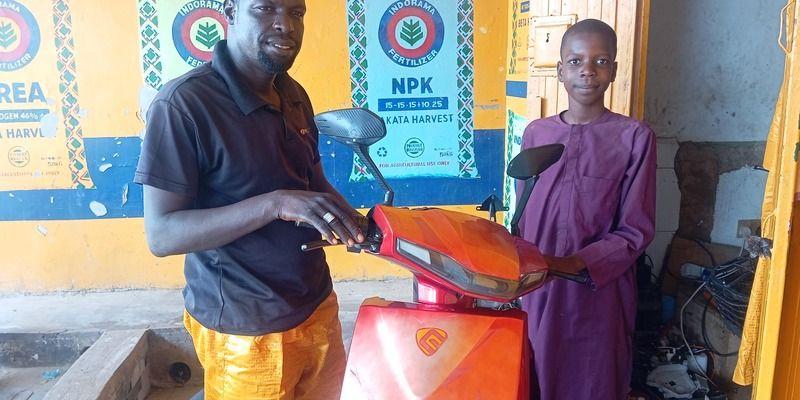
• Petrol prices in Gombe have surged to approximately ₦1,365 per litre, creating acute financial pressure for commercial riders compared to pre-2023 subsidy removal rates of around ₦200.
• Electric motorcycles, priced around ₦1 million, are gaining traction as riders seek relief from escalating fuel expenses and regular engine maintenance costs.
• Despite weekly fuel savings estimated at roughly ₦5,000 by adopters like Ayuba Abubakar, widespread e-bike adoption faces severe hurdles including unreliable power grids and the risk that charging via fossil-fuel generators merely shifts emissions.
The daily scramble for affordable fuel has transformed transport economics across northern Nigeria, forcing commuters and commercial operators alike to reevaluate how they move. In Gombe state, where dusty motor parks once echoed exclusively with the throaty roar of two-stroke and four-stroke petrol engines, a quieter mechanical hum is beginning to mingle with the traffic. Mechanics and riders are witnessing an incremental shift toward electric motorcycles, driven not by sweeping environmental mandates or generous government subsidies, but by the relentless arithmetic of fuel inflation.
For years, commercial transport operators relied on petroleum as an inexpensive, non-negotiable staple of daily commerce. Today, that foundation has fractured. As local economic pressures mount, the search for alternative propulsion systems has moved from theoretical urban policy discussions to the dusty alleyways where local technicians weld frames and solder battery packs. Yet, this nascent e-mobility transition in Gombe is far from straightforward. While electric bikes offer a compelling escape from petrol pump volatility, they collide directly with infrastructure deficits that test the ingenuity of every rider who dares to make the switch.
The relentless fuel price squeeze on Gombe streets
To understand why commercial riders in Gombe are entertaining battery-powered alternatives, one must examine the staggering ascent of fossil fuel prices over recent years. According to ground reporting by Al Jazeera, petrol in Gombe recently traded at approximately ₦1,365 per litre. This figure represents a dramatic departure from historical baselines; before the federal government removed petroleum subsidies in May 2023, the same quantity of fuel cost roughly ₦200.
For commercial transport operators whose daily livelihoods depend on covering extensive distances across urban and suburban routes, this exponential price multiplication has decimated profit margins. Motorcycle taxi riders, commonly known as okada operators, find themselves spending a disproportionate share of their daily earnings simply to keep their tanks full. Maintenance costs, compounded by adulterated fuel and frequent engine wear, add further strain to an already precarious financial existence. In this climate of fiscal attrition, even modest reductions in operating expenditures take on immense survival value, prompting adventurous operators to look beyond the internal combustion engine.
The economics of e-bikes: Upfront capital versus weekly savings
Transitioning from a petrol motorcycle to an electric alternative introduces a stark financial trade-off: high initial capital outlay versus reduced ongoing operational costs. On the open market in Gombe, acquiring a new electric motorcycle typically requires an upfront investment of about ₦1 million. For many local artisans and commercial riders, raising this sum represents a formidable barrier, often necessitating informal loans, cooperative financing, or pooling family resources.
Despite the steep entry cost, early adopters argue that the long-term savings justify the initial sacrifice. Ayuba Abubakar, an e-bike adopter interviewed in Gombe, estimated that switching to electric propulsion saves him around ₦5,000 a week in fuel expenses alone. Beyond direct fuel savings, riders frequently highlight the elimination of engine-oil expenditures, spark plug replacements, carburetor cleanings, and complex piston overhauls. Without internal combustion components, routine mechanical upkeep is drastically simplified, reducing the frequency of unexpected repair bills that traditionally drain a rider's weekly earnings.
However, industry analysts caution against treating these individual accounts as universal guarantees. Operating conditions, battery lifespan degradation, terrain variations, and payload weights all influence real-world efficiency. Furthermore, while the absence of moving engine parts cuts maintenance overhead, the battery pack itself remains an expensive consumable asset that will eventually require replacement, introducing a distinct future capital expenditure that riders must factor into their long-term financial planning.
The charging bottleneck: Grid instability and generator dilemmas
While the mechanical simplicity of electric motorcycles is appealing, keeping them powered in northern Nigeria exposes profound infrastructural vulnerabilities. The primary obstacle confronting Gombe's nascent e-bike community is not the vehicle technology itself, but the reliability and cleanliness of the electricity supply used to charge them.
Public power grids across many parts of Nigeria remain erratic, characterized by frequent load shedding, voltage fluctuations, and prolonged outages. When grid electricity fails, operators turn to alternative power sources, primarily petrol or diesel generators. This fallback creates a paradoxical environmental and economic dilemma. As Muhammad Abubakar of Sustenaa aptly points out, charging electric vehicles using fossil-fuel generators risks merely shifting carbon emissions rather than eliminating them, while also driving up the effective cost of energy per kilowatt-hour.
Consequently, the long-term viability of e-mobility in Gombe hinges heavily on the development of robust off-grid solutions, such as dedicated solar charging kiosks and efficient battery-swapping networks. Without accessible renewable infrastructure, riders remain tethered to the very fuel economy they are trying to escape. Technicians like Hussaini Isa, who spends his days repairing electric motorcycles in Gombe, find themselves troubleshooting not just motor controllers and wiring harnesses, but also devising makeshift charging rigs that can withstand unstable local voltage.
Weighing the future of e-mobility in northern Nigeria
It would be premature to interpret the growing presence of electric bikes in Gombe as evidence of a nationwide, unstoppable e-mobility boom. Urban transport ecosystems across Nigeria vary wildly, influenced by local state policies, topography, disposable income levels, and the availability of technical support. What works on the paved corridors of Lagos or Abuja encounters different economic and geographical realities on the streets of Gombe.
Nevertheless, the organic adoption observed in Gombe illustrates a resilient grassroots pragmatism. When traditional economic models become unsustainable, commercial operators demonstrate a willingness to experiment with disruptive technologies out of pure economic necessity. Whether these green transport experiments mature into permanent commercial fixtures will depend on targeted investments in local manufacturing, accessible financing schemes, and decentralized renewable energy infrastructure.
As policymakers and investors contemplate the future of Nigerian transportation, the experiences of Gombe's e-bike riders offer a clear lesson: technological transitions in developing markets are driven less by abstract climate goals and more by the immediate, urgent need to preserve human livelihood against macroeconomic headwinds.
Also read: Nigeria says 3,700 telecom towers are coming, but the dead zones are still here
Also read: Nigeria's 90,000km fibre rollout starts in October: Can it make online work less painful?
What is your view on the shift toward electric transport amidst rising fuel costs? Share your thoughts in the comments below.
