
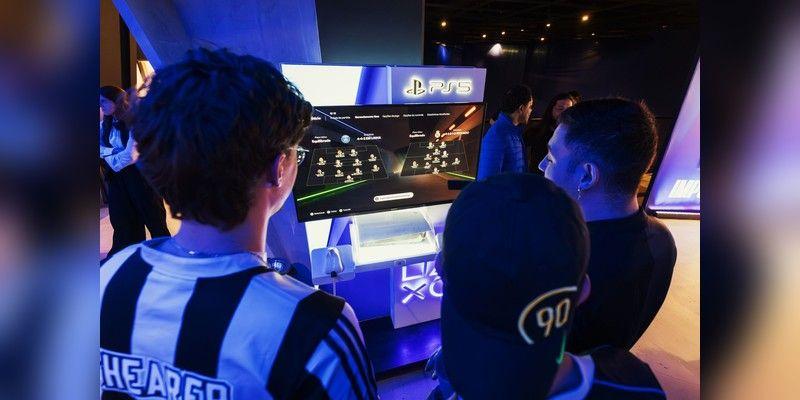
• Jabi Lake Mall says its Gaming Championship, carrying FC 26 branding, runs from Friday, 28 August to Sunday, 30 August at the Atrium (Center).
• The Mall’s public notice lists activity from 12:00 PM to 5:00 PM daily, with check-in starting at 11:30 AM.
• The announcement is a three-day event listing, not proof that Abuja has a permanent esports circuit or a guaranteed pathway from casual play to professional competition.
For many people, FC 26 is a private ritual: a controller, a screen, a familiar opponent and that one person who insists the rematch must happen immediately. This weekend in Abuja, that ritual is moving out of the sitting room and into a mall.
Jabi Lake Mall says its Gaming Championship runs from Friday to Sunday at its Atrium (Center), with FC 26 branding, a 12:00 PM–5:00 PM daily programme and an 11:30 AM check-in. The listing is small in the scale of global gaming, but it points to a bigger local shift: games become different when other people can watch the score change.
The game leaves the room
A public tournament changes the ordinary geography of play. At home, a player can restart a match, switch off the console or keep the win inside a group chat. At a mall competition, there is a queue, a clock and strangers paying attention.
That does not make the event a professional league. It simply gives casual players a different setting in which to compete—and gives friends and shoppers a reason to see gaming as something more social than a solitary screen habit.
Why FC 26 makes an easy meeting point
Football games already come with a shared language. Players may argue over formations, possession and goals even when they do not follow the same clubs. That familiarity makes a football-game bracket easier to understand than a tournament built around a niche title.
It also explains why the public setting matters. A good game can pull in someone who did not arrive intending to compete. They may stop for a match, pick a side, debate a goal or ask when the next round starts. That is the audience layer a living-room game does not automatically have.
A weekend listing is not an esports verdict
The accessible announcement gives dates, hours, venue and check-in time. It does not set out an entry fee, a prize total, detailed rules, registration process or a winner. Those are details no report should invent around a flyer.
It would also be too much to treat one weekend at one mall as proof of a lasting Abuja esports economy. Repeated events, dependable organisers, accessible venues and players returning after the crowd goes home are different questions. The listing tells us that a public competition is happening; it does not settle those bigger questions.
What a crowd can add to the match
Still, the difference between “I play FC 26” and “I showed up to play in public” can matter. There is pride in a clean win, but there is also exposure to new opponents, the pressure of an audience and the chance to meet people who care about the same game.
The Jabi event is scheduled through Sunday. Its clearest value may not be who takes a crown. It may be the simple experiment of making gaming visible enough for people to ask whether Abuja wants more nights like it.
Also read: Nigeria made a FIFAe Mobile semi-final. Why phone-first esports deserve a closer look
Also read: Nigeria’s iGaming is moving beyond betting apps. Why code and compliance matter
Would you rather play FC 26 at home or in front of a crowd? Join the conversation in the comments.
