
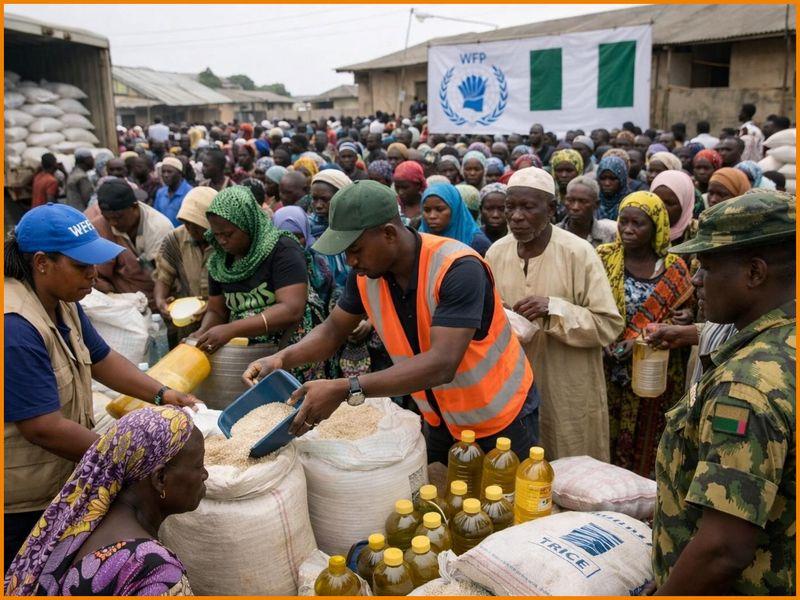
• Nigeria’s hunger crisis is deepening as global food aid budgets are cut
• Rising inflation, conflict and climate shocks are worsening food insecurity nationwide
• Aid agencies warn funding decisions in 2026 will have life-or-death consequences
Nigeria is facing a worsening hunger crisis as global food aid funding continues to shrink, raising concerns that millions more people could fall into severe food insecurity in 2026. A combination of reduced international humanitarian budgets, high inflation, persistent insecurity, and climate-related disruptions to food production is driving the situation.
Humanitarian organisations say Nigeria is now among the countries most exposed to the global pullback in food assistance. With food prices rising faster than incomes and government resources under strain, the country’s ability to absorb further aid cuts is increasingly limited.
Nigeria’s growing hunger and food insecurity crisis
Food insecurity in Nigeria has intensified over the past two years, with economic pressures and conflict leaving millions unable to meet basic nutritional needs. According to international humanitarian agencies, more than 30 million Nigerians are currently experiencing moderate to severe food insecurity, while several million face emergency-level hunger conditions.
Staple food prices, including rice, maize and wheat-based products, have surged as inflation remains elevated and the naira continues to face pressure. For low-income households, food now consumes a disproportionately large share of monthly spending, increasing the risk of malnutrition and negative health outcomes.
Children under five, pregnant women and internally displaced persons are among the most vulnerable. Health experts warn that prolonged food insecurity is driving higher rates of acute malnutrition, which places additional strain on Nigeria’s healthcare system and increases long-term public health costs.
Global food aid cuts and funding constraints
Nigeria’s hunger crisis is being amplified by declining global food aid funding. International donors are reducing humanitarian budgets as they respond to competing global pressures, including geopolitical conflicts, rising defence spending and domestic economic challenges.
Aid agencies report that funding shortfalls have forced difficult decisions, including scaling back food distributions, nutrition programmes and cash-transfer initiatives across parts of Nigeria. In conflict-affected regions, the cost of delivering food aid has risen sharply due to security risks, fuel prices and logistics challenges.
Without renewed commitments, humanitarian organisations warn that food aid coverage in Nigeria could decline further in 2026, leaving millions without reliable access to food assistance at a time of peak vulnerability.
Inflation, Conflict and Climate Risks Worsen the Crisis
Beyond aid funding, domestic economic conditions continue to fuel Nigeria’s food insecurity. High inflation has increased the cost of food imports, transportation and agricultural inputs, pushing prices higher for consumers nationwide.
Insecurity in northern and central regions has disrupted farming activity and food supply chains. Attacks on rural communities, displacement of farmers, and reduced access to farmland have lowered agricultural output, particularly in areas critical to national food production.
Climate-related risks are also contributing to the crisis. Flooding and erratic rainfall have damaged crops and reduced yields, increasing Nigeria’s dependence on imports and exposing the country to volatility in global food markets.
Health, economic and stability implications
The consequences of Nigeria’s hunger crisis extend beyond immediate food shortages. Rising malnutrition levels increase healthcare costs, reduce workforce productivity and heighten long-term economic risks.
Analysts note that widespread food insecurity can contribute to social instability, internal displacement and migration pressures, with implications for regional security in West Africa. For international partners, Nigeria’s food situation matters because of the country’s population size and its role in regional trade and migration dynamics.
What happens next for Nigeria’s food security?
Humanitarian agencies are urging donor governments, development banks and international institutions to reassess funding priorities and prevent deeper cuts to food aid in Nigeria. Early intervention, they argue, remains more cost-effective than responding to full-scale humanitarian emergencies later.
At the national level, experts say addressing food insecurity will require sustained investment in agriculture, rural security, climate resilience and economic stabilisation. While long-term reforms are essential, aid groups warn that immediate funding decisions in 2026 will be critical.
If global food aid continues to decline, Nigeria’s hunger crisis could intensify further, with significant consequences for public health, economic stability and regional security — outcomes that would carry costs well beyond the country’s borders.
