
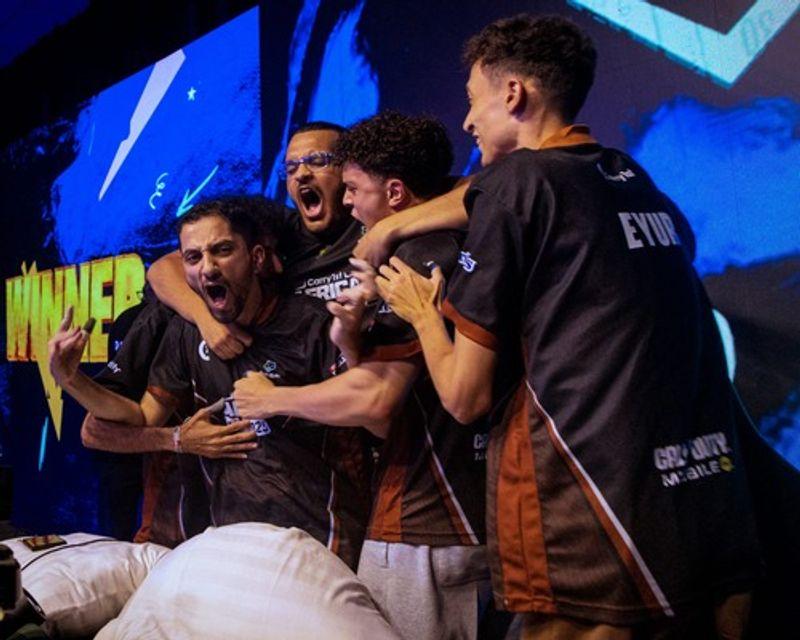
- Abuja will host eight Call of Duty: Mobile teams from five African regions on September 5 and 6, with two places reserved for Nigeria.
- The $30,000 prize pool matters, but the bigger prize is a route to represent Africa at the 2026 Call of Duty: Mobile World Championship.
- A live LAN final is a test of whether mobile esports can become a proper spectator culture in Nigeria—not just another competition watched through somebody’s phone.
A phone is still a phone until the final circle closes.
Then it becomes a controller, a stadium, a teammate’s lifeline and, for a few players, a possible ticket beyond Nigeria.
That is the energy heading to Abuja on September 5 and 6, when the Carry1st Africa Cup 2026 brings its Grand Finals to the Los Angeles Event Center in Wuse. Eight Call of Duty: Mobile teams will play live. Two slots belong to Nigeria. The eventual champion will carry Africa’s name to the 2026 Call of Duty: Mobile World Championship. Carry1st’s official event page confirms the format, the two Nigerian slots and the World Championship route.
The easy headline is the $30,000 prize pool.
The more interesting one is that an African mobile-game tournament is asking Nigerians to treat a phone game like a real live sport.
Abuja is getting a proper final, not another online bracket
Most Nigerian players know competitive mobile gaming as a private thing.
You register. You queue. Your data starts misbehaving at the worst possible second. Somebody’s teammate disappears. The match ends, a screenshot goes into a group chat and everybody returns to their normal life.
The Carry1st Africa Cup final changes the setting.
The September event is a live LAN competition, not a string of online games played from bedrooms across the continent. Nigeria will host eight teams from Nigeria, Southern Africa, West Africa, North Africa and East Africa. The official allocation gives Nigeria two Grand Final slots; the other six are split across the regional qualifiers.
That matters because competitive gaming only starts to feel like a public culture when the audience can see the pressure in the room.
A lag complaint is one thing. A missed shot under stage lights, with teammates beside you and a crowd behind you, is something else entirely.
The prize money is not the whole prize
Yes, $30,000 is serious money.
But prize money disappears fast when a team splits it, buys better equipment, pays for travel and tries to keep competing. The larger currency here is legitimacy.
The winner will earn the right to represent Africa at the Call of Duty: Mobile World Championship. That is the line Nigerian gamers have been waiting to hear: not you can play for fun, but you can play your way onto a global stage.
Nobody should pretend that one tournament will turn every finalist into a full-time professional. It will not. A strong run is not a salary. A viral clip is not a contract. Even a trophy does not fix the lack of coaches, stable practice spaces, sponsorship and reliable tournament calendars that players face after the applause dies down.
But it gives people something concrete to point to.
A team that survives a regional route, reaches Abuja and plays on a continental final stage now has proof that its grind exists outside a Discord server.
Nigeria has two slots. That is opportunity and pressure.
Two Nigerian teams will reach the final. That is not a guarantee that Nigeria will win it.
It is a chance to see what local talent looks like when it has to compete against the best teams from four other African regions in the same room, on the same game, under the same rules.
That distinction matters. A lot of gaming conversations in Nigeria end at potential. We have talent. We have a huge mobile audience. We have young people who can spend six hours learning a game while somebody else is still asking where the settings menu is.
Potential is useful. Results travel farther.
The official Cup page currently lists the two Nigeria entries as TBD, which is a reminder that the story is still being written. The tournament’s official page is the place to watch for the confirmed Nigerian teams.
A free ticket is not a small detail
Carry1st says entry tickets are free but need to be reserved in advance. That sounds like logistics. It is also a quiet statement about who this event is for.
For too long, gaming events have been built around people who already know the right Discord, own the right console or have enough money to treat a ticket as an afterthought.
A free event in Abuja will not remove every barrier. It will not pay somebody’s transport from Lagos. It will not solve the cost of data, devices or time off work.
But it gives students, casual players, content creators and sceptical parents a chance to see that mobile esports has a real crowd behind it.
That is how the category grows. Not only through prize money, but through people walking into a room and realising that the player they dismissed as “always pressing phone” may be building a skill, an audience or a career path around a game.
Gaming needs more than winners
The final will crown one team. The ecosystem needs more than one winner.
It needs organisers who can run events consistently. It needs creators who can explain the games without making every match sound like a funeral. It needs editors, casters, community managers, coaches, tournament admins and brands that understand the difference between sponsoring a logo and supporting a scene.
That is why Lagos Games Week showed Nigeria’s gaming industry is bigger than a single tournament. It also explains why gamers who want money from the culture should not wait for a trophy alone; TheRadar has already mapped legitimate gaming side hustles beyond playing professionally.
The Carry1st Africa Cup cannot build all of that in one weekend.
It can give the people building it a much louder room.
When Abuja hosts the finals, Nigeria will not just be waiting to see who wins $30,000. It will be watching to see whether mobile esports can hold a real crowd, carry a serious broadcast and send one African team into the world with more than a hashtag behind it.
Also read: Lagos Games Week 2026: Everything you need to know about Nigeria’s biggest gaming event
Also read: 10 legit gaming side hustles Nigerians are using to make extra money
Will Abuja’s final make you take mobile esports more seriously, or do Nigerian gamers still need more than one big tournament to prove the scene is real? Drop your take in the comments below.
