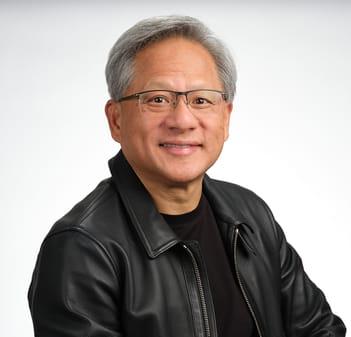
• Nvidia's board reinstated Jensen Huang as president, chief executive and director on Monday 23 November, 11 days after he resigned on 12 November following his admission of an extramarital affair, and the company's shares closed about 31% higher that day.
• The board says it consulted senior US government officials and concluded his return poses no national security risk, but its own independent investigation into reports that Huang was the target of a foreign intelligence effort is still running, and he faces closed-door questions in the US House on 1 December.
• For Nigeria, the clearest Nvidia link is Cassava Technologies' plan to take its Nvidia-powered "AI factory" to Nigeria after South Africa, and no date, site or GPU count for a Nigerian facility has been announced.
A machine-learning student in Ibadan trains a small model on a free cloud notebook until the session times out, then starts again. Nearly every serious AI tool she reads about, from chatbots to image generators, was trained on chips made by one company: Nvidia. So when Nvidia's boss resigned and then came back inside two weeks, the story did not stay in Silicon Valley.
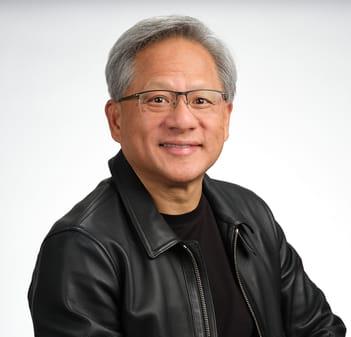
On Monday 23 November, Nvidia said in a statement announcing Huang's reinstatement that its board had voted unanimously to bring him back "effective immediately", saying it was "satisfied with respect to Mr. Huang's candor and ability to lead". Huang, 63, co-founded the company in 1993 and had run it ever since, until 12 November.
Watch:
Eleven days and two reversals
The sequence is short. According to CNBC's report on his return to the office, Huang admitted to an affair in a note to employees on 8 November and resigned as CEO on 12 November. The New York Times and Reuters later reported relationships with two employees, one of them a direct report, CNBC said. Separately, The New York Times reported on 29 October, citing US intelligence officials, that Alice Huang, a former executive at the Nvidia chip buyer Megaspeed with whom Huang had a relationship, is suspected of passing information to Chinese intelligence. China has called the claim a fabrication. Huang said he supports the board's investigation and "will cooperate fully", and Nvidia said it had "no reason to believe" national security or its secrets were compromised, CNBC reported. None of this has been tested in court.
Colette Kress, Nvidia's chief financial officer, stepped in as interim CEO. On 17 November, board chair Harvey Jones said the board did not intend to reinstate Huang, even after Huang said publicly he would be "honored" to return. Six days later the board reversed itself. US President Donald Trump told CNBC he had played a large role in the decision and spoke to the board "directly and indirectly".
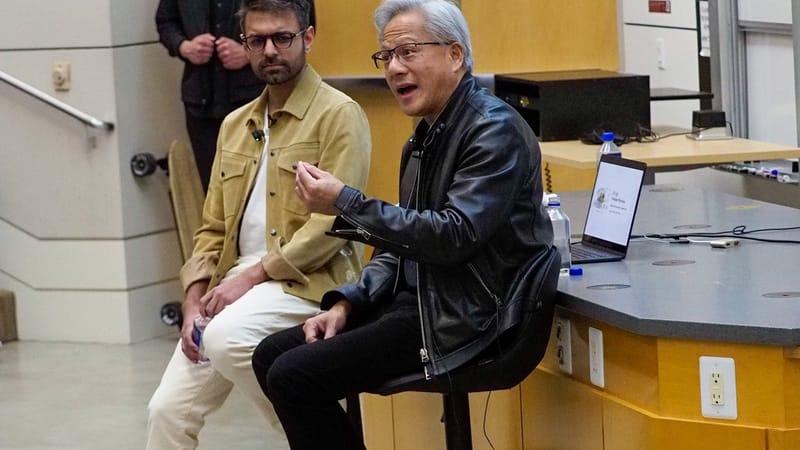
Investors cheered. Nvidia shares rose as much as 36% on Monday and closed about 31% higher, according to CNBC, recovering most of what they lost after the affair became public. Inside the company, CNBC reported, employees chanted his name as he walked in, and Huang told them: "I'm going to be a better CEO the second time around."
The questions that are still open
Reinstatement is not the end of the matter. Nvidia's own statement says a committee of independent directors, with outside lawyers, is investigating reports that Huang was the target of a foreign intelligence effort, and that "the committee's investigation will proceed to conclusion". Huang says he supports it.
The company is also creating a national security and export control committee on its board and hiring its first chief compliance officer. In Washington, Huang has a closed-door interview with a House committee on 1 December and is scheduled to appear before the Senate Banking Committee on 3 December, according to CNBC. Lawmakers are seeking answers about alleged smuggling of restricted Nvidia chips into China.
What is established: Huang is back in charge, the board says he poses no security risk, and the market agrees with the board for now. What is not established: what the internal investigation will find, and what Congress will conclude.
Where Nigeria fits in Nvidia's Africa map
Nvidia has announced no Nigerian facility of its own. Its best-known African tie-up runs through Cassava Technologies, the Strive Masiyiwa-founded group that calls itself Nvidia's first African cloud partner and counts Nvidia as a shareholder, according to TechBuild Africa. In March, Cassava began deploying an "AI factory" in South Africa, a data centre of Nvidia GPUs that sells computing power as a service, and said it would expand to Nigeria, Kenya, Egypt and Morocco, according to BusinessDay's report on the rollout and Connecting Africa.
Neither report gives a date, location or chip count for Nigeria. Masiyiwa said in November 2025 that Cassava had acquired 12,000 Nvidia GPUs, a figure that has not been independently confirmed. A tech site tracking the story, TechBuild Africa, noted that Huang's exit and return had not visibly changed anyone's African plans, and nothing in Nvidia's 23 November statement mentions Africa.
The government's own view of the gap is blunt. At an Abuja AI conference in October, the communications minister, Bosun Tijani, said through a representative that "Nigerian capacity might not be big enough", and proposed pooling GPUs with countries such as Rwanda, Kenya and Senegal, ThisDay reported. That is a single report, and no pooling deal has been announced.
What it means for young builders here
For a Lagos startup or a student training models, Nvidia's leadership drama matters mostly through two channels: the price and supply of GPUs, and the company's willingness to keep spending on emerging markets. Huang's return points to continuity rather than change. The board kept Kress as CFO and Jones as chair, and CNBC reported the company still forecasts about 75% revenue growth next year, which suggests demand for its chips, and their price, are not about to ease.
That continuity cuts both ways. Most Nigerian developers already reach Nvidia hardware indirectly, through foreign cloud services billed in dollars, and a weak naira makes every GPU hour dearer. A local Cassava site would help only if it arrives with naira-friendly pricing, and nobody has announced that.
What the return does not change is the skills gap. Nvidia-linked training schemes in Africa, such as its partnership with Gebeya announced in 2024, were set up before this crisis, and there is no sign they have been paused or expanded.
The next dates to watch are 1 and 3 December, when Huang faces US lawmakers, and any word from Cassava on when, where and at what price a Nigerian AI factory will open. Until that last announcement comes, Huang's comeback is a big story about a company that powers Nigerian AI work from a distance.
Also read: Jensen Huang: the Nvidia co-founder and CEO behind the AI chip boom
Also read: Anthropic's record IPO left Nigeria out of its retail offer. What that means for local apps
Would a Nigerian AI data centre with naira pricing change what you build? Tell us in the comments.