
• FIFA president Gianni Infantino told ARISE News in Abuja on Monday that Nigeria could not host a World Cup "today", but added "tomorrow, why not?", pointing to stadiums, airports and transport as the work still needed.
• FIFA's published requirements for the 48-team, 104-match World Cup ask for at least 14 all-seater stadiums of 40,000 seats or more, with 80,000 seats for the opening match and final, plus 72 team base camps and thousands of hotel rooms in every host city.
• Infantino did not give a timeline, Nigeria has not announced any World Cup bid, and he spoke of what hosting would take, not of any formal FIFA assessment of Nigeria.
A Super Eagles fan in Surulere has watched World Cups in Germany, Brazil, Qatar and North America on a television screen, and asks the same question every four years: when will one come here? This week, the man who runs world football gave a short answer.
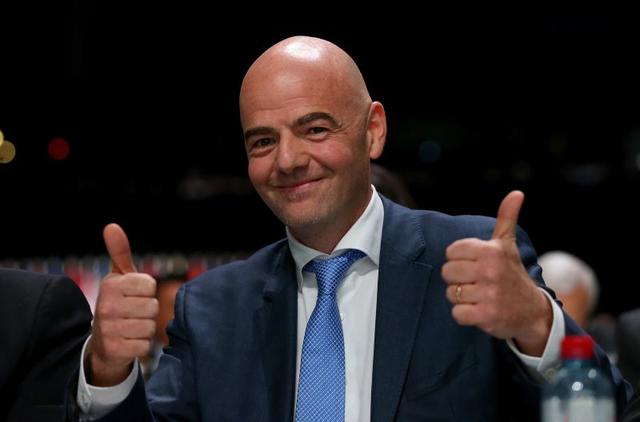
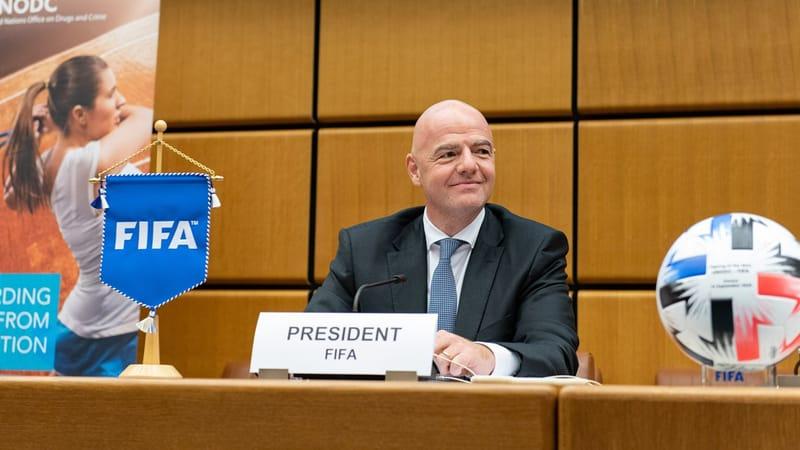
FIFA president Gianni Infantino was asked on ARISE News whether Nigeria is ready to host the World Cup. "Today, no. But tomorrow, why not?" he said, according to Vanguard's report on the interview. Nigeria Info's account dates the interview to Monday 23 November in Abuja, where Vanguard says he had attended the Confederation of African Football's general assembly that weekend.
"Today, no" is about concrete, not passion
Infantino did not question Nigeria's love of the game. "The key to hosting a World Cup is obviously the infrastructure, the stadiums, the airports, transportation," he said, as quoted by Nigeria Info, adding that this is where best practice is needed. Vanguard's version of the same quote also includes hotels.
He paired the "no" with praise. Nigeria, he said, "has the resources, has the passion, has the will as well to move ahead", according to the Sports247 report. He also pointed to the number of top players the country has produced, singling out Delta State, Vanguard reported.
What he did not do is set a date, name a tournament or say FIFA had studied a Nigerian bid. No such bid exists. His answer reads as a description of the gap, not a verdict from a formal inspection.
What a FIFA host has to build
The gap becomes clearer against FIFA's own paperwork. In the overview of the bidding processes for the 2030 and 2034 World Cups, FIFA says the tournament is expected to have 48 teams and 104 matches, and that a bid must propose at least 14 suitable stadiums. For 2030, at least seven had to be existing grounds; the hosting overview for 2034 in the same document lowered that to four, counting stadiums already under construction.
The seat counts, set out in the document's 2034 hosting requirements, are the hard part. Every stadium must be all-seater, with:
- 40,000 seats for group matches and knockout games up to the quarter-finals
- 60,000 seats for the semi-finals
- 80,000 seats for the opening match and the final
FIFA also says that, in principle, every stand should be fully covered by a roof, and each pitch should be natural grass with hybrid reinforcement and drainage, heating and ventilation systems.
Then come the stadiums nobody watches on TV. A bid must offer at least 72 Team Base Camp hotels paired with 72 training sites, plus four team hotels and training sites for each stadium. Each training site must sit within a 20-minute drive of its hotel, and base camp sites need at least two pitches each.
Hotels and airports are the hidden test
Infantino's other gaps are written into the same document. For fans, FIFA estimates that a city staging the opening match or final needs roughly 8,000 guest rooms at peak time, a semi-final city about 6,000 and every other host city about 4,000, of 3-star to 5-star standard. FIFA's own headquarters hotel is expected to have about 700 rooms, and each team hotel at least 80 rooms of 4-star or 5-star standard.
On travel, bidders must list every airport they plan to use, with its design capacity and the host cities it would serve, and describe public transport in each city. Security is expected to cover airports, train and bus stations, not just stadiums.
For a country, the question is not one excellent ground but a dozen or more cities that can each fill hotels, move tens of thousands of fans and fly teams in and out on match weeks. That is why recent tournaments have gone to large, already-built economies or to joint bids: 2026 is shared by the United States, Canada and Mexico, and 2030 by Spain, Portugal and Morocco.
Where Nigeria starts from
Nigeria is not starting from zero. It staged the FIFA U-17 World Cup in 2009, a much smaller tournament, and Warri's stadium was renovated for it. The Moshood Abiola National Stadium in Abuja was built for about 60,000 spectators, according to its listing on stadium databases, enough on paper for a semi-final but short of the 80,000 FIFA asks for an opening match or final.
The visit also highlighted some of the investment Infantino spoke about. Nigeria Info reports that FIFA's Forward 3.0 programme has put $4.88 million into a FIFA Forward Technical Centre at the Abuja stadium, with a 68-room players' hostel and two training pitches planned.
On Friday 20 November, Infantino and FIFA secretary-general Mattias Grafström toured the remodelled Warri City Stadium in Delta State. "This stadium is fantastic. It has everything you can dream of," he said, Vanguard reported from the visit, adding that he hoped to return and play there once the remaining work was completed. Nigeria Info reported that the stadium was not formally commissioned during the visit because work was still being finished. None of the reports gave a capacity for the remodelled ground.
Those numbers point to the real distance. A single good stadium in Warri or Abuja helps clubs, the national teams and youth football. A World Cup asks for more than a dozen of them, plus the hotels, flights and roads around them, all at once.
What to watch now is when the Warri stadium is formally commissioned and opened to league and international matches, and whether the Abuja technical centre is completed. Any talk of a bid, solo or shared with neighbours, would have to come from the Nigeria Football Federation and government first, and FIFA has not said when the next open World Cup bidding race will start.
Also read: How Nigeria can still qualify for AFCON 2027 after the Tanzania draw
Also read: Chelle says the Super Eagles are in trouble after Zanzibar. What March now asks of him
Should Nigeria chase a World Cup on its own, or with West African neighbours? Tell us in the comments.